IndiaAI Mission targets sovereign foundation models as reasoning architectures lower compute barrier
A global shift towards inference-time compute and open-weight architectures is accelerating India's drive to build sovereign multimodal systems under its national AI programme.

India is stepping up procurement for its national compute infrastructure under the ₹10,372 crore IndiaAI Mission, aiming to deploy sovereign foundation models at a moment when global artificial intelligence research is shifting decisively in favour of inference efficiency.
For nearly two years, the frontier of large language models belonged almost exclusively to a handful of American technology companies capable of spending hundreds of millions of dollars on pre-training runs. That dynamic changed over the past six months. The focus of leading research laboratories has moved from massive data-ingestion pre-training towards reinforcement learning during post-training and test-time compute, where models spend additional processing cycles "thinking" through problems before generating a response.
This architectural pivot, visible in systems such as OpenAI's o1 and o3 series as well as open-weight reasoning models like DeepSeek-R1, means high-level mathematics, coding, and logical reasoning no longer require trillion-parameter model sizes. Instead, smaller models trained with deliberate chain-of-thought reinforcement learning are matching or exceeding the problem-solving benchmarks of earlier flagship systems at a fraction of the operating cost.
How frontier model architectures compare
| Model approach | Primary training mechanism | Reasoning method | Accessibility | Hardware demand |
|---|---|---|---|---|
| Frontier pre-trained (e.g., GPT-4o) | Massive next-token prediction | Single-pass generation | Proprietary API | Very high cluster capacity |
| Test-time compute (e.g., OpenAI o1) | Post-training reinforcement learning | Dynamic chain-of-thought search | Proprietary API | High inference compute |
| Open-weight reasoning (e.g., DeepSeek-R1) | Large-scale RL on base models | Explicit chain-of-thought tokens | Open weights | Moderate inference compute |
| Sovereign language models (e.g., BharatGen) | Multilingual fine-tuning and distillation | Domain-specific prompting | Domestic open/licensed | Subsidised public compute |
What this means for India's sovereign AI
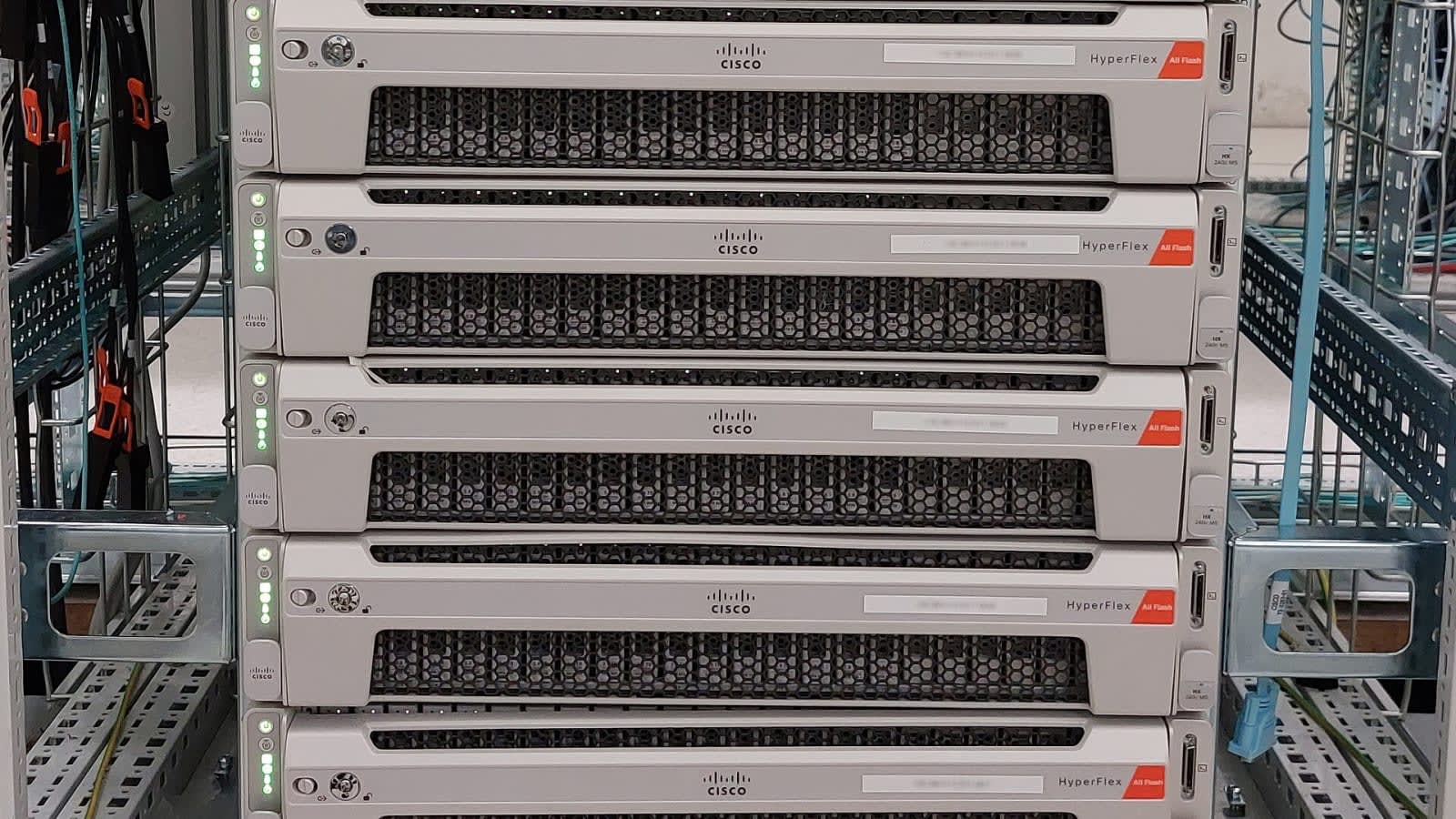
For the Indian government, the timing is advantageous. Under the IndiaAI Mission approved by the Union Cabinet, the Ministry of Electronics and Information Technology (MeitY) is pooling over 10,000 graphics processing units (GPUs) to make compute available to local startups, researchers, and public institutions at subsidised rates.
Officials leading the initiative have argued that India cannot afford to depend on foreign proprietary application programming interfaces (APIs) for critical governance, education, and public service delivery. By relying on open-weight architectures and distillation techniques rather than attempting to brute-force a raw pre-training run from scratch, domestic engineering teams can adapt frontier-grade reasoning into India's 22 scheduled languages.
Efforts such as BharatGen, an initiative backed by the Department of Science and Technology and IIT Bombay, are already applying these efficient training frameworks. The goal is multimodal models that process Indian audio dialects and vernacular scripts natively, bypassing the translation layers that frequently introduce errors in Western models.
The competitive shift to agents and inference
The broader industry trajectory points toward autonomous agent workflows, where models do not merely answer questions but run external software tools, execute database queries, and verify their own work. Because agent systems require hundreds of iterative model calls to complete a single task, inference latency and cost per token determine whether a tool is commercially viable.
Open-source distillation has compressed frontier capabilities into 7-billion and 14-billion parameter footprints that can run on enterprise servers or high-end local workstations. For Indian developers building digital public infrastructure on top of the India Stack—spanning UPI, Aadhaar, and DigiLocker—these lightweight reasoning engines make direct integration feasible without exporting sensitive user data abroad.
The global competitive field remains fierce, but the technical barrier to entry has moved from sheer capital scale to algorithmic precision, providing India with a clear opening to establish technological self-reliance.
Key numbers
| What | Figure | Source |
|---|---|---|
| IndiaAI Mission financial outlay | ₹10,372 crore | Union Cabinet, Government of India |
| Targeted public GPU procurement capacity | 10,000+ units | Ministry of Electronics and Information Technology |
Questions readers are asking
What is the IndiaAI Mission?
It is a central government initiative with a budget of ₹10,372 crore designed to establish domestic AI computing infrastructure, support startups, fund indigenous foundation models, and democratise GPU access for researchers.
How does test-time compute differ from traditional model training?
Traditional models generate answers in a single pass based on data absorbed during pre-training. Test-time reasoning models allocate additional computing power at inference to generate and verify chain-of-thought reasoning steps before delivering an output.
In this story
| Name | Role in the story |
|---|---|
| Ministry of Electronics and Information Technology | Indian central ministry overseeing digital infrastructure and the IndiaAI programme. |
| IndiaAI Mission | National government programme financing domestic artificial intelligence infrastructure and compute access. |