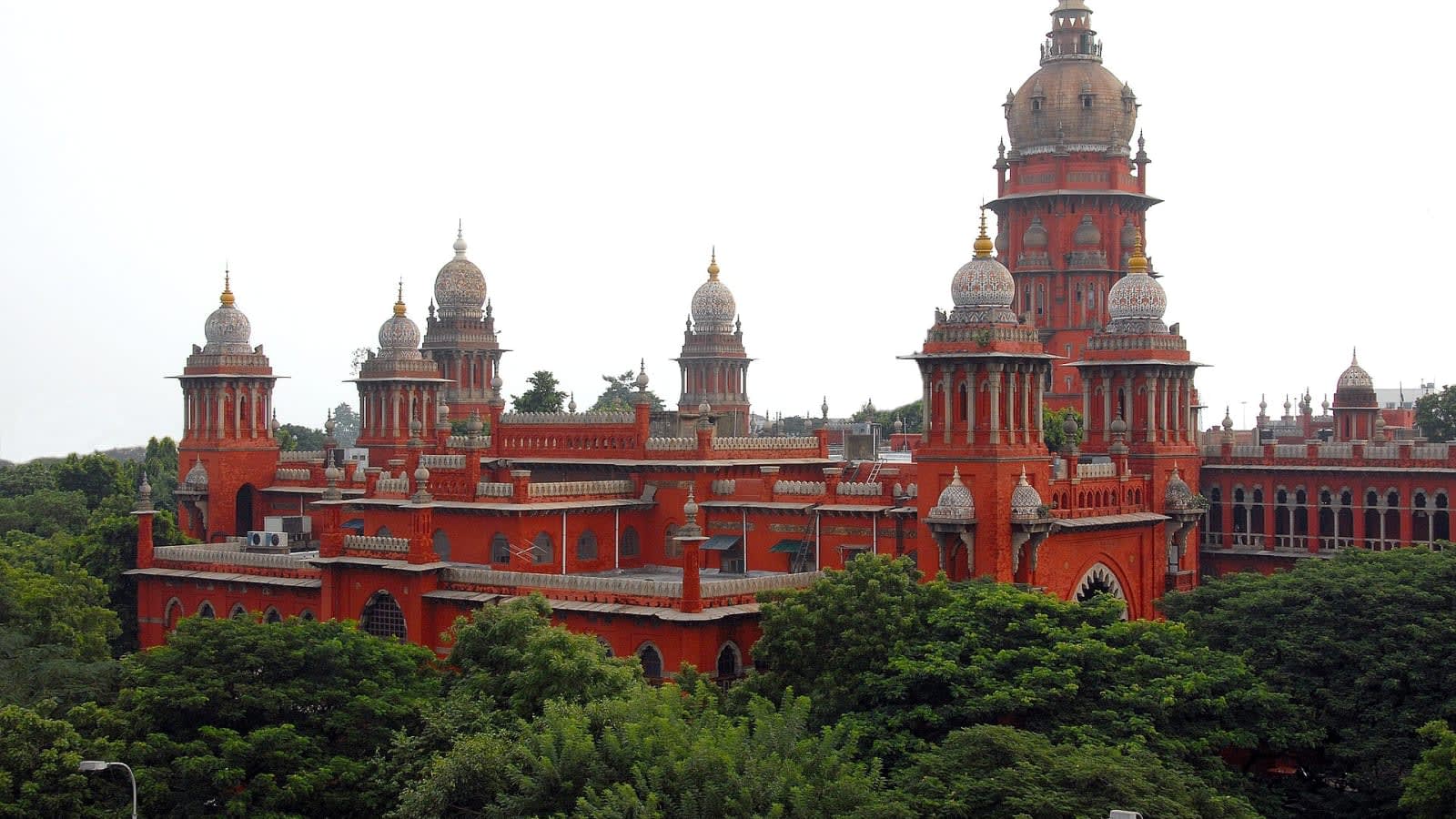
Madras HC upholds Tamil Nadu Speaker accepting resignations of six AIADMK MLAs
The court ruled that resignation and disqualification are distinct constitutional tracks and told the Speaker to finish pending Tenth Schedule proceedings within two months.

The Madras High Court has upheld Tamil Nadu Assembly Speaker JCD Prabhakar's decision to accept the resignations of six AIADMK legislators who switched allegiance to the ruling Tamilaga Vettri Kazhagam (TVK).
Dismissing petitions challenging the Speaker's orders, a division bench of Chief Justice Sushrut Arvind Dharmadhikari and Justice G Arul Murugan ruled that the resignations were voluntary and constitutionally sound. The court affirmed that the Speaker was under no obligation to conduct a roving inquiry into the political motives behind the departures before accepting them and declaring the assembly seats vacant.
The ruling reinforces the procedural authority of constitutional offices and provides institutional clarity regarding assembly management under the Tenth Schedule of the Constitution.
What the court decided
The challenge was brought by AIADMK chief whip Agri S Krishnamurthy and National People's Power Party leader Ravi. They argued that the Speaker acted prematurely by accepting the resignations while petitions seeking the legislators' disqualification for defying party whips were still pending.
The judges rejected that reasoning, drawing a firm constitutional line between leaving office voluntarily and facing disciplinary proceedings.
"The pendency of disqualification proceedings did not constitutionally bar the speaker from accepting the resignations, as resignation and disqualification are two distinct constitutional processes," the bench stated. However, the bench made clear that stepping down does not grant lawmakers immunity from anti-defection consequences. Directing the Speaker to act within a fixed timeframe, the court issued a mandamus ordering that disqualification proceedings be concluded within two months.
| Legislator | Original party | New allegiance | Resignation status |
|---|---|---|---|
| Maragatham Kumaravel | AIADMK | TVK | Upheld |
| K. Sathyabama | AIADMK | TVK | Upheld |
| Isakki Subbaiah | AIADMK | TVK | Upheld |
| D. Jayakumar | AIADMK | TVK | Upheld |
| M.R. Vijayabhaskar | AIADMK | TVK | Upheld |
| C. Vijayabhaskar | AIADMK | TVK | Upheld |
The defection row
The six MLAs had cross-voted in support of the TVK government during a confidence motion, later resigning their seats to join Chief Minister Vijay's party. The defectors went on to win subsequent by-elections, strengthening the ruling party's legislative position.
Opposing the petitions, counsel for the Speaker argued that an elected representative cannot be coerced into remaining in office against their will once they submit an unforced resignation. Forcing a legislator to retain a seat would undermine the constitutional duties vested in the Speaker's office.
Counsel for the six MLAs similarly argued that stepping down from elected office and joining another political organisation represents lawful political conduct rather than illicit floor-crossing.
What happens next
While the High Court confirmed that the declaration of vacancies stood valid, its two-month directive requires the assembly secretariat to bring the formal anti-defection inquiry to a close.
The Supreme Court had previously declined to intervene against the Speaker's procedural handling of the matter. With the High Court's latest ruling, the functioning of the state legislative assembly remains stable and constitutionally intact as regular proceedings continue.
Key numbers
| What | Figure | Source |
|---|---|---|
| Number of MLAs whose resignations were upheld | 6 | Madras High Court order |
| Deadline set for Speaker to conclude disqualification pleas | 2 months | Madras High Court order |
Questions readers are asking
Can an MLA resign while disqualification proceedings are pending?
Yes. The Madras High Court clarified that voluntary resignation and Tenth Schedule disqualification proceedings are separate constitutional processes, meaning the Speaker is entitled to accept genuine resignations even when disqualification pleas remain open.
Does resignation shield MLAs from disqualification under the Tenth Schedule?
No. The court directed the Tamil Nadu Speaker to conclude the disqualification proceedings within two months, holding that resignation does not make anti-defection adjudication infructuous.
In this story
| Name | Role in the story |
|---|---|
| Tamilaga Vettri Kazhagam | Ruling party in Tamil Nadu joined by the defecting AIADMK MLAs. |
| AIADMK | Opposition party from which the six MLAs resigned. |
| Tamil Nadu | State where the assembly dispute and legal proceedings took place. |
| Madras High Court | Delivered the ruling upholding the assembly speaker's order. |