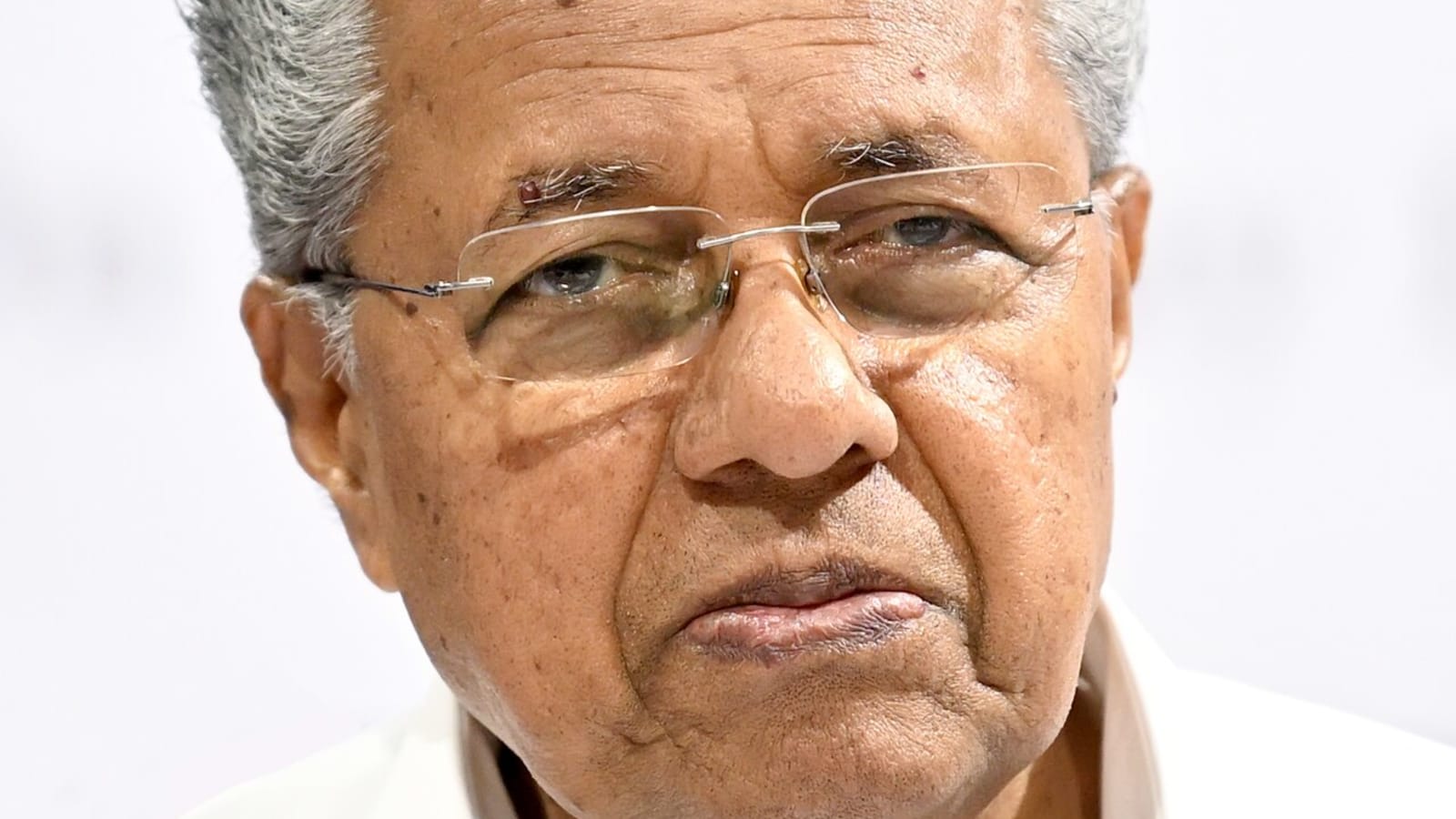
Supreme Court stays probe against Pinarayi Vijayan in CMRL case for seven days
The top court leaves the criminal case intact while directing the Kerala High Court to hear the former chief minister's appeal.

The Supreme Court has paused further investigation for seven days in the Cochin Minerals and Rutile Limited bribery case involving former Kerala Chief Minister Pinarayi Vijayan, his daughter Veena T, and son-in-law P A Mohamed Riyas.
A vacation bench comprising Justice Joymalya Bagchi and Justice V Mohana granted the temporary reprieve during a special sitting on Wednesday. The bench set aside an earlier order of the Kerala High Court division bench that had dismissed Vijayan's challenge to a single-judge directive ordering a criminal case.
While halting active police inquiries for a week to let the petitioners seek interim relief before the High Court, the judges refused to quash or stay the First Information Report itself.
"Howsoever high you will be, you cannot be above law. We will not order a stay on the FIR," Justice Bagchi observed during the hearing, affirming that allegations of financial impropriety must face rigorous legal scrutiny.
What the case alleges
The dispute centres on financial transactions between Cochin Minerals and Rutile Limited, a private mineral firm, and Exalogic Solutions Private Limited, an IT firm owned by Vijayan's daughter Veena T.
Income tax audits and subsequent inquiries revealed that between 2017 and 2020, CMRL transferred funds to Exalogic under the umbrella of consultancy services without any documented services being rendered.
| Accused / Entity | Role in proceedings | Core allegation |
|---|---|---|
| Pinarayi Vijayan | Former Chief Minister | Official patronage linked to company payouts |
| Veena T | Owner, Exalogic Solutions | Received ₹2.78 crore consultancy fees without service delivery |
| P A Mohamed Riyas | Minister / family member | Named co-accused in preliminary filings |
| CMRL | Industrial firm | Disbursed questionable corporate payments to Exalogic |
Jurisdictional questions and statutory limits
The central government's anti-money laundering agency, the Enforcement Directorate, uncovered evidence during its own proceedings under the Prevention of Money Laundering Act and shared the findings with the Kerala Police on 22 September. Following a writ petition filed by advocate K M Shajahan, a single judge of the Kerala High Court directed the state vigilance wing to register an FIR on 9 October.
The Supreme Court questioned the procedural rush in issuing directives before the state government's nine-member Special Investigation Team had concluded its preliminary enquiry. The bench drew attention to statutory safeguards under Section 17A of the Prevention of Corruption Act and Section 175(4) of the Bharatiya Nagarik Suraksha Sanhita, which require due procedure before investigating public servants.
The bench also cautioned the Enforcement Directorate against overstepping its legal mandate into state policing powers.
"Do your examination under the Prevention of Money-Laundering Act. File your complaint... Go ahead with your prosecution. Don't extend your hand beyond your statutory limits," the bench told ED counsel Zoheb Hossain, clarifying that once central authorities alert a state to predicate crimes, local law enforcement must proceed strictly according to statutory process.
What happens next
The Supreme Court left the separate money laundering case registered by the central agency unhindered, noting that any challenge to the Enforcement Case Information Report must be raised in separate proceedings.
The matter now returns to a division bench of the Kerala High Court, which must determine whether the FIR complied with statutory requirements while considering the family's plea for protection from arrest.
Key numbers
| What | Figure | Source |
|---|---|---|
| Investigation stay duration | 7 days | Supreme Court order |
| Alleged payout amount | ₹2.78 crore | Enforcement Directorate probe findings |
| Period of disputed payments | 2017 to 2020 | Tax assessment records cited in court |
| Date of state FIR registration | 12 October | Kerala Police Vigilance records |
Questions readers are asking
Has the Supreme Court cancelled the FIR against Pinarayi Vijayan?
No. The Supreme Court specifically declined to quash or stay the First Information Report, holding that nobody is above the law. It only paused active investigation steps for seven days.
What is the CMRL-Exalogic case about?
The case involves allegations that Cochin Minerals and Rutile Limited made irregular payments exceeding ₹2.78 crore between 2017 and 2020 to Exalogic Solutions, a company owned by Pinarayi Vijayan's daughter, without actual services being provided.
What happens after the seven-day stay expires?
A division bench of the Kerala High Court will hear Vijayan's appeal on its legal merits and determine whether interim relief or protection from coercive action should be granted.
In this story
| Name | Role in the story |
|---|---|
| Enforcement Directorate | Federal agency investigating money laundering charges in the transaction. |
| Veena T | Daughter of Pinarayi Vijayan and sole owner of Exalogic Solutions. |
| Exalogic Solutions Private Limited | IT consulting firm owned by Veena T that received the questioned funds. |
| Pinarayi Vijayan | Former Chief Minister of Kerala named in the CMRL payoff case. |
| Supreme Court of India | Apex court that ordered a seven-day stay on the police investigation. |
| Cochin Minerals and Rutile Limited | Private firm that allegedly transferred unearned consultancies to Exalogic Solutions. |