Pete Hegseth creates Pentagon Office of Religious Affairs reporting directly to him
The Defence Secretary says the military's 'real battle is spiritual', but critics argue the new office violates the US Constitution.

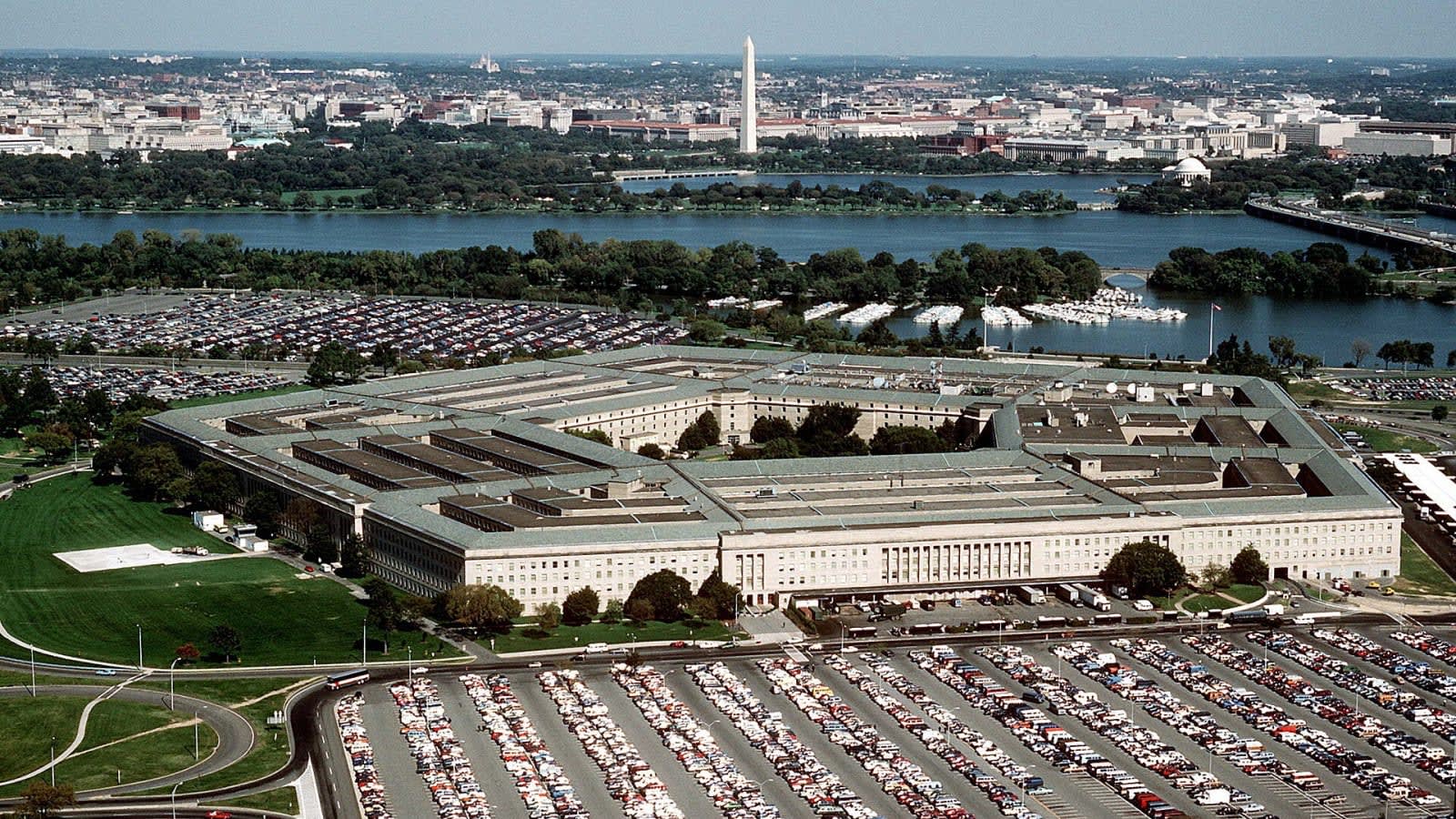
US Defence Secretary Pete Hegseth has established a new Office of Religious Affairs at the Pentagon, a direct-report agency designed to elevate faith and "spiritual readiness" to the highest level of military leadership.
Hegseth announced the creation of the office during his State of the Force address at Marine Corps Base Quantico in Virginia on 30 September. The new office will bypass traditional bureaucratic layers to report directly to him, giving military chaplains a high-level advocate in the department.
During his speech, Hegseth framed the initiative in explicitly Christian terms. "Our department is, you might say, putting on the full armour of God, because while we wage physical war, we all know the real battle is spiritual," he said, invoking language from the biblical Letter to the Ephesians. He later told military chaplains to "preach truth" and "minister to the flock."
According to a Pentagon memo, the Office of Religious Affairs (ORA) will coordinate spiritual resources across the Department of Defence. Its duties will include supporting faith-based homeschooling for military families and driving faith-based initiatives to reduce suicide rates across the armed forces. A director for the office has not yet been named.
While the Pentagon stressed that the new office will not compel religious participation, favour any specific faith, or diminish the rights of non-religious personnel, the move has ignited swift backlash from secular watchdogs and political opponents.
Representative Jared Huffman, a California Democrat, accused Hegseth of acting as a "full-throttle Christian nationalist" and pointed to the US Constitution's First Amendment, which bans government-established religion. Writing on social media, Huffman argued that the Defence Secretary has consistently eroded the separation of church and state.
Rachel Laser, president of Americans United for Separation of Church and State, said the department is failing in its promise to defend religious freedom. Laser, whose organisation has previously sued the Pentagon over internal worship services, warned that the new office risks giving Christianity a dominant role in shaping military policy.
The Secular Coalition for America also condemned the decision, stating that the office "ignores the numerous nonreligious service members" in the military.
What are Hegseth's other faith reforms?
The new office is the latest in a series of sweeping faith-related changes under Hegseth's tenure. He has hosted Christian worship services inside the Pentagon and frequently described the US as a "Christian nation."
Under his leadership, the military has also reduced its list of officially recognised religious affiliations from more than 200 to just 31. The revised list no longer includes options for atheists, Unitarian Universalists, pagans, and Wiccans. Hegseth has also ordered military chaplains to stop wearing military ranks on their uniforms, replacing them solely with religious insignia.
While other federal departments have operated faith-based offices since the George W. Bush administration, critics note those offices served different functions. For instance, the State Department's former religion office under the Obama administration was designed to analyse the geopolitical impact of religion in global conflict zones, rather than to promote spiritual well-being among US staff.
During the same address at Quantico, Hegseth also announced the creation of an "Autonomous Warfare Command" to advance AI and robotic capabilities, and confirmed plans to cut the number of military generals and admirals by 20 per cent.
Key numbers
| What | Figure | Source |
|---|---|---|
| Generals and admirals reduction | 20% | Pete Hegseth's address at Marine Corps Base Quantico |
| Recognised religious affiliations remaining | 31 | Department of Defence revised list |
| Previous number of recognised religious affiliations | More than 200 | Department of Defence list |
Questions readers are asking
What is the purpose of the Pentagon's Office of Religious Affairs?
According to the Pentagon, the office will advocate for military chaplains, coordinate spiritual resources, support faith-based homeschooling for military families, and assist with faith-based suicide reduction initiatives.
Why is the new religious office controversial?
Critics argue that the office violates the US Constitution's separation of church and state by elevating Christianity's influence on military policy. Opponents also point to Pete Hegseth's use of explicitly Christian terminology when announcing the department's new direction.
In this story
| Name | Role in the story |
|---|---|
| Pete Hegseth | US Defence Secretary who established the new office and announced it during a speech. |
| US Department of Defence | The government department establishing the Office of Religious Affairs. |