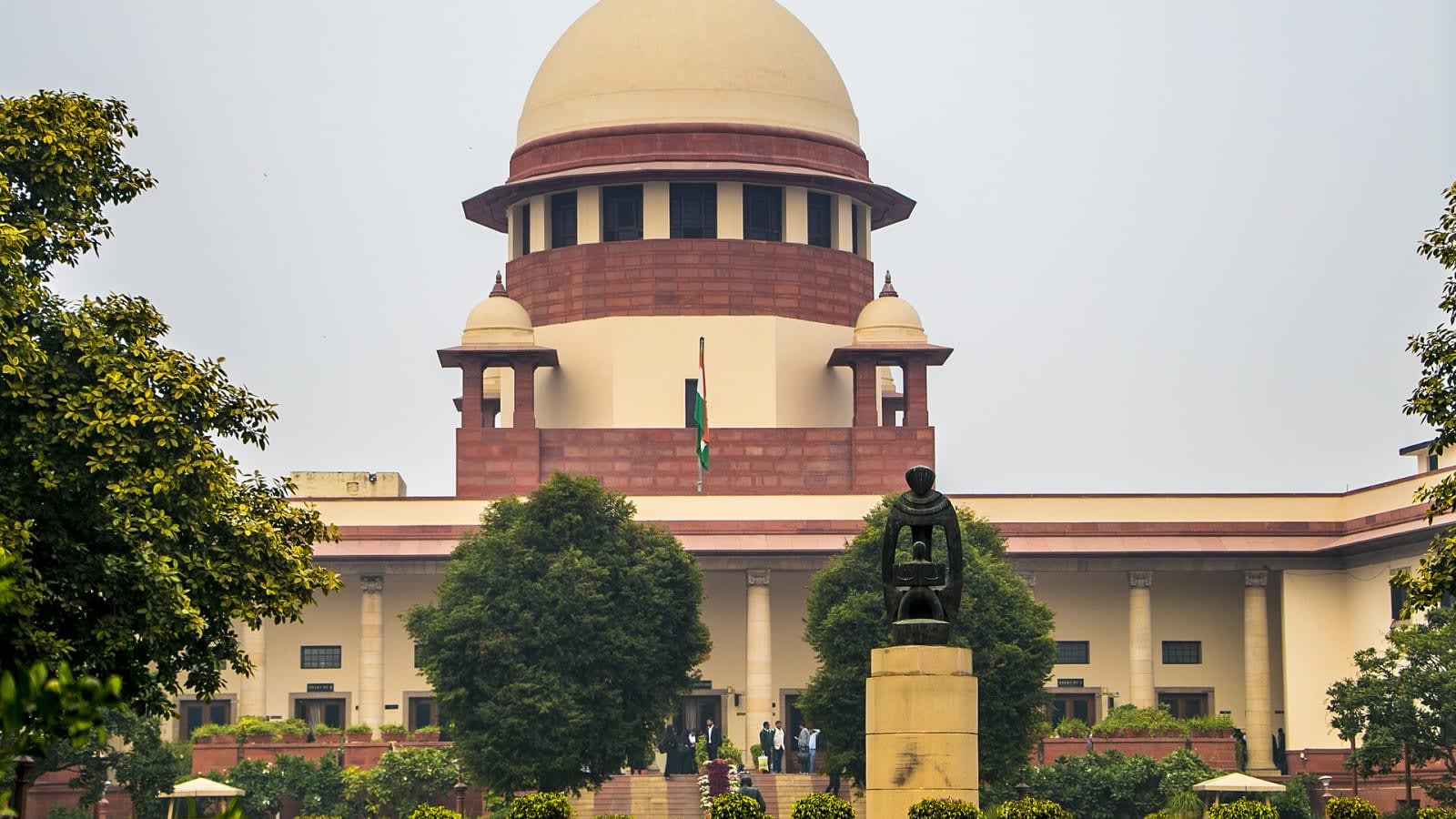
Supreme Court petition filed by Rahul Gandhi as Fadnavis slams Opposition march
The top court insisted that legal grievances follow formal judicial processes rather than street demonstrations.

Judicial route followed after Supreme Court declines political meeting
Leader of Opposition Rahul Gandhi filed a petition in the Supreme Court on Monday seeking an independent committee to inspect the Election Commission of India's Special Intensive Revision (SIR) procedure and online voter platforms.
The legal move followed a firm stance taken by Chief Justice of India Surya Kant, who declined a request from Rahul Gandhi and Congress president Mallikarjun Kharge for a private meeting ahead of a planned Opposition march. The top court made it clear that judicial matters must strictly follow official legal processes rather than street demonstrations, adding that democratic protests must never disrupt court operations or hinder movement for litigants and lawyers.
According to court records, the writ petition was lodged through advocate Prasanna S. at 4.37 p.m. on Monday, formalising the Opposition's demands regarding the ECI's decision-making frameworks and the ECINet portal.
Opposition march met with sharp criticism over constitutional decorum
The petition was submitted alongside a protest march organised by the INDIA bloc in New Delhi, demanding the resignation of Chief Election Commissioner Gyanesh Kumar over the roll revision exercise. Key leaders including Priyanka Gandhi Vadra and Samajwadi Party chief Akhilesh Yadav participated in the demonstration.
The street march drew strong criticism from government leaders, who emphasised the importance of maintaining constitutional decorum and respecting independent institutions. Speaking in Nagpur, Maharashtra Chief Minister Devendra Fadnavis accused Congress leadership of adopting an anarchic, ultra-leftist mindset that risks destabilising democratic frameworks.
"Congress is working to destroy the Constitution while repeatedly displaying it," Fadnavis stated, arguing that the Opposition was attacking established constitutional bodies to deflect from consecutive electoral defeats.
Fadnavis commended the Supreme Court's insistence on proper judicial procedure, reiterating that political agitation should not interfere with the functioning of the highest court in the country.
Institutional processes uphold legal boundaries
The Supreme Court bench maintained that any grievance regarding electoral procedures must be addressed purely through constitutional and legal channels, rather than political pressure tactics. The court agreed to hear petitions regarding the disruption caused by protests in the capital, reinforcing the necessity of public order and institutional integrity.
While Samajwadi Party chief Akhilesh Yadav defended the agitation as a campaign to safeguard democracy, government representatives pointed out that attacking constitutional bodies on the streets sets an unhealthy precedent. They maintained that India's electoral mechanisms remain robust and transparent, with established judicial remedies available to any aggrieved party.
Key numbers
| What | Figure | Source |
|---|---|---|
| Petition filing time | 4.37 p.m., 12 October 2026 | Supreme Court website records |
| Filing deadline set by CJI | 4.30 p.m. | Chief Justice of India statement |
In this story
| Name | Role in the story |
|---|---|
| Election Commission of India | Constitutional body whose revision exercise is challenged |
| Devendra Fadnavis | Maharashtra Chief Minister who criticised the Opposition march |
| Rahul Gandhi | Leader of Opposition in Lok Sabha who filed the petition |
| Supreme Court of India | Apex court where the petition was filed |