Former IMF director dismisses Pakistan claim of historic World Bank leadership
Krishnamurthy Subramanian says chairing the 2027 IMF-World Bank meetings is a routine ceremonial rotation while Islamabad relies on ongoing bailouts.
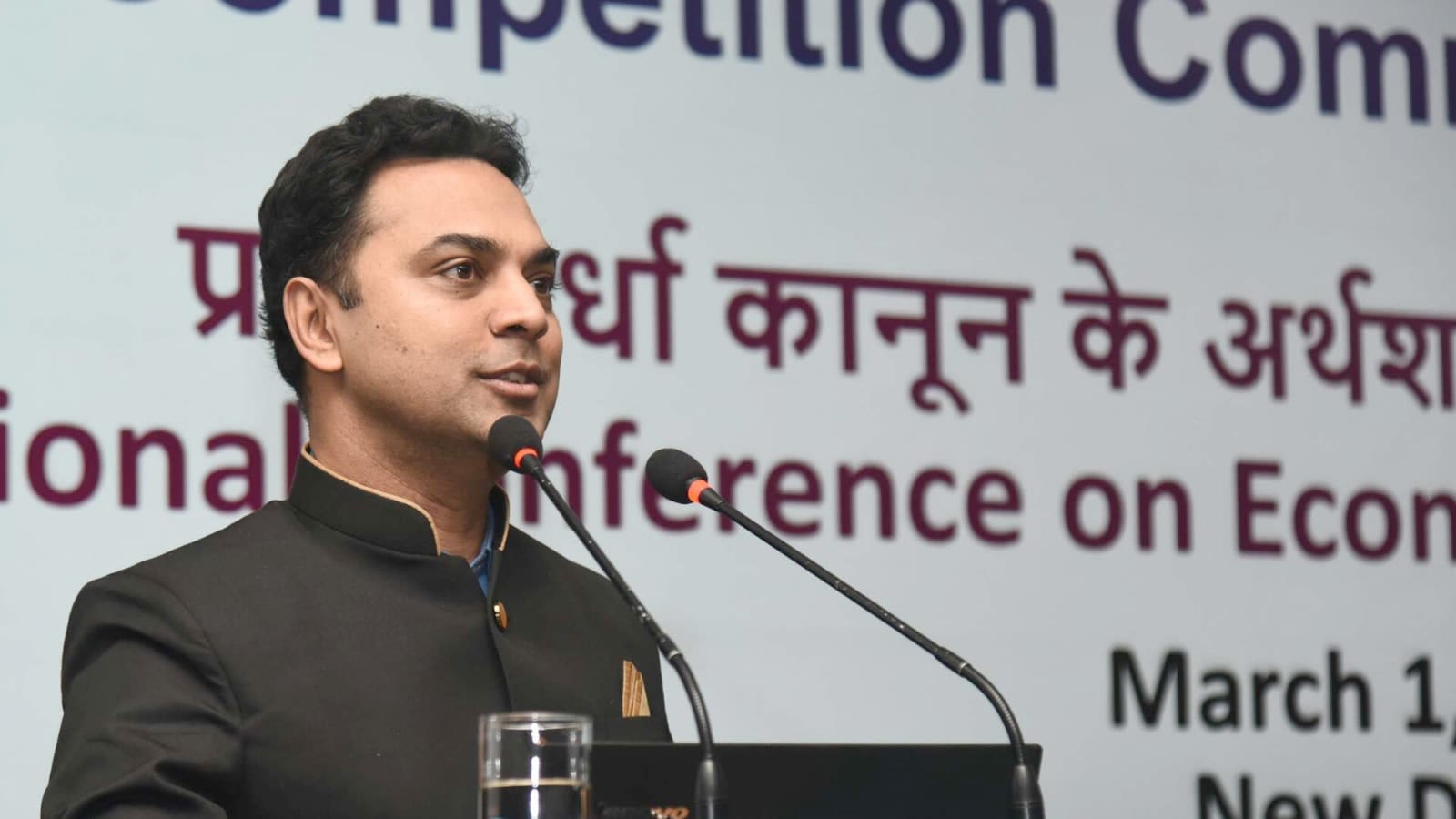
Former IMF executive director Krishnamurthy Subramanian has publicly challenged Pakistan's claim that being named to chair the IMF and World Bank Boards of Governors in 2027 represents a major economic breakthrough, describing the role as routine protocol rather than genuine power.
Pakistan's Ministry of Economic Affairs announced that Economic Affairs Minister Ahad Khan Cheema was selected for the 2027 post during annual meetings in Bangkok. The ministry framed the appointment as a historic milestone that would grant the country a prominent voice in global financial discussions. Pakistan last held the position in 1953.
Subramanian, who served as IMF executive director for India between November 2022 and May 2025, rejected that assessment on social media. He pointed out that the role rotates automatically among member nations each year and carries no authority over loan approvals, policy frameworks, or institutional governance.
Ceremonial rotation vs agenda-setting power
The chairmanship involves presiding over plenary sessions attended by central bank governors and finance ministers. It does not allow the host country to influence executive decisions or direct international financial flows.
Subramanian also dismissed attempts to draw parallels between Pakistan's procedural appointment and India's recent international leadership roles, calling the comparison a false equivalence. He noted that India used its G20 and BRICS presidencies to drive substantive multilateral reforms and set the global economic agenda, whereas Pakistan will simply be managing meeting logistics.
| Country | Role or Presidency | Primary Function |
|---|---|---|
| Paraguay | 2024 IMF-World Bank Chair | Ceremonial plenary rotation |
| Cabo Verde | 2025 IMF-World Bank Chair | Ceremonial plenary rotation |
| Pakistan | 2027 IMF-World Bank Chair | Ceremonial plenary rotation |
| India | G20 Presidency | Global economic agenda setting |
| India | BRICS Presidency | Emerging market policy steering |
Continued reliance on foreign bailouts
The public dispute comes as Pakistan remains heavily dependent on international financial assistance to maintain national liquidity and service external debt. Islamabad is awaiting IMF Executive Board approval for a $1.2 billion disbursement following a staff-level agreement on existing loan programmes.
Pakistan is currently locked into a $7 billion Extended Fund Facility to support fiscal reforms and balance-of-payments challenges. It has also accessed a $1.4 billion Resilience and Sustainability Facility to finance long-term climate adaptation.
While the 2027 appointment gives Pakistani officials a formal platform at plenary proceedings, financial analysts agree that procedural chairing does not alter the country's reliance on external multilateral support or grant it political leverage over international lending bodies.
Key numbers
| What | Figure | Source |
|---|---|---|
| Extended Fund Facility loan to Pakistan | $7 billion | IMF |
| Resilience and Sustainability Facility financing | $1.4 billion | IMF |
| Pending loan tranche awaiting IMF approval | $1.2 billion | IMF |
| Year Pakistan last chaired the Boards of Governors | 1953 | Pakistan Ministry of Economic Affairs |
In this story
| Name | Role in the story |
|---|---|
| Pakistan | Claimed its appointment as chair of IMF-World Bank Boards of Governors was a historic milestone. |
| World Bank | Global financial institution co-hosting the Boards of Governors meetings. |
| International Monetary Fund | International lender providing loans to Pakistan and organizing annual governance meetings. |
| Krishnamurthy Subramanian | Former IMF executive director for India who rebutted Pakistan's claims. |