Jaishankar says US has chosen to become a lonelier power as India steps up Ukraine diplomacy
The External Affairs Minister told the Munich Security Conference in Delhi that India is going 'beyond advocacy' to facilitate talks on Black Sea shipping and grain exports.
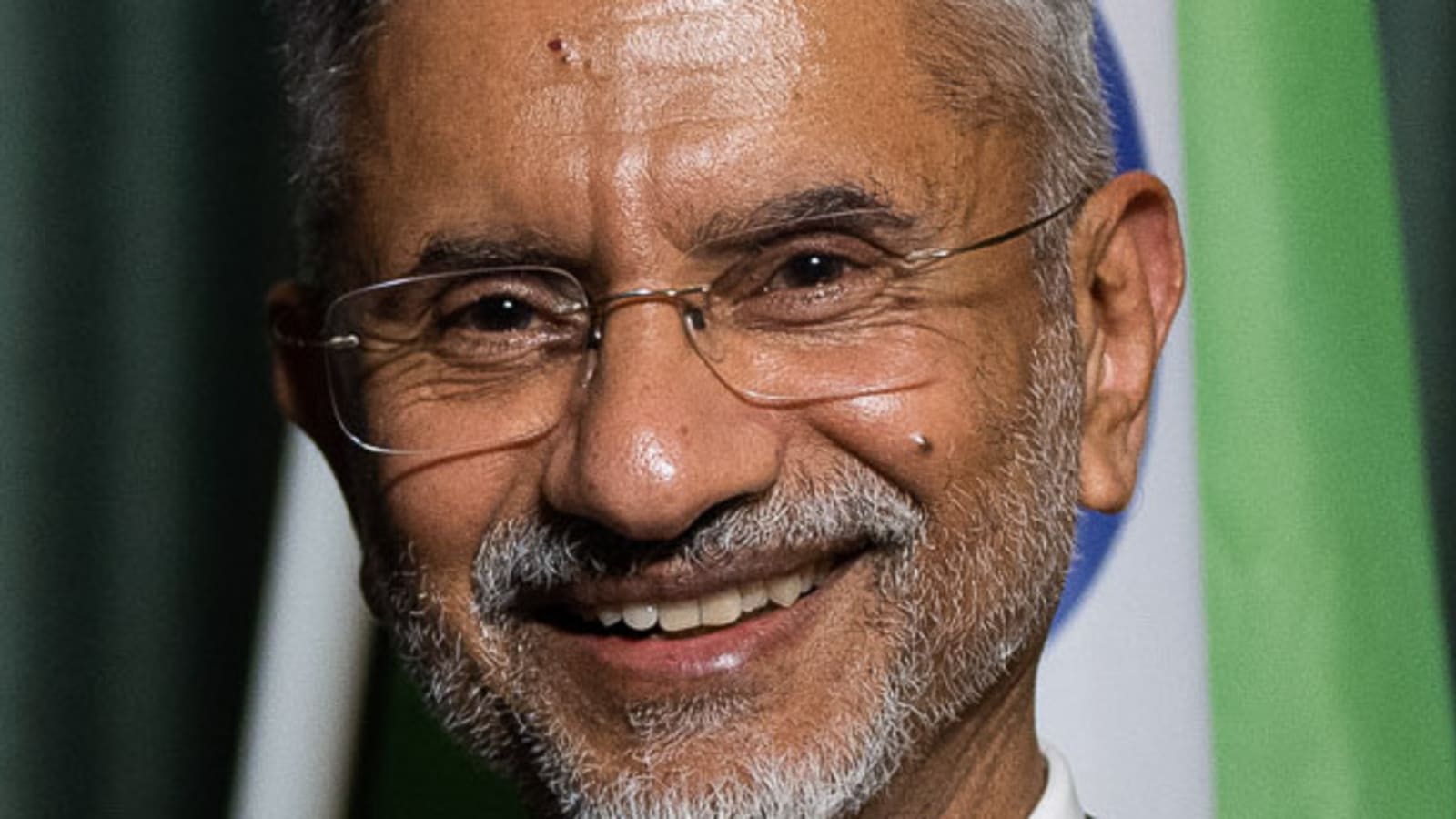
The United States has deliberately chosen to become a "lonelier power" while China’s rapid rise continues to reshape the global order, India’s External Affairs Minister S. Jaishankar has said.
Speaking at the 62nd Munich Security Conference in Delhi on Sunday, Jaishankar also revealed that India has quietly stepped up its diplomatic efforts in the Russia-Ukraine war, moving "beyond advocacy" to try and help broker practical agreements between the two warring nations.
India's quiet diplomacy in the Ukraine war
New Delhi has long called for dialogue and diplomacy to end the war in Ukraine, but Jaishankar said India’s involvement has recently become much more hands-on.
"We have been advocating it for many years, and in recent months we have got a little bit more involved beyond advocacy," Jaishankar said.
He confirmed that Indian officials are now holding active, ongoing discussions with both Moscow and Kyiv to address specific, immediate flashpoints. These include negotiations over safe shipping in the Black Sea, grain exports, energy trade, and securing commitments against attacking key infrastructure.
Jaishankar also defended India's enduring relationship with Russia, which has drawn criticism from Western capitals since the 2022 invasion of Ukraine. He pointed out that Moscow had historically stood by India during critical national security threats at a time when "much of the world preferred backing a military regime next to us" — a reference to Western support for Pakistan during past conflicts.
Why the US is becoming a 'lonelier power'
In a wide-ranging assessment of global politics, Jaishankar argued that the current international order is being defined by a "radical repositioning of the United States."
He described this shift as a deliberate "posture of choice" by Washington, which has left the country increasingly isolated. This retreat is occurring alongside the rise of China, whose massive economic engine now accounts for roughly one-third of all global manufacturing.
Jaishankar warned that the fierce rivalry between the US and China has led to the "weaponisation of every leverage" that countries possess. Yet because the two superpowers remain deeply interdependent, their competition has created a highly volatile and complex global environment.
The rise of flexible coalitions
To survive this volatile environment, Jaishankar said emerging and middle powers are taking matters into their own hands. Rather than picking sides, countries are focusing on self-reliance, diversifying their partnerships, and "de-risking" their economies.
Crucially, Jaishankar argued that countries no longer need to agree on everything to work together.
"The days when you have to have an identity of views or a very strong congruence of interest, I think that's too high a bar today," Jaishankar said. "If you have enough touch points, that is good enough for countries to work together."
He pointed to the Quad alliance and the BRICS group as prime examples of this modern, flexible approach. In this new global setup, countries are comfortable working with both Washington and Beijing, using ad-hoc arrangements to amplify their collective voices and protect their own interests.
Key numbers
| What | Figure | Source |
|---|---|---|
| China's share of global manufacturing | One-third | S. Jaishankar |
In this story
| Name | Role in the story |
|---|---|
| Munich Security Conference | The 62nd security conference held in Delhi where the speech was delivered. |
| S. Jaishankar | India's External Affairs Minister who delivered the keynote speech outlining India's foreign policy positions. |