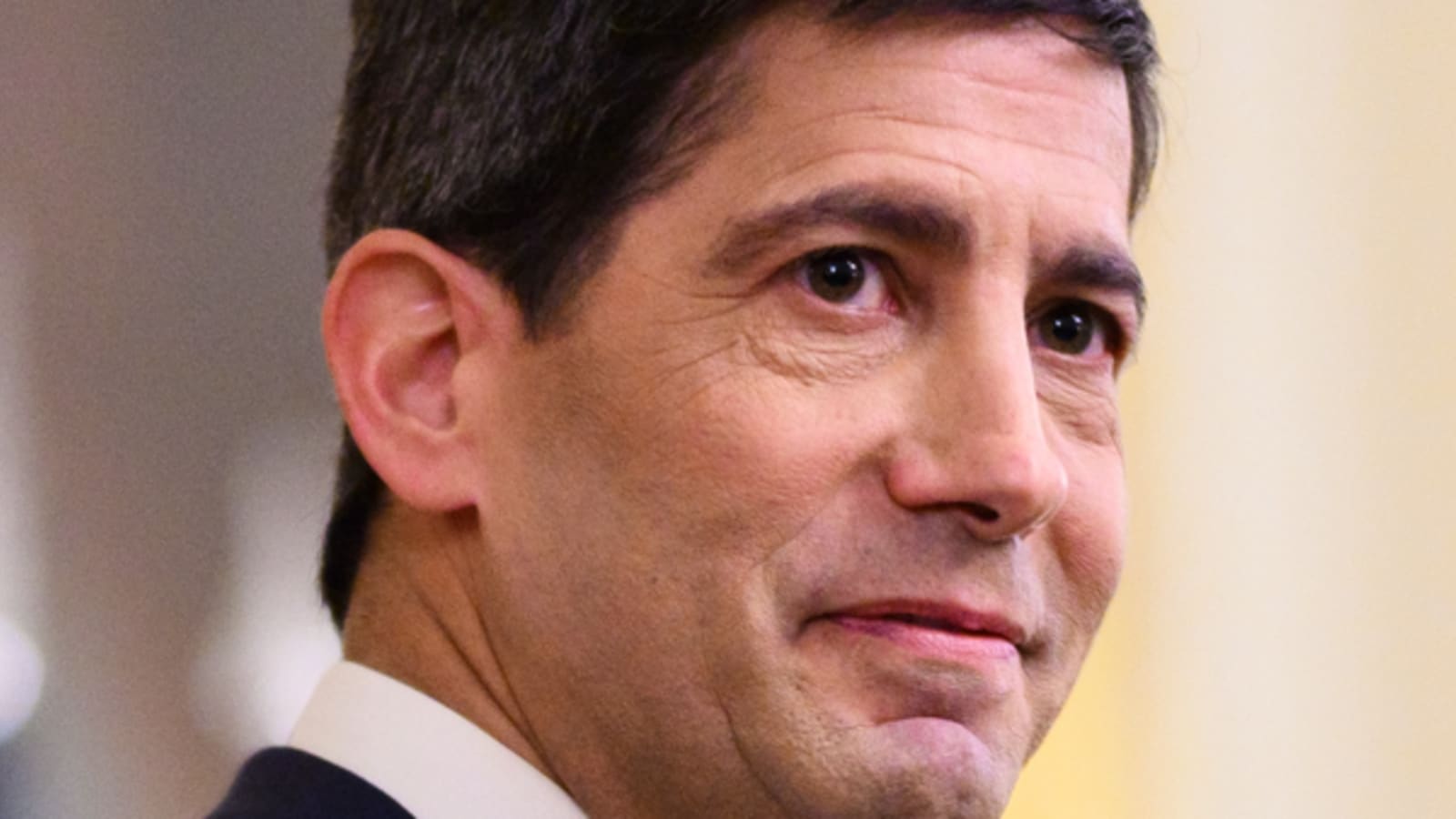
Fed rates: Philip Jefferson signals no urgency for October hike
The central bank's number two says policymakers can take more time to assess economic data as markets adjust to rising bond yields.

Federal Reserve Vice Chair Philip Jefferson has signalled that the US central bank is in no hurry to raise interest rates again, suggesting policymakers will likely hold rates steady at their meeting later this month.
Speaking at the University of Virginia’s Darden School of Business, Jefferson said that while he supported the Fed's decision to raise its benchmark rate last month, he sees "no urgency" to take further action immediately.
The remarks suggest the Fed is prepared to take a breath at its meeting on 27-28 October, allowing policymakers to assess how previous rate hikes and a recent surge in bond yields are affecting the economy. Jefferson noted that with financial markets reassessing the economic outlook, officials "will need to come to our own judgment, which may take more time" before deciding on their next step.
Taking time to study the data
The Fed raised its benchmark interest rate by a quarter of a percentage point to a range of 3.75% to 4.00% at its mid-September meeting. While policymakers' projections indicated one more rate increase before the end of the year, Jefferson indicated that any future moves would depend entirely on what the economic data shows.
"With more data in hand, such trends may allow for better discernment, as may the appropriate stance of monetary policy," Jefferson said.
He expects inflation to remain high in the short term before slowly declining toward the Fed's 2% target. However, he warned that risks to his inflation forecast are "tilted to the upside," driven by stronger-than-expected consumer demand and recent geopolitical developments. On the other hand, he described the risks to employment and overall economic activity as "roughly balanced."
Other Fed officials advocate patience
Jefferson's call for patience is mirrored by other prominent central bankers. New York Fed President John Williams also suggested earlier this week that policymakers have breathing room to study incoming data, even though he still anticipates another rate hike before the year ends.
Meanwhile, Minneapolis Fed President Neel Kashkari said on Thursday that while further rate increases will likely be needed to restrain the economy, he is undecided on whether the Fed should act in October.
"I'm open-minded," Kashkari told Reuters, adding that he does not hold a "strong view" on whether a hike is necessary this month.
Kashkari, who voted for September's rate increase, noted that recent data shows the US economy performing even better than he had anticipated, while inflation remains too high. If the economy proves exceptionally resilient and inflation is stickier than expected, he said, borrowing costs may need to go higher than currently projected.
What happens next
Financial markets are already heavily betting that the Fed will keep rates unchanged at its October meeting. The central bank has one final policy meeting this year scheduled for 8-9 December.
Both Jefferson and Kashkari noted that the broader financial system is handling the transition well. Kashkari said he sees no evidence of "systemic risk" in the markets, though he admitted the banking sector requires close monitoring given how rapidly borrowing costs have risen.
He also attributed the recent movement in long-term interest rates to market confidence in the central bank's resolve under Fed Chair Kevin Warsh, stating that the markets now understand "the Fed is really serious... about controlling inflation."
Key numbers
| What | Figure | Source |
|---|---|---|
| Fed benchmark interest rate | 3.75% to 4.00% | Federal Reserve statement |
| October Fed meeting dates | 27-28 October | Federal Reserve calendar |
| December Fed meeting dates | 8-9 December | Federal Reserve calendar |
In this story
| Name | Role in the story |
|---|---|
| Federal Reserve | The US central bank determining monetary policy and interest rates. |
| Philip Jefferson | Vice Chair of the Federal Reserve who signalled a patient approach to future rate hikes. |