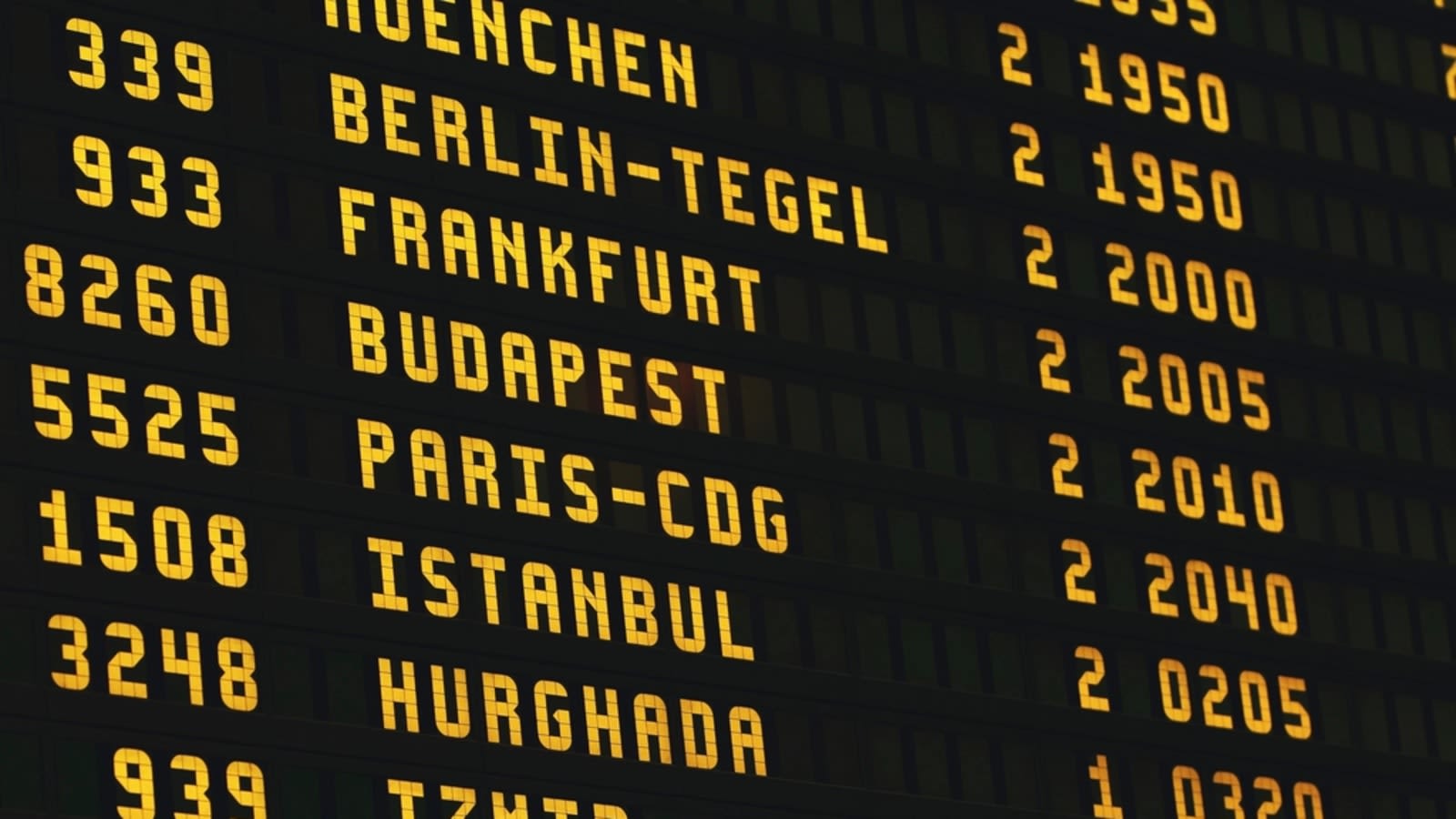
How do aviation authorities execute nationwide ground stops?
Civil aviation regulators enforce nationwide ground stops through centralized air traffic networks that freeze departures while allowing airborne flights to land safely.
Aviation authorities execute nationwide ground stops by issuing electronic advisories through centralised air traffic management networks, commanding control towers across the country to hold all outbound flights on the tarmac. This emergency measure freezes new departures while air traffic facilities continue guiding aircraft already aloft to their destinations or nearby diversions. The command propagates across regional Air Route Traffic Control Centers through digital communication channels, effectively pausing commercial aviation departures within minutes. Regulators deploy this protocol during severe telecommunications failures, critical system outages, or major national security emergencies.
- 3 times in U.S. history
- Latin Times, February 2026
- 3,115 aircraft
- AirNav Radar, February 2026
- Over 5,500 flights
- Latin Times, February 2026
- Telecommunications failure across control centers
- Federal Aviation Administration, February 2026
- Preliminary reports indicate non-cyber origin
- U.S. law enforcement via CNN, February 2026
- Widespread internal system outage
- United Airlines via The New York Times, November 2026
What's happening now
In November 2026, United Airlines requested a nationwide ground stop from the United States Federal Aviation Administration (FAA) after a widespread system outage disabled its departure control operations. The order temporarily held all United flights on the tarmac across American airports until engineers resolved the internal technology disruption later that day. The airline-specific hold followed a broader regulatory action in February 2026, when the FAA issued a nationwide ground stop freezing all domestic commercial departures across all carriers. That freeze stemmed from a critical telecommunications failure across regional en-route control facilities, forcing controllers to halt departures while safely guiding roughly 3,115 aircraft already airborne to their destinations. In India, central air traffic flow and nationwide holds are managed through the Airports Authority of India's Central Air Traffic Flow Management system under Directorate General of Civil Aviation oversight. While individual carriers occasionally request targeted ground stops during internal automation failures, complete regulatory nationwide freezes remain rare administrative actions reserved for systemic infrastructure failures or national security emergencies.
How a nationwide ground stop works
Emergency trigger identification
A critical failure occurs in core aviation infrastructure, such as en-route telecommunications or primary flight database systems. When central facilities lose redundant communications, regulators determine that safe separation of aircraft cannot be guaranteed.
Issuance of central command advisory
The central aviation authority releases a nationwide ground stop notice through its air traffic management system. This directive instantly broadcasts to all air traffic control towers and regional centers.
Outbound flight freeze at airports
Air traffic controllers at local towers instruct all commercial and private aircraft to hold on the ground. Planes parked at gates or waiting on taxiways are denied takeoff clearance until the order is modified.
Managing airborne traffic
Aircraft already aloft continue receiving en-route guidance to their destination airports or designated diversions. Controllers prioritise existing airborne flights using surviving radar and communication links to ensure safe landings.
System restoration and phased release
Once technical teams resolve the underlying infrastructure fault, authorities issue an updated advisory. Departure freezes are lifted incrementally to prevent severe overcrowding in controlled airspace and on runways.
Who it affects
In India, civil aviation operations fall under the Directorate General of Civil Aviation (DGCA) and the Airports Authority of India (AAI), which maintain equivalent protocols for emergency airspace management and ground holds. When a regulator freezes departures, the impact ripples through national transit hubs, air cargo supply chains, and passenger connections within hours.
The operational fallout of a nationwide ground hold propagates rapidly. During the February 2026 U.S. ground stop, over 5,500 flights were cancelled across major transit hubs, leaving thousands of travellers stranded and aircraft positioned out of place for subsequent schedule rotations.
What's being done, and is it working
Institution
Federal Aviation Administration (FAA)
Issued a nationwide ground stop advisory freezing all U.S. departures following a telecommunications failure across en-route centers.
Institution
U.S. Department of Transportation
Coordinated emergency response and public communications regarding the system failure alongside FAA leadership.
Institution
Air traffic control facilities
Executed local tower holds on departing planes while maintaining en-route guidance for airborne aircraft.
What you can do
Check flight status directly with your airline before travelling to the airport during a ground stop advisory.
Monitor official civil aviation authority updates and airport bulletins for real-time news on departure freezes.
Keep mobile devices charged and save digital boarding passes to receive instant airline operational alerts.
Review airline rebooking policies and passenger rights regarding technical delays and ground holds.
What we still don't know
- What specific telecommunications redundancy failure allowed regional control center communications to collapse simultaneously?
- Whether newly introduced air traffic management AI tools had any role in or interaction with the system disruption.
Questions readers ask
What is a nationwide ground stop?
A nationwide ground stop is an emergency directive issued by an aviation regulator ordering all airports in a country to hold departing aircraft on the ground. It is used when severe safety or communication disruptions prevent air traffic control from managing new departures safely.
What happens to planes already in the air during a ground stop?
Planes already airborne when a ground stop is issued are allowed to continue to their destinations or divert to nearby airports. Air traffic controllers prioritise these flights using active radar and backup systems.
How often are nationwide ground stops ordered?
Nationwide ground stops are extremely rare. In the United States, for example, nationwide freezes have occurred only three times in history: during the September 11 attacks, a system computer failure in January 2023, and a major telecommunications failure in February 2026.
Sources
Updates
Updated in November 2026 to incorporate the United Airlines nationwide ground stop triggered by an internal system outage.