
UKHSA winter virus data shows rising Covid and flu cases
The latest weekly figures show hospital admissions and positivity rates are ticking upwards as the cold season begins.
Influenza and COVID-19 cases are beginning to climb as the UK enters its annual winter virus season, according to the first weekly surveillance report of the year.
The UK Health Security Agency (UKHSA) figures for the week ending 4 October 2026 show that both viruses are circulating at relatively low levels but are clearly on the rise.
Covid-19 remains the more prominent of the two respiratory infections at this early stage. The weekly positivity rate for Covid-19 rose to 9.1 per cent, up from 7.9 per cent the previous week. Hospitalisations also crept up, reaching 2.04 per 100,000 people compared to 1.75 per 100,000 in the previous seven days. Intensive care admissions remain very low at 0.06 per 100,000.
Flu cases are also picking up. The positivity rate for influenza reached 6.5 per cent, up from 5 per cent the week before. Hospital admissions for flu stood at 1.97 per 100,000 people. Because official surveillance for flu hospital admissions only starts in week 40, there is no direct comparison to the preceding week.
RSV and stomach bugs remain low
While respiratory viruses are ticking upwards, other seasonal illnesses are currently holding steady. Respiratory Syncytial Virus (RSV) activity remains at baseline levels, though its positivity rate did see a minor increase from 0.3 per cent to 0.5 per cent. Hospital admissions for RSV actually saw a slight drop, falling to 0.11 per 100,000 from 0.13.
Stomach bugs like norovirus and rotavirus are also behaving largely as expected for late September and early October. Norovirus activity remains low, with laboratory reports for the fortnight ending 4 October running 9.8 per cent below the five-season average. Norovirus outbreaks reported in hospitals are also 19.2 per cent lower than the five-season average.
Rotavirus, which causes similar symptoms, is currently running slightly higher than usual, with activity 13.9 per cent above the five-season average, but the UKHSA says this remains within normal ranges.
How to stop the spread
Health officials have reminded the public of simple steps to prevent the spread of stomach bugs. Unlike respiratory viruses, norovirus is highly resistant to alcohol hand gels.
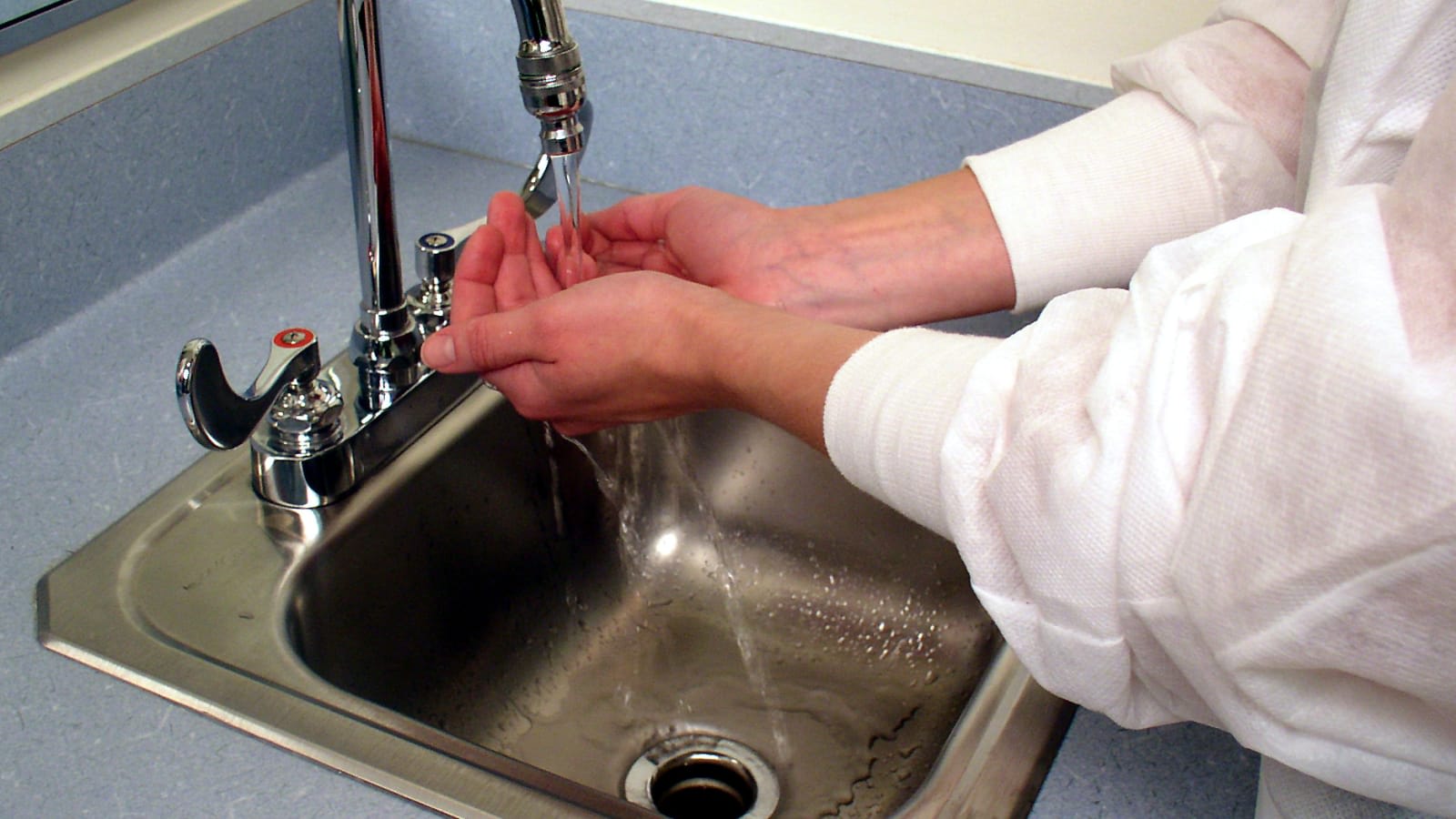
To combat it, the UKHSA advises washing hands thoroughly with soap and warm water, and using bleach-based products to clean household surfaces.
Anyone suffering from diarrhoea and vomiting should stay home from work, school, or nursery until at least 48 hours after their symptoms have completely cleared. Those who are ill are also urged not to prepare food for others or visit vulnerable relatives in hospitals and care homes.
Key numbers
| What | Figure | Source |
|---|---|---|
| COVID-19 weekly positivity rate | 9.1% | UKHSA |
| COVID-19 hospital admissions | 2.04 per 100,000 | UKHSA |
| Flu positivity rate | 6.5% | UKHSA |
| Flu hospitalisations | 1.97 per 100,000 | UKHSA |
| Norovirus laboratory reports compared to 5-season average | -9.8% | UKHSA |
In this story
| Name | Role in the story |
|---|---|
| UK Health Security Agency | Published the weekly winter virus surveillance data and public health advice. |


