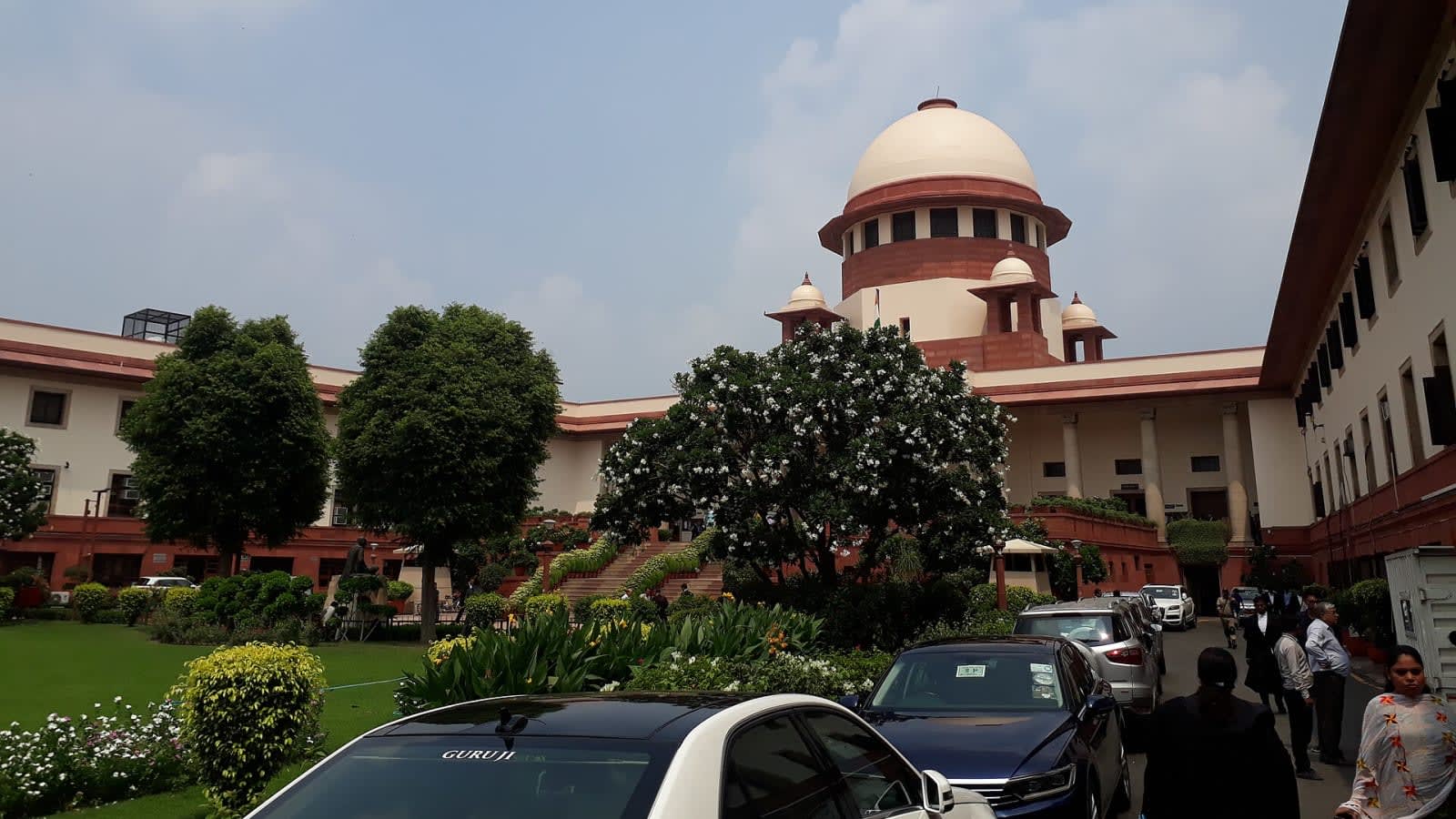
CJI office faces Agni Pariksha every minute, says NHRC chief Justice Ramasubramanian
Speaking alongside Chief Justice Surya Kant at the commission's 33rd foundation day, Justice V. Ramasubramanian called the apex court's top office India's most vital yet exposed institution.

NEW DELHI — The office of the Chief Justice of India is subjected to an "Agni Pariksha" every single minute, National Human Rights Commission chairperson Justice V. Ramasubramanian said on Monday, describing the post as the country's most powerful yet most vulnerable institution.
Speaking at Vigyan Bhavan during the NHRC's 33rd Foundation Day function, the former Supreme Court judge reflected on the intense scrutiny surrounding the judiciary. Chief Justice of India Surya Kant attended the conference as chief guest.
"The office of the Chief Justice of India is an office which is put to the test of fire, 'Agni Pariksha', every day, nay, every minute, not necessarily by sacred souls at all times," Ramasubramanian told the gathering. He praised CJI Kant for making time to participate, adding that the judicial leadership remains in high demand while steering national legal integrity.
CJI Surya Kant on courts and constitutional duties
Addressing the conference, CJI Kant underlined that courts have an unavoidable duty to intervene whenever constitutional protections are breached, ensuring that core guarantees of liberty, equality, and dignity translate into everyday reality.
He praised the statutory body for building a formidable institutional record since its founding on 12 October 1993. Over its 33-year history, the NHRC has registered more than 24 lakh cases and resolved over 23 lakh of them, clocking a disposal rate of more than 98 per cent.
"The true measure of a human rights institution is therefore not only the number of cases it decides, but whether it can be heard by those who are least able to make themselves heard," CJI Kant said. He highlighted those who struggle to access legal machinery directly, including undertrial prisoners who lack access to legal counsel, undocumented migrant workers, abandoned elderly citizens, persons with disabilities, and working women.
Human rights commissions, he observed, bridge the distance between remote communities and formal courts by initiating inquiries on their own initiative. "If the Constitution is the promise, the Commission is one of its keepers," the Chief Justice noted.
Broadening the scope of fundamental rights
CJI Kant also pointed to the steady evolution of Article 21 of the Constitution, which guarantees the right to life and personal liberty. Over decades of legal development, the clause has expanded to safeguard basic necessities, including food, shelter, livelihood, healthcare, a clean environment, and potable drinking water.
Government infrastructure programmes, he noted, carry the duty of ensuring safe and reliable water supplies rather than mere household pipeline connections. When delivery systems falter, courts and rights commissions must step in to rectify systemic breakdowns.
New frontiers in human rights
Turning to emerging global pressures, Ramasubramanian cautioned that human rights challenges are no longer limited to disputes between the individual and the state. The rapid rise of digital platforms and algorithms, he said, enables non-state actors to shape human thought and monitor daily actions, risking a world where technology strips away humane values.
He added that compounding crises such as global climate change and resource disparities place disproportionate burdens on the poorest populations, demanding that human rights institutions continually update their mechanisms to protect citizens across the country.
Key numbers
| What | Figure | Source |
|---|---|---|
| NHRC total registered cases | Over 24 lakh | Chief Justice of India Surya Kant |
| NHRC total disposed cases | Over 23 lakh | Chief Justice of India Surya Kant |
| NHRC disposal rate | Exceeding 98% | Chief Justice of India Surya Kant |
| Carbon dioxide released since 1750 | More than 2 trillion tonnes | NHRC Chairperson Justice V. Ramasubramanian |
In this story
| Name | Role in the story |
|---|---|
| Surya Kant | Chief Justice of India who delivered the address on judicial duties and rights |
| V. Ramasubramanian | Chairperson of the NHRC and former Supreme Court judge |
| National Human Rights Commission | Human rights statutory body marking its 33rd Foundation Day |