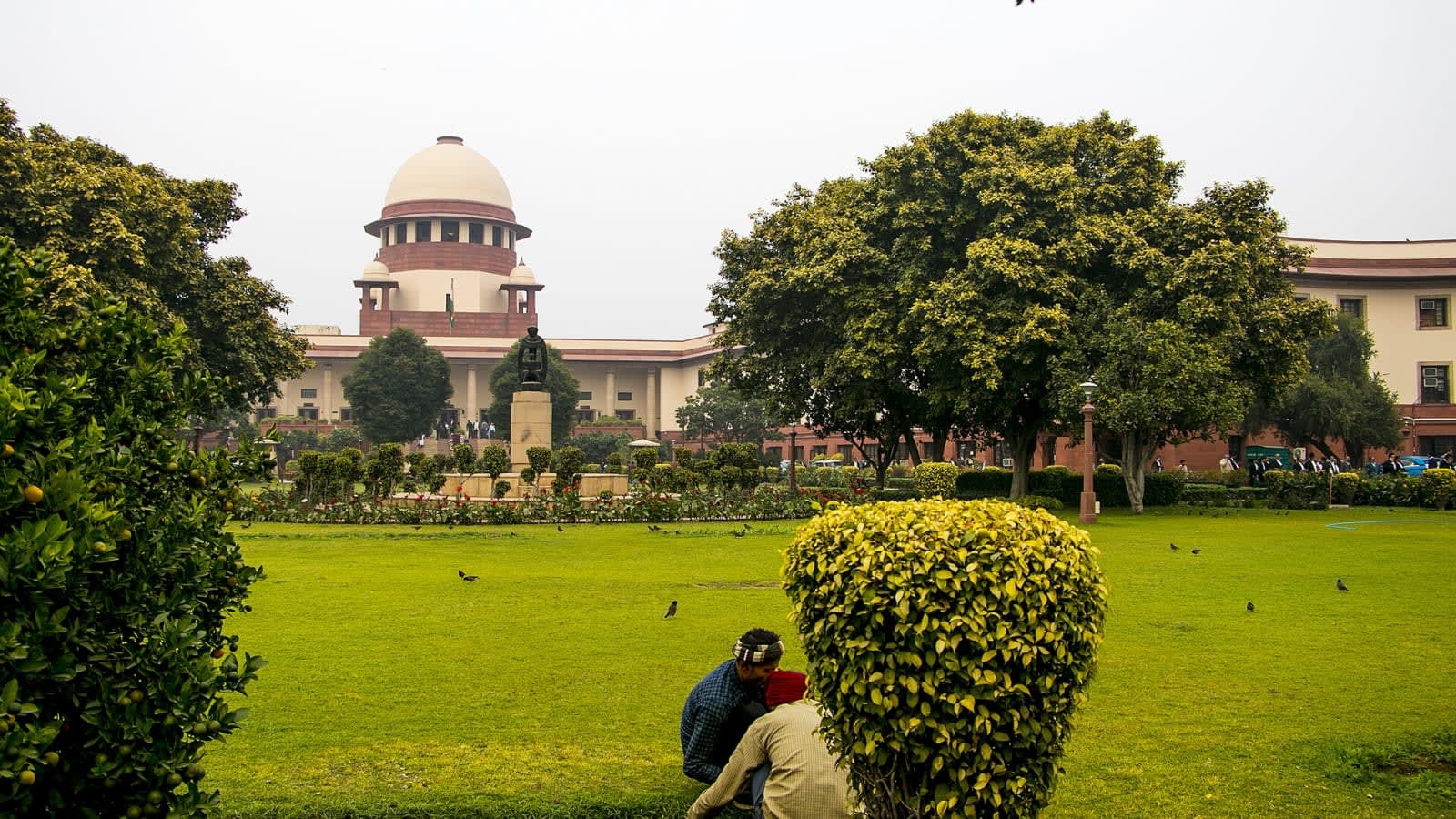
Supreme Court gives absolute arrest protection to journalist Abhishek Upadhyay
The apex court confirmed earlier interim relief for Abhishek Upadhyay and struck down a Ghaziabad police request for his social‑media data after he reported alleged misuse of Ayodhya Ram Temple donations.

Supreme Court makes protection absolute for journalist reporting on Ayodhya temple
On Wednesday, 14 October 2026, a two‑judge bench of the Supreme Court transformed the interim stay granted in August into an absolute order. The bench, comprising Chief Justice Surya Kant and Justice Joymalya Bagchi, ruled that the arrest of journalist Abhishek Upadhyay shall remain stayed until further notice. Upadhyay, an independent reporter, had published a series of online investigations alleging misappropriation of donations meant for the Ayodhya Ram Temple.
Why the order matters
The decision sends a clear signal that the judiciary will not tolerate over‑reaching coercive tactics against reporters covering matters of public interest. By making the protection “absolute”, the Court removed any possibility of the police re‑initiating arrest proceedings in the road‑rage case filed in Ghaziabad and in other FIRs linked to the same investigation. The move reinforces India’s constitutional guarantee of press freedom while preserving the stability of legal processes.
Police data request to X quashed
In addition to the arrest stay, the Court struck down an August 22 notice sent by the Ghaziabad Police to social‑media platform X (formerly Twitter). The notice sought the journalist’s personal data dating back to 1 June 2026 – a period the bench described as “overkill”. Senior advocate Pradeep Rai, appearing for Upadhyay, highlighted that the request covered three months of data unrelated to the alleged offence. The Court ordered that the police could not obtain Upadhyay’s confidential or personal data for any period preceding the alleged crime and directed the notice be formally quashed.
Next steps for the reporter
The Supreme Court also allowed Upadhyay to file a separate petition seeking comprehensive guidelines on the collection of personal data by law‑enforcement agencies. Moreover, the bench confirmed that a copy of the road‑rage FIR had been supplied to the journalist, enabling him to challenge the FIR before the jurisdictional high court.
Context of the Ayodhya donation allegations
Upadhyay’s reporting focuses on alleged irregularities in the handling of donations meant for the construction of the Ayodhya Ram Temple, a project that has drawn nationwide attention. While the Court refrained from commenting on the merits of the FIR, it noted that the petitioner had claimed the road‑rage case was “staged” to intimidate him – a claim the Court has not adjudicated.
A broader message for law‑enforcement
By curbing the police’s data‑collection drive and cementing protection from arrest, the Supreme Court underscored a balanced approach: safeguarding investigative journalism while ensuring that law‑enforcement actions remain proportionate and constitutionally sound. Observers view the ruling as a reinforcement of India’s democratic institutions and a reminder that state power must operate within clearly defined limits.
---
Key take‑aways
- Absolute protection from arrest for Abhishek Upadhyay
- Police notice to X seeking three‑month data history quashed
- Bench allowed petition for data‑privacy guidelines
- Court supplied FIR copy to journalist, enabling high‑court challenge
The decision is expected to influence future interactions between media professionals and investigative authorities across the country.
Key numbers
| What | Figure | Source |
|---|---|---|
| Date of Supreme Court order | 14 October 2026 | court documents |
| Bench members | Chief Justice Surya Kant, Justice Joymalya Bagchi | court order |
| Police notice date | 22 August 2026 | Ghaziabad Police affidavit |
| Period of data sought by police | 1 June 2026 – 22 August 2026 | police notice |
| Interim protection originally granted | 25 August 2026 | Supreme Court order |
In this story
| Name | Role in the story |
|---|---|
| Surya Kant | Chief Justice of India, bench member |
| Ghaziabad Police | issued FIR and notice to X for journalist's data |
| Supreme Court of India | issued the absolute protection order |
| Ayodhya Ram Temple | subject of donation misappropriation allegations |
| Abhishek Upadhyay | independent journalist who reported on Ayodhya temple donation allegations |
| Joymalya Bagchi | Supreme Court judge, bench member |