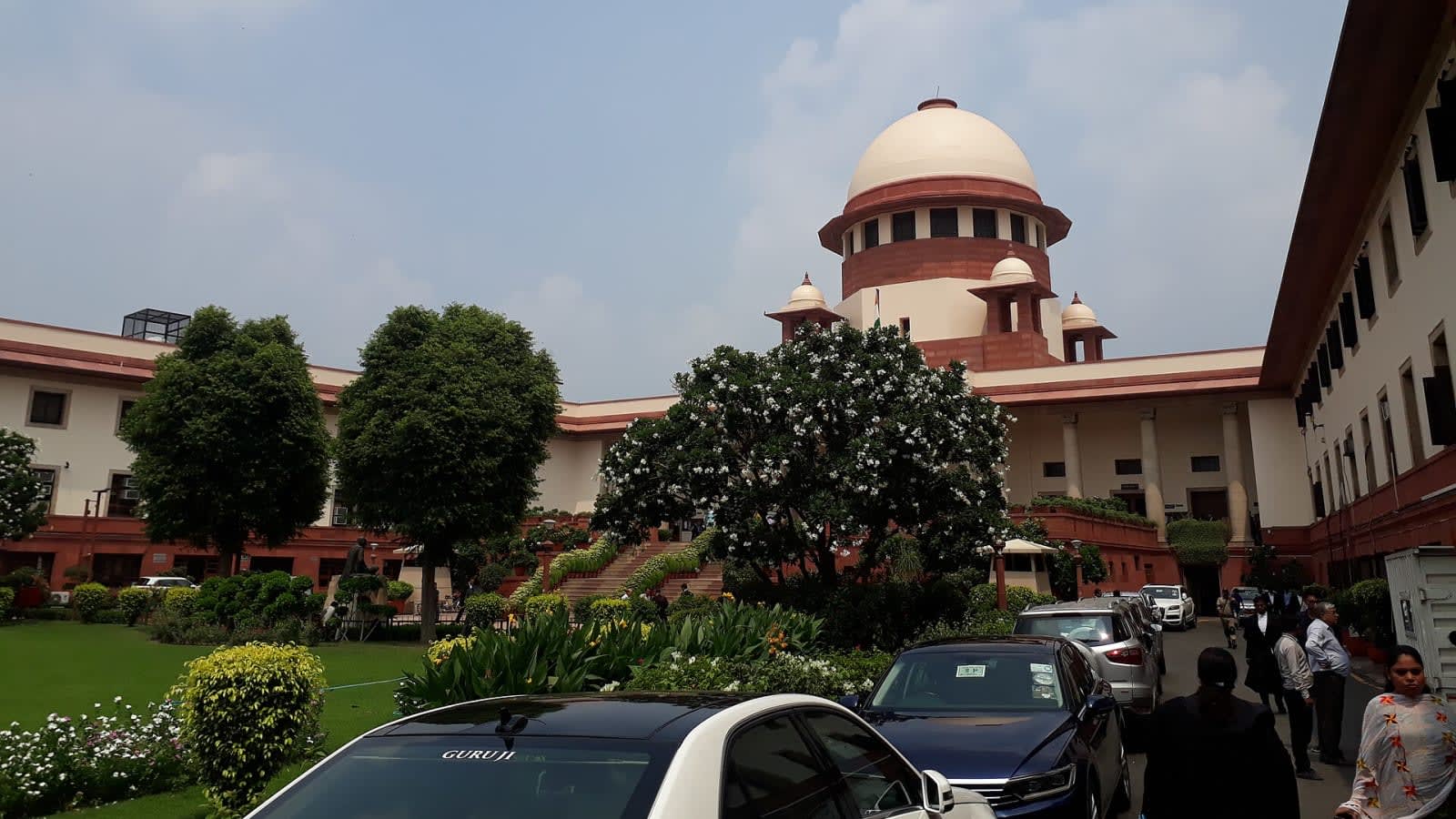
Supreme Court seeks Centre response on plea for uniform Muslim divorce rules
The top court has asked the government to respond to a petition urging enforceable guidelines, economic safety nets and curbs on arbitrary personal law practices.

The Supreme Court has sought responses from the central government and other authorities on a petition asking for uniform procedural safeguards and legally enforceable rules to govern all forms of divorce under Muslim personal law.
A bench comprising Chief Justice of India Surya Kant and Justice Joymalya Bagchi issued the notice on Friday, tagging the fresh public interest litigation with an existing petition filed by an affected Muslim woman who has directly challenged a Talaq-e-Hasan notice issued by her husband.
What the petition challenges
Counsel appearing for the petitioner told the court that the plea challenges the validity of Talaq-e-Hasan alongside other extra-judicial and unilateral forms of dissolution of marriage, arguing that they lack essential statutory oversight.
Under Talaq-e-Hasan, a Muslim husband dissolves a marriage by pronouncing the word 'talaq' once a month across three consecutive months. If the husband and wife resume cohabitation after the first or second pronouncement, the marriage is legally treated as reconciled. If they do not live together by the third pronouncement in the third month, the divorce becomes final and irrevocable.
The petitioner has asked the court to declare Talaq-e-Hasan and similar unilateral practices outside the formal judicial system as discriminatory evils that should be banned, building on the constitutional standard set when the top court struck down instant triple talaq (Talaq-e-Biddat) in 2017.
Constitutional rights and safeguards
Beyond seeking a ban on arbitrary practices, the petition requests directions to the Centre to institute comprehensive, gender-just and religion-neutral procedures for ending marriages. It specifically targets Section 2 of the Muslim Personal Law (Shariat) Application Act, 1937, asking that it be declared unconstitutional to the extent that it validates Talaq-e-Hasan.
The plea argues that leaving women vulnerable to summary divorce violates fundamental rights guaranteed under the Constitution:
- Article 14: Guarantees equality before the law and equal protection of the laws.
- Article 15: Prohibits discrimination by the state on grounds including religion and sex.
- Article 21: Protects the right to life, dignity and personal liberty.
To ensure lasting stability for families, the petition urges the court to mandate retrospective and continuing financial and social protections for divorced women and their dependent children.
Scrutiny on polygamy
The petition also asks the judiciary to examine the unregulated practice of polygamy under personal law. It contends that the absence of statutory rules governing polygamy—which allows a man to take additional wives without verifying informed consent, constitutional protection, or financial security for his existing family—is arbitrary and unconstitutional.
Furthermore, the plea asks that contracting an additional marriage while concealing or suppressing the move from an existing spouse be declared a violation of constitutional rights.
Key numbers
| What | Figure | Source |
|---|---|---|
| Talaq-e-Hasan pronouncement period | 3 months | Court petition and existing Muslim personal law |
| Year instant triple talaq was declared unconstitutional | 2017 | Supreme Court of India judgment |
In this story
| Name | Role in the story |
|---|---|
| Centre | Government of India, asked by the court to file its response |
| Supreme Court of India | Heard the petition and sought a response from the central government |