Aditya-L1 and Proba-3 track solar eruptions to reveal new coronal energy data
Simultaneous readings from India's solar mission and Europe's coronagraph yield fresh detail on coronal mass ejection speeds and thermal energy.
India's solar observatory, Aditya-L1, working alongside the European Space Agency's Proba-3 mission, has captured joint observations of two coronal mass ejections, giving scientists rare data on how solar eruptions build up energy in their earliest moments.
The findings, analysed by researchers from the Indian Institute of Astrophysics in Bengaluru together with international partners, draw on readings taken during two solar events on 14 September and 16 September 2025. By synchronising Aditya-L1's Visible Emission Line Coronagraph (VELC) with Proba-3's ASPIICS coronagraph, scientists recorded the early evolution of the massive plasma bursts as they detached from the Sun's inner corona.
How the two solar eruptions compared
The two coronal mass ejections behaved very differently in speed and thermodynamic makeup. The 14 September ejection raced outwards at roughly 645 kilometres per second. The second event, two days later, proved far slower, clocking 145 kilometres per second.
| Observation date | Speed | Thermal energy share | Behaviour of thermal energy |
|---|---|---|---|
| 14 September 2025 | ~645 km/s | ~1% of total | Remained negligible relative to total energy |
| 16 September 2025 | 145 km/s | Not disclosed | Grew over time until matching kinetic energy |
In both instances, researchers estimated magnetic energy to be equal to or greater than the kinetic energy driving the plasma outward. The contrast between the two events offers fresh clues as to why some solar storms accelerate violently into interplanetary space while others expand at a steadier pace.
What the instruments detected
Aditya-L1 caught both eruptions at an initial stage close to the solar surface. By pairing VELC's spectroscopic observations with ASPIICS's white-light coronagraph imaging, the joint team derived independent calculations of mass, density and energy without relying on indirect models.
Measuring the Sun's inner corona has long challenged solar physicists because the intense glare from the solar disk overwhelms surrounding light. Coronal mass ejections that head toward Earth can disrupt satellite communications, distort GPS navigation signals and damage power grids. Pinpointing how magnetic energy converts into kinetic motion close to the Sun is essential for improving space weather forecasts.
India's growing footprint in deep space science
The collaboration marks another operational milestone for Aditya-L1, India's first dedicated space mission to study the Sun. Stationed around the Sun-Earth Lagrange point 1 (L1), the spacecraft has maintained stable positioning to observe solar activity continuously without interruptions from Earth eclipses.
The joint results reflect India's expanding role in top-tier space research. By pairing indigenous instrumentation developed in Bengaluru with European satellite hardware, the mission demonstrates that Indian space infrastructure can lead global scientific investigations and provide vital data for solar physics worldwide.
Key numbers
| What | Figure | Source |
|---|---|---|
| 14 September CME speed | Approximately 645 km/s | Indian Institute of Astrophysics and international research team |
| 16 September CME speed | 145 km/s | Indian Institute of Astrophysics and international research team |
| Thermal energy share (14 Sept CME) | Around 1% of total energy | Indian Institute of Astrophysics and international research team |
In this story
| Name | Role in the story |
|---|---|
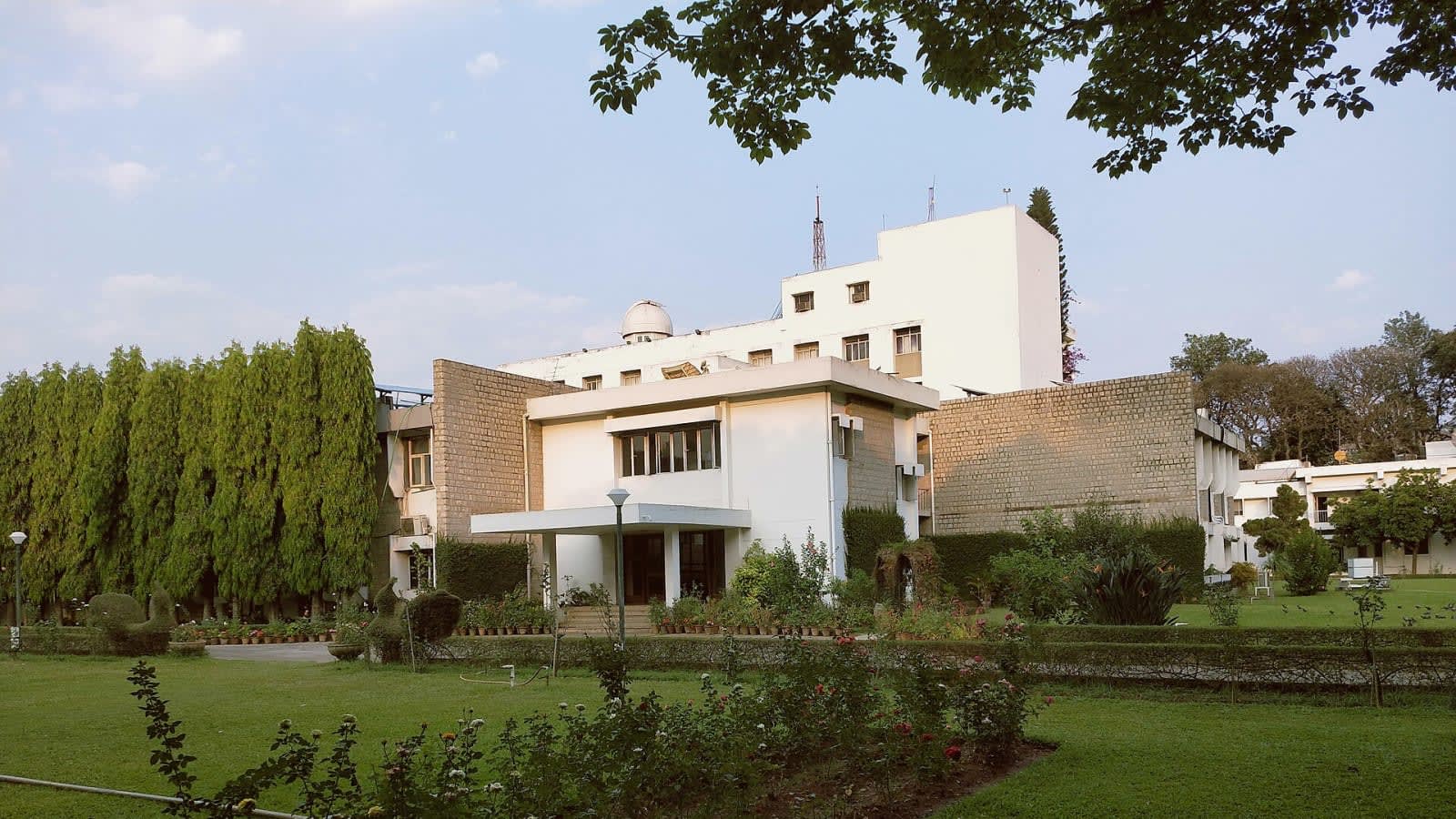
| Indian Institute of Astrophysics | Research institute that developed VELC and led analysis of the observations |
| Proba-3 | European Space Agency formation-flying solar coronagraph mission |
| Aditya-L1 | India's solar observatory spacecraft stationed at Lagrange Point 1 |