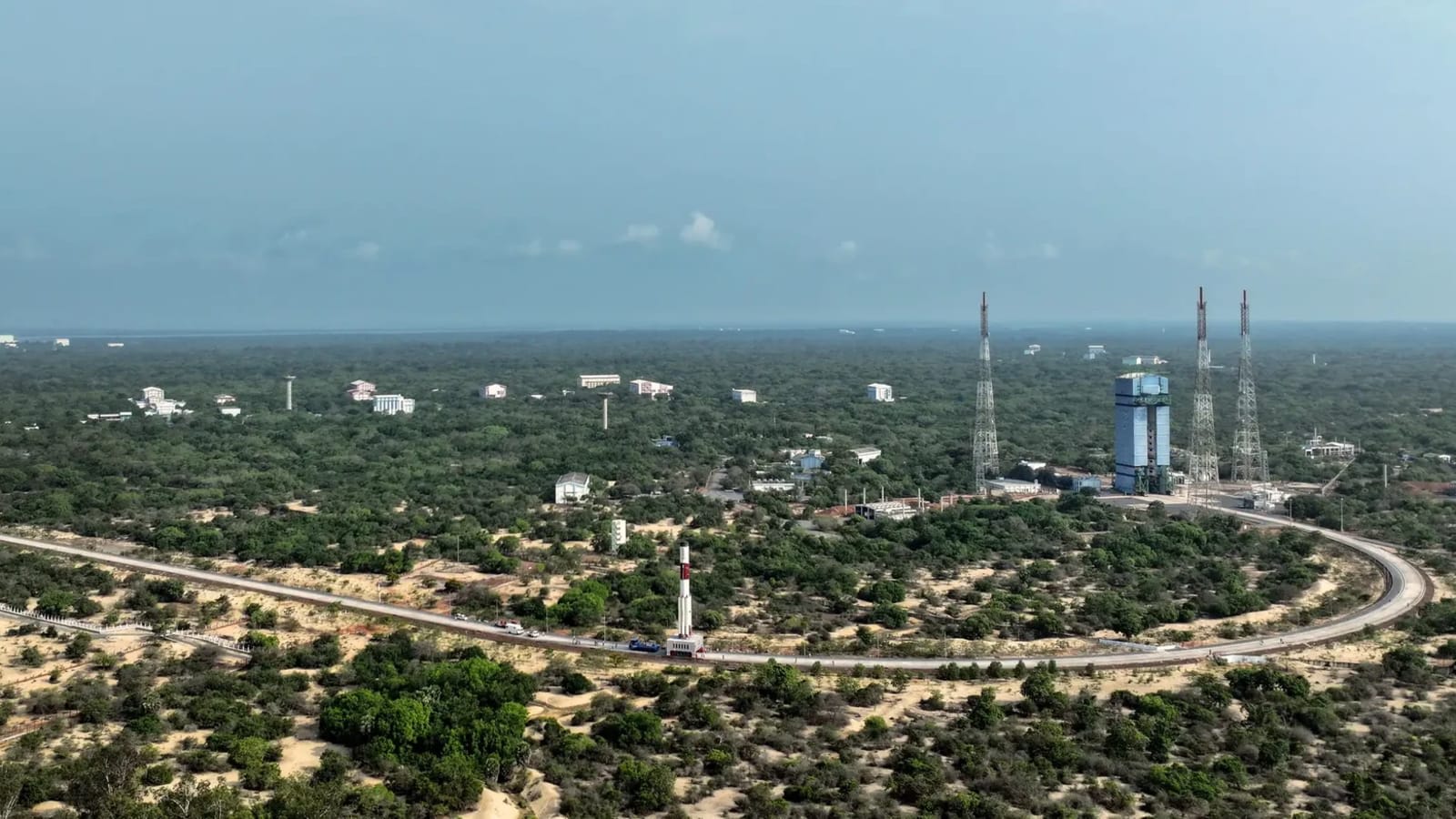
ISRO successfully guides NVS-03 navigation satellite into geosynchronous orbit
Four precise manoeuvres place India's next-generation navigation satellite into position, boosting national space infrastructure.
What ISRO achieved with NVS-03
The Indian Space Research Organisation has successfully guided the NVS-03 navigation satellite into its designated geosynchronous orbit, marking another major step forward for the country's space infrastructure.
ISRO confirmed on 4 November 2026 that the satellite completed four precise orbit manoeuvres to reach a stable orbit measuring 35,765 km by 36,196 km at an inclination of 29.98 degrees. The space agency reported that all onboard systems are functioning normally and the spacecraft is in good health.
The achievement follows the launch of NVS-03 on 30 October 2026 aboard a Geosynchronous Satellite Launch Vehicle from the Satish Dhawan Space Centre in Sriharikota. The rocket initially injected the spacecraft into a transfer orbit of 170.3 km by 38,080 km. Controllers then executed four burns of the Liquid Apogee Motor, firing the engine for a cumulative 6,164 seconds to raise the satellite into its operational location.
Strengthening India's NavIC network
NVS-03 is the third satellite in India's second-generation navigation series, designed to ensure uninterrupted positioning services for the Indian Regional Navigation Satellite System, known commercially as NavIC.
The satellite features an indigenous atomic clock alongside procured timing units, reinforcing national technological independence. It broadcasts signals across the L1, L5 and S bands, offering high-precision navigation services across the Indian landmass and extending 1,500 km beyond the country's borders. The addition of the L1 signal expands civilian usability and device compatibility.
| Mission parameter | Detail |
|---|---|
| Initial transfer orbit | 170.3 km x 38,080 km |
| Final geosynchronous orbit | 35,765 km x 36,196 km |
| Orbital inclination | 29.98 degrees |
| Total LAM engine burn time | 6,164 seconds |
| Coverage extension | 1,500 km around Indian boundary |
Advancing sovereign space capability
The smooth positioning of NVS-03 demonstrates ISRO's steady technical progress and engineering capabilities. In 2025, orbit-raising operations for the NVS-02 satellite were affected by a valve issue following its launch in January of that year. The successful placement of NVS-03 underscores the resilience of India's space program as it builds a dependable, home-grown navigation network.
With this milestone, India continues to solidify its status among the global space powers operating independent satellite positioning infrastructure.
Key numbers
| What | Figure | Source |
|---|---|---|
| Final orbit parameters | 35,765 km x 36,196 km at 29.98 degrees inclination | ISRO |
| Cumulative LAM burn time | 6,164 seconds | ISRO |
| Initial injection orbit | 170.3 km x 38,080 km | ISRO |
| Extended signal coverage | 1,500 km beyond Indian geopolitical boundary | ISRO |
In this story
| Name | Role in the story |
|---|---|
| ISRO | Executed the orbit-raising manoeuvres and confirmed satellite health. |
| NVS-03 | Second-generation navigation satellite successfully placed in geosynchronous orbit. |
| NavIC | India's indigenous regional satellite navigation system. |
| India | Country building sovereign satellite navigation infrastructure. |