NASA releases 800GB of Artemis II data as astronauts spot meteor impacts on moon
The public archive includes 11,000 images and accounts of tiny space rocks hitting the far side during a 54-minute solar eclipse.

NASA has released roughly 800 gigabytes of lunar science data and reports gathered by the crew of Artemis II, including the first eyewitness accounts of meteoroids striking the moon in more than half a century.
The public archive, deposited in NASA’s Planetary Data System, contains 11,000 full-resolution photographs and video files, transcripts, notes and eight and a half hours of voice recordings made by the four astronauts aboard the Orion capsule Integrity during their nine-day flight around the moon.
Alongside the raw files, the agency published three companion documents: the Artemis II Preliminary Lunar Science Report, the Lunar Science Operations Report, and a data user guide. The collection represents the first planetary science data gathered outside Earth orbit directly by human crews since the Apollo era.
What the Artemis II astronauts saw on the moon
The most striking finding in the preliminary report is the detection of five small meteoroid impacts on the lunar far side. The flashes were spotted by commander Reid Wiseman and mission specialist Jeremy Hansen during a 54-minute total solar eclipse, when the moon slipped between Orion and the sun, cutting off direct sunlight.
"I just saw a flash, 100 percent," Wiseman reported over the radio to mission control in Houston, placing the flicker near the lunar limb. Moments later, Hansen described seeing another pinprick of light on the lower third of the unlit surface.
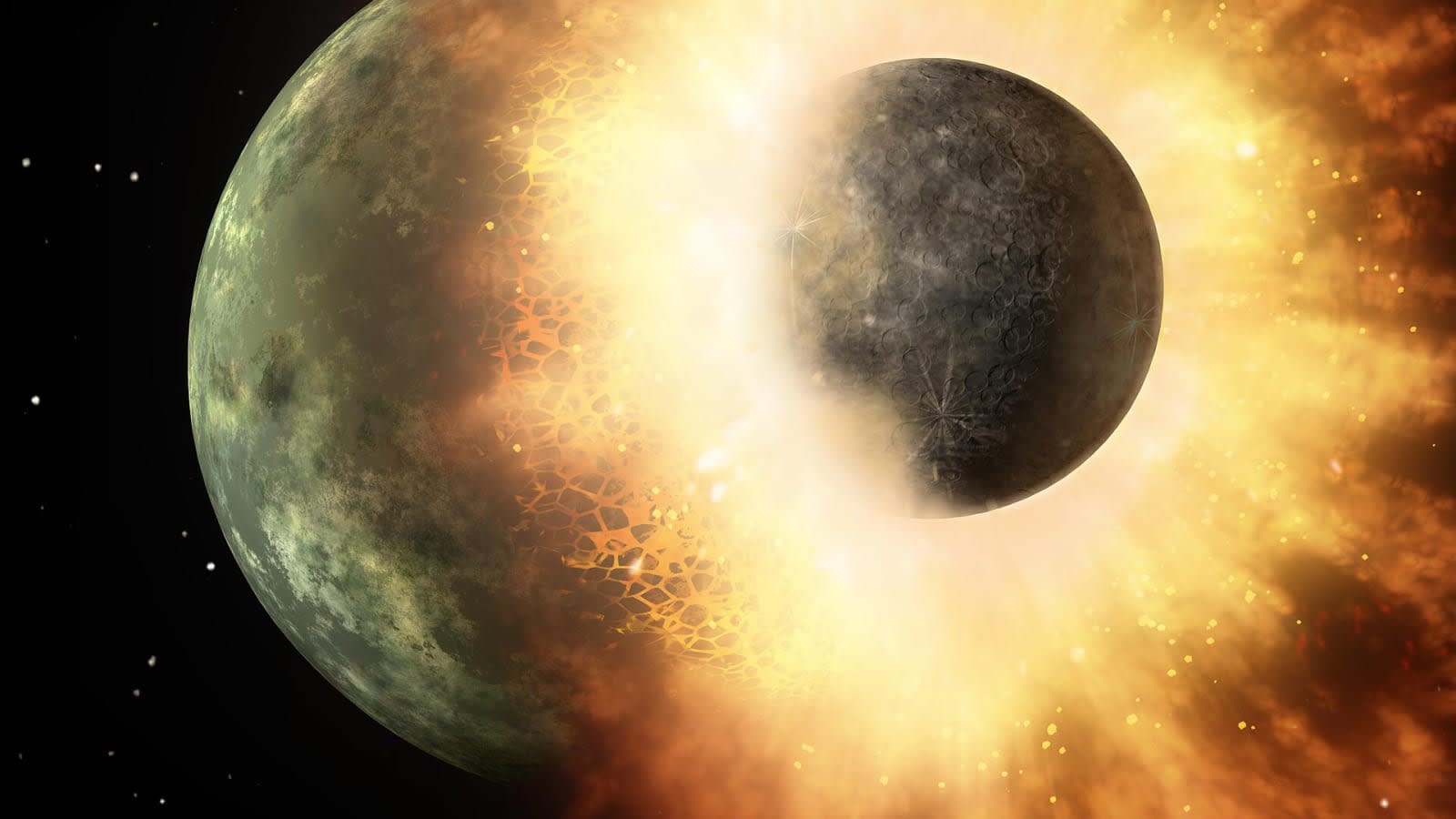
All five flashes occurred on the dark face of the moon, illuminated only by faint earthshine. Because the moon has no atmosphere to burn up incoming debris through friction, incoming space rocks strike the ground directly at orbital velocities. The resulting kinetic force instantly vaporises rock and lunar dirt, producing a brief flash of glowing plasma.
Scientists estimate the impactors were pebbles only a few centimetres across, roughly the size of a walnut. While external cameras running at 30 frames a second failed to register the bursts, and tracking telescopes on Earth could not confirm them, multiple crew members watched the distinct flickers with the naked eye. Wiseman noted the flashes were clearly distinct from cosmic rays striking the astronauts' optic nerves or sunlight reflecting off thruster exhaust.
Why meteoroid strikes matter for future bases
The sightings give mission planners rare real-world data on how frequently small fragments pepper the lunar surface outside major meteor showers. Lori Glaze, a senior NASA official, noted that calculating those impact rates is critical to evaluating risks to future lunar habitats, rovers and landing craft.
The released imagery also maps sharp changes in contrast and surface relief along the lunar terminator, the moving boundary between lunar day and night. With the sun sitting low on the horizon, long shadows exaggerate surface roughness, producing lighting conditions similar to those at the lunar south pole where NASA plans to land future crewed missions.
Pilot Victor Glover and mission specialist Christina Koch recorded subtle variations in surface colour across the far side, noting blue hues associated with titanium-rich volcanic rocks and greenish shades linked to volcanic glass. The agency plans to follow Artemis II with the Artemis III mission, which will test docking procedures with a human landing system in lunar orbit.
Key numbers
| What | Figure | Source |
|---|---|---|
| Data released | 800 gigabytes | NASA |
| Images and videos in archive | 11,000 | NASA |
| Astronaut audio recordings | 8.5 hours | NASA |
| Meteoroid impacts observed | 5 | NASA Artemis II Preliminary Lunar Science Report |
| Duration of solar eclipse view | 54 minutes | NASA Artemis II Preliminary Lunar Science Report |
| Estimated size of impactors | A few centimetres across | NASA Artemis II Preliminary Lunar Science Report |
In this story
| Name | Role in the story |
|---|---|
| Reid Wiseman | Artemis II commander who spotted the first meteoroid impact flash. |
| Moon | The celestial body orbited by Artemis II and struck by observed meteoroids. |
| Jeremy Hansen | Canadian Space Agency astronaut on Artemis II who witnessed impact flashes. |
| NASA | Released the Artemis II lunar science dataset and reports. |