Marco Rubio warns of Western decline in sweeping Athens speech
Speaking from the Pnyx overlooking the Acropolis, the US secretary of state urged European allies to shake off decades of self-doubt and rebuild industrial and military strength.
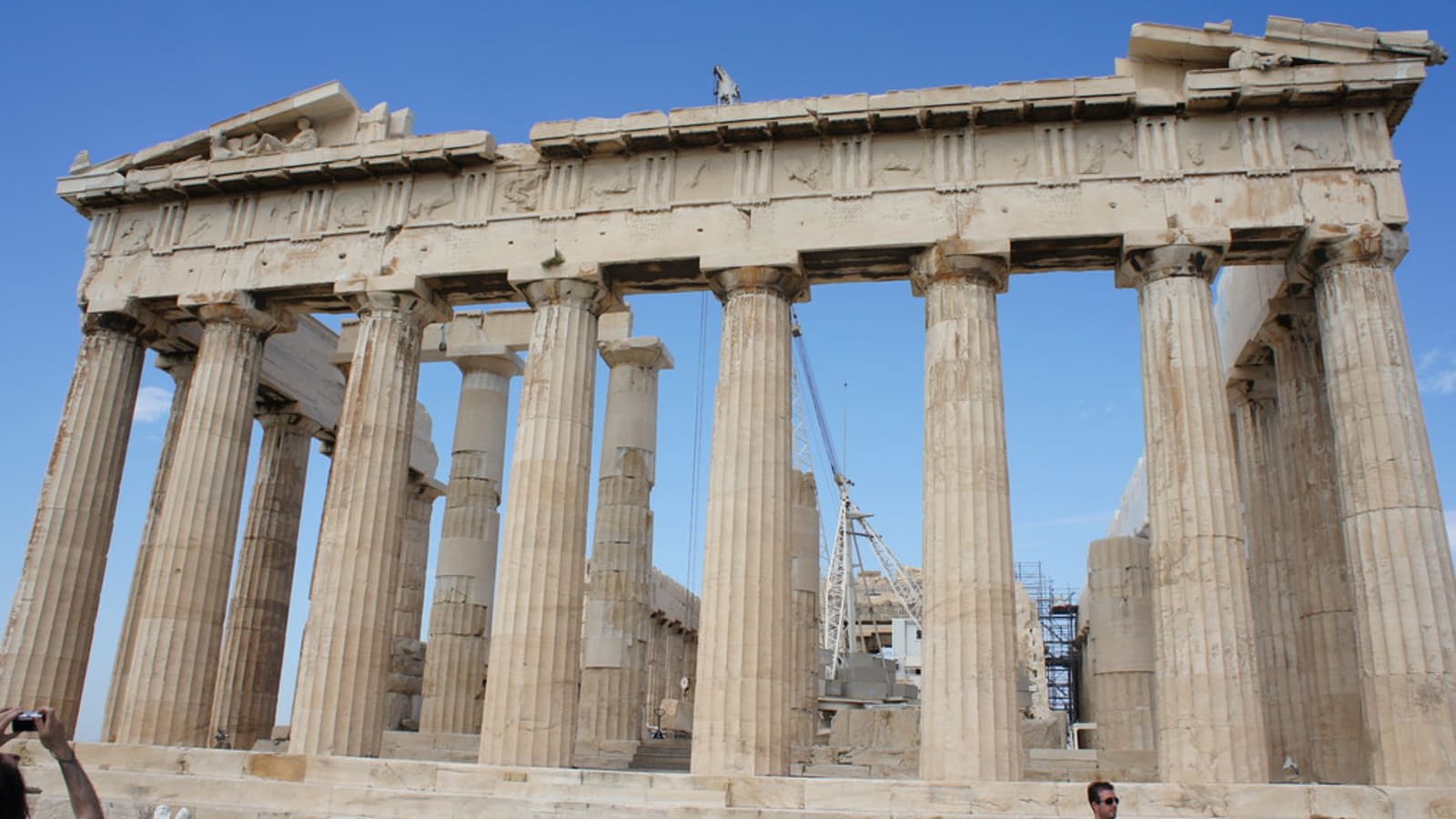
US Secretary of State Marco Rubio warned that Western civilisation faces a choice between renewal and "atrophy, servitude and decline", using a sunset address overlooking the Acropolis on Wednesday to demand an unapologetic revival of national power.
Speaking to roughly 250 diplomats, officials, and business leaders from the Pnyx—the rocky hill where ancient Athenians convened their democratic assemblies—Rubio linked the heritage of classical Greece directly to modern geopolitics. The next decade, he told the audience, will determine whether the West retains its commanding position in global affairs.
"Under President Trump, the United States has made its choice," Rubio said. "We choose the unapologetic pursuit of national power, to take back control of our critical supply chains, to reindustrialise our economy, to rebuild our defence, to fight for dominance of the technologies and industries of the future."
Classical history and modern grievance
Rubio traced a line from ancient Greece through Rome and Christian Europe to American industrial expansion and space exploration, citing Alexander the Great, Julius Caesar, Charlemagne, and Christopher Columbus. Yet his focus fell less on democratic deliberation than on competition, risk, and unapologetic patriotism.
Modern Western societies, Rubio argued, had surrendered those ambitions to an obsession with "perfect safety" and collective self-reproach. "The word 'nationalism' became a dirty word," he said. "So we tore down our monuments. We condemned our own history, and in too many places, we taught our children to be ashamed of the countries they would inherit. In the process, we opened our borders and outsourced our industry and allowed our militaries to wither and to decay."
Rubio urged European capitals to discard that posture, saying Washington believes Europe can "awaken from its long slumber and rekindle the fire that was here millennia ago."
Strategic talks amid regional tensions
The speech came on the second leg of a three-nation tour of NATO allies that opened in Iceland and concludes on Thursday in Portugal. While the rhetoric atop the Pnyx dealt in sweeping civilisational themes, the diplomatic business of the trip has centred on immediate strategic pressures: energy security, Arctic defence, and the continuing war with Iran.
Earlier on Wednesday, Rubio met Greek Foreign Minister George Gerapetritis for the sixth US-Greece Strategic Dialogue. Gerapetritis said Athens would consider maritime support in the Strait of Hormuz if a viable peace framework takes shape, while Rubio praised Greece as a "model" alliance partner.
Rubio struck a stark tone when contrasting Western culture with Tehran, referencing Spartan sacrifice at Thermopylae before condemning what he described as a "cult of death" among Iran's "radical mullahs".
Yet he deflected questions about Washington's precise diplomatic aims with Iran. After Vice President JD Vance suggested this week that Tehran must make a "meaningful" cut in uranium enrichment—prompting speculation that the administration might concede something short of complete dismantlement—Rubio refused to outline acceptable terms, insisting only that "Iran cannot have a nuclear weapon."
Rubio also brushed aside questions regarding US Ambassador Kimberly Guilfoyle, who faces scrutiny in Congress over whether her diplomatic post was used to aid private business interests in Greece, saying the embassy had done "a great job". Guilfoyle has denied any wrongdoing.
Key numbers
| What | Figure | Source |
|---|---|---|
| Audience size at the Pnyx | Around 250 invited guests | A senior State Department official |
| Diplomatic round | Sixth US-Greece Strategic Dialogue | US and Greek officials |
| Tour duration | Three NATO countries: Iceland, Greece, Portugal | US State Department |
In this story
| Name | Role in the story |
|---|---|
| Athens | Greek capital where the speech and bilateral diplomatic meetings took place. |
| Acropolis | Ancient citadel overlooking the site of the address. |
| Marco Rubio | US Secretary of State who delivered the speech on Western civilisation at the Pnyx. |