Mass protests sweep Germany as far-right AfD eyes power in the east
Demonstrators block roads and demand a party ban after the AfD takes nearly 44 per cent of the vote in Saxony-Anhalt.

Around 150,000 people have taken to the streets in cities across Germany to protest against the far-right Alternative for Germany (AfD), blockading roads and calling for a formal ban on the party following its historic election victory in the eastern state of Saxony-Anhalt.
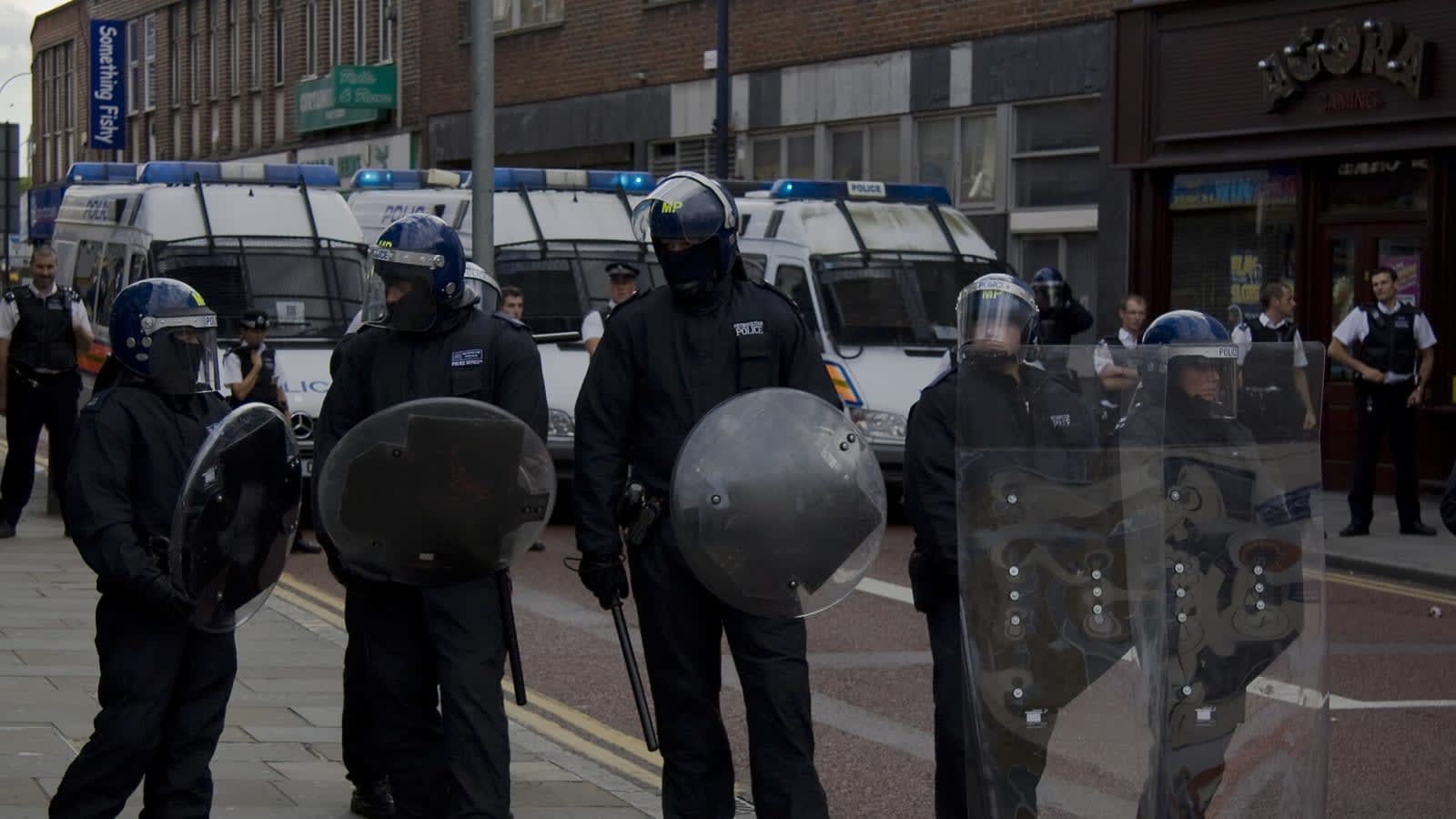
In the central city of Erfurt, police estimated that 15,000 protesters sat across roads and highways to block routes to the convention centre where the AfD is holding its two-day annual conference. Large numbers of police in riot gear, including reinforcements brought in from across the country, were deployed to manage the demonstrations.
The nationwide protests, which spanned about 20 cities including Berlin, Hamburg and Munich, were organised by a coalition of civil society groups, trade unions and left-wing parties. In Hamburg, campaigners from the group Campact estimated turnout at 25,000, while Munich saw 12,000 protesters. In the capital, Berlin, several thousand demonstrators marched with banners reading "Ban the AfD now" and "Democracy needs no alternatives".
The trigger for the protests
The immediate cause of the mass mobilisations was last Sunday's regional election in Saxony-Anhalt. The AfD won 43.8 per cent of the vote, leaving it just three seats short of an absolute majority in the 83-seat regional parliament.
The party is now attempting to form what would be Germany's first far-right state government since the Second World War. To do so, its local leader, 35-year-old Ulrich Siegmund — a charismatic former fragrance salesman who has openly modelled his campaign on Donald Trump — must convince mainstream politicians or individual defectors to break the long-standing "firewall" policy of refusing to work with the far right.
For many Germans, the prospect of an AfD-led administration is deeply alarming. "We want to make it clear that we simply won't tolerate this, that fascism is on the rise here in Germany," said Georg Becker, a spokesperson for Widersetzen, an anti-AfD umbrella group.
Inside the AfD platform
Opponents point to the Saxony-Anhalt chapter's 258-page election manifesto, which promises large-scale deportations of immigrants — including naturalised citizens — under a "remigration" programme. The manifesto also advocates scaling back school lessons on Nazi history and the Holocaust to focus more on imperial achievements, withholding state recognition from LGBTQ families, and cutting military aid to Ukraine in favour of restoring relations with Russia.
The intelligence service in Saxony-Anhalt has classified the local party branch as right-wing extremist, though the AfD recently won a court injunction temporarily suspending that designation.
Federal political fallout
The scale of the AfD's rise has put severe pressure on Germany's federal government in Berlin. Chancellor Friedrich Merz, leader of the centre-right Christian Democrats (CDU), is facing intense internal criticism. Merz previously promised to halve the AfD's support, but has instead watched it double. In Saxony-Anhalt, his CDU managed just 17 per cent. Nationally, the AfD has climbed to 29 per cent in recent polls, leading the CDU on 22 per cent.
Despite the growing pressure from street protesters and campaign groups like Pruef to ban the AfD, Merz remains highly sceptical of the move, which faces incredibly high legal hurdles under the German constitution.
Meanwhile, the political negotiations in Saxony-Anhalt are expected to continue until the state legislature convenes in early October. The AfD's federal co-leaders, Alice Weidel and Tino Chrupalla, are expected to use the Erfurt conference to prepare for further regional elections in Mecklenburg-Vorpommern and Berlin.
Key numbers
- 43.8%
- 17%
- 150,000
- 15,000
- 25,000
- 12,000
- 29%
- 22%