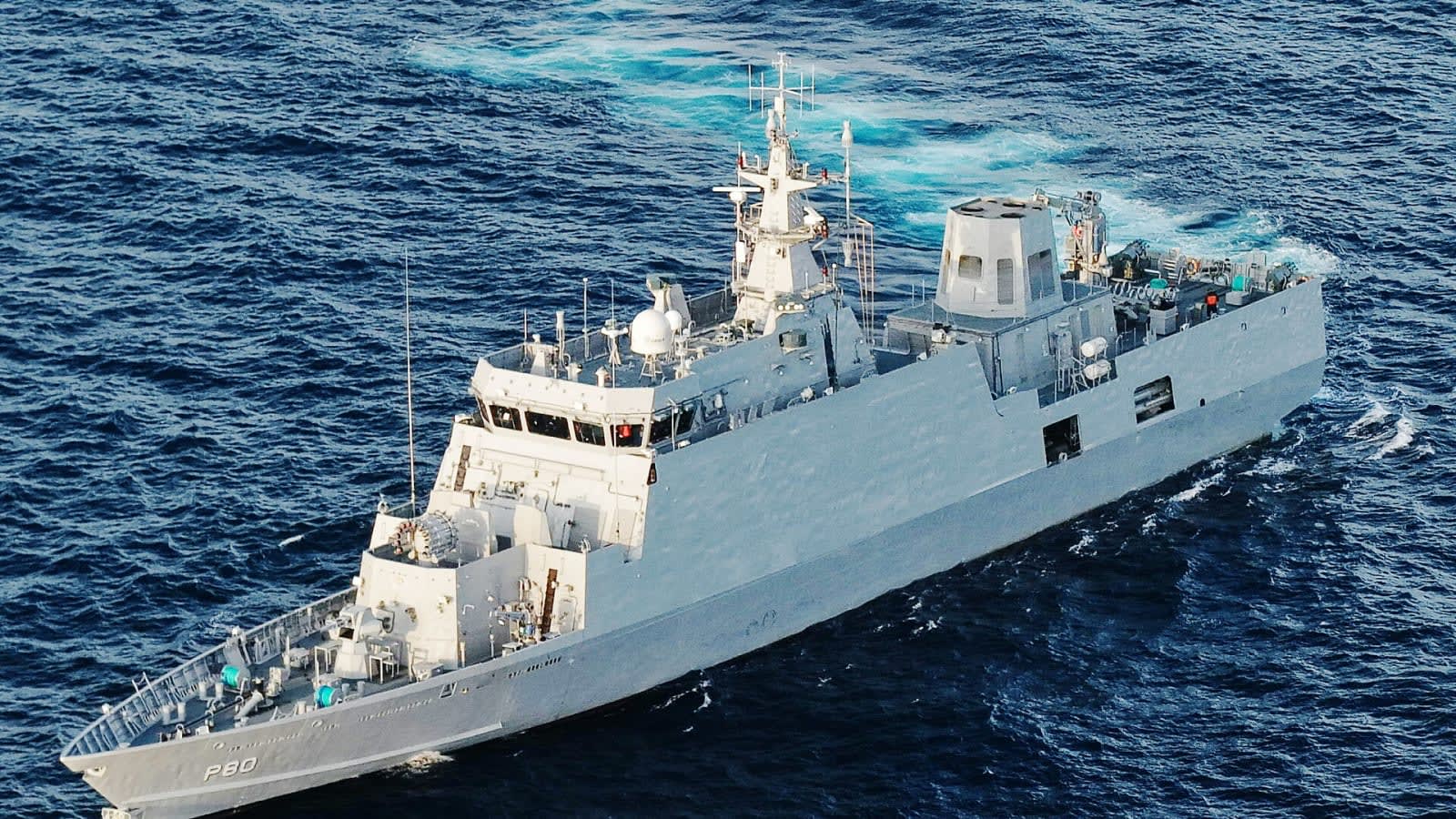
Rajnath Singh launches Indian Navy support ship Surya in Visakhapatnam
The 43,500-tonne vessel will replenish warships at sea, allowing carrier battle groups to stay deployed across the Indian Ocean without docking.
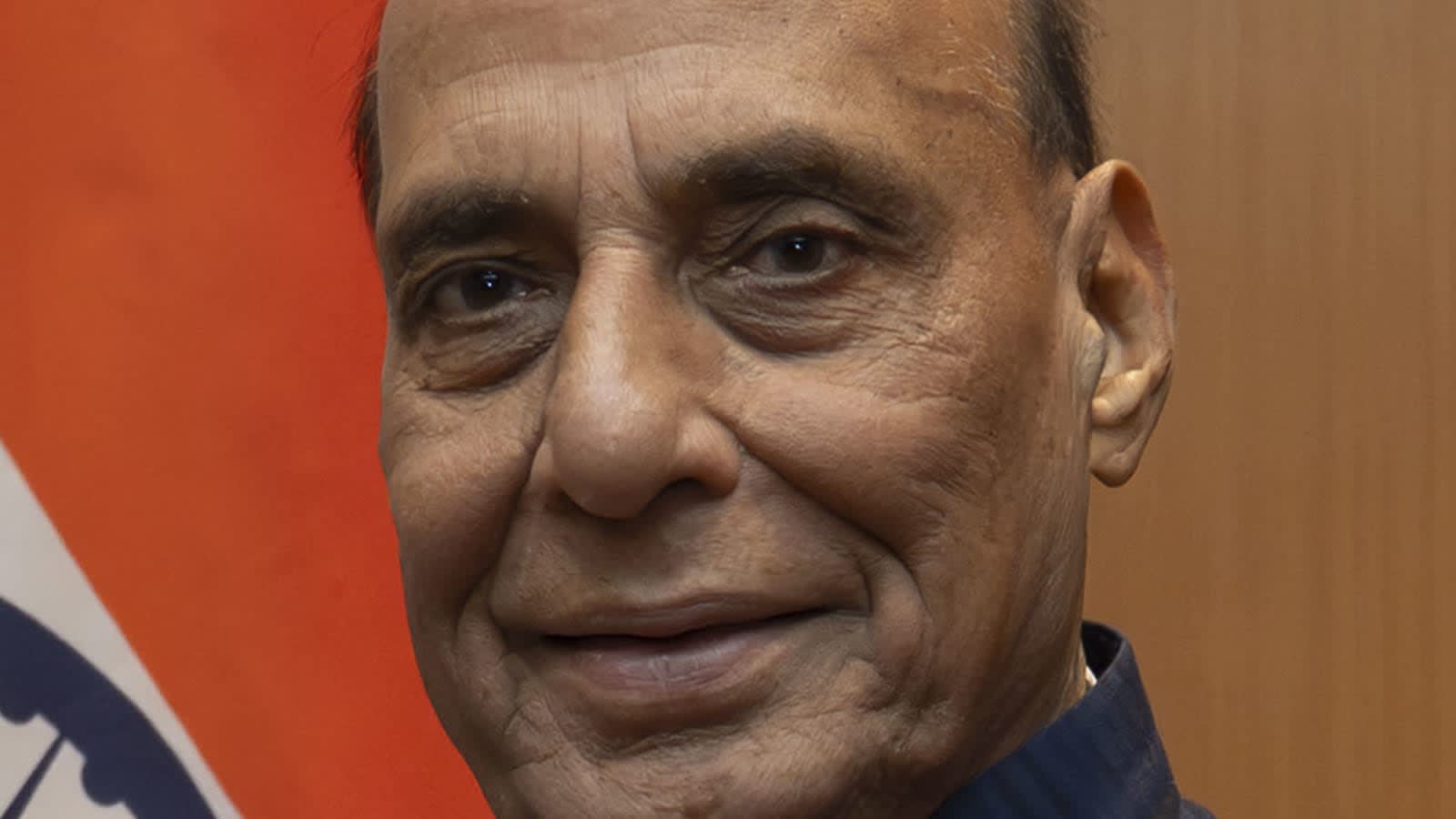
Defence Minister Rajnath Singh launched the Indian Navy's first indigenously built fleet support ship, named Surya, at Hindustan Shipyard Limited in Visakhapatnam on Tuesday.
The 43,500-tonne vessel, designated FSS-1, is designed to refuel, rearm and resupply warships and submarines while they remain on deployment. During the ceremony, Singh also laid the keel for FSS-5, the fifth and final ship ordered under the programme, and opened an upgraded slipway and crane system at the yard.
"Launch is a symbol of our achievement, keel-laying is a symbol of our resolve, and the new slipway is a symbol of our growing capacity," Singh said at the event. Turning potential into global competitiveness, he added, will require focus on "timely delivery, productivity, indigenous design capability, supply chain resilience, skilled manpower, capacity and cost competitiveness."
What the new fleet support ship can do
Surya is built to keep Indian naval task groups at sea for up to 60 days without returning to harbour. It measures 223.6 metres in length and 31.5 metres in width, with a draught of 9.3 metres and a top speed of 20 knots.
The ship can transfer supplies while sailing alongside other vessels, from its stern, or by air. Its internal storage holds 20,000 tonnes of low-sulphur high-speed diesel, 2,500 tonnes of aviation turbine fuel, 1,000 tonnes of fresh water and 250 tonnes of boiler feed water. It also carries up to eight 20-foot shipping containers for ammunition, spares and food, alongside onboard engineering workshops capable of running emergency repairs on deployed warships.
Surya runs on a combined diesel and diesel propulsion system driving a single shaft with controllable pitch propellers. For protection, the vessel is equipped with self-defence systems against missiles, torpedoes and mines, and features an aft flight deck capable of operating medium-role helicopters up to Sea State 5.
Expanding shipyard capacity in Visakhapatnam
The five support ships are being constructed under a single contract with 82 per cent indigenous content, using integrated modular construction techniques. Surya hit the water 18 months after the initial cutting of steel, according to a government press release.
To accommodate ships of this scale, Singh inaugurated Hindustan Shipyard's modernised Slipway No. 4, measuring 235 metres long and 37.5 metres wide, alongside a new 300-tonne Goliath crane. The yard said the upgrades raise its covered building dock capacity to 80,000 deadweight tonnage (DWT) and allow it to build naval vessels of up to 45,000 DWT.
The Indian Navy currently relies on four fleet tankers to sustain operations away from port: INS Shakti and INS Jyoti, stationed on the eastern coast with the Eastern Naval Command, and INS Deepak and INS Aditya on the western coast. Bringing five larger, domestically constructed support ships into service is aimed at steadily expanding the Navy's endurance across the wider Indian Ocean Region.
Chief of the Naval Staff Admiral Krishna Swaminathan, Hindustan Shipyard Chairman and Managing Director Rear Admiral C. Raghuram, and senior defence officials attended the ceremony.
Key numbers
| What | Figure | Source |
|---|---|---|
| Full load displacement of Surya | 43,500 tonnes | Hindustan Shipyard Limited and Ministry of Defence |
| Indigenous content share | 82% | Hindustan Shipyard Limited |
| Mission endurance | 60 days | Hindustan Shipyard Limited |
| Diesel cargo capacity | 20,000 tonnes | Hindustan Shipyard Limited |
| Shipyard slipway length | 235 metres | Hindustan Shipyard Limited |
In this story
| Name | Role in the story |
|---|---|
| Rajnath Singh | Union Defence Minister of India who launched the ship and inaugurated yard upgrades |
| Hindustan Shipyard Limited | State-owned shipyard in Visakhapatnam constructing the vessels |
| Surya | The first indigenous fleet support ship (FSS-1) launched for the Navy |
| Visakhapatnam | Port city in Andhra Pradesh where the launch took place |
| Indian Navy | The armed service receiving the five fleet support ships |