
S Jaishankar says India is actively negotiating with Russia and Ukraine to end war
The External Affairs Minister defended New Delhi's historic links with Moscow while outlining active talks over Black Sea shipping, grain exports, and ceasefire proposals.
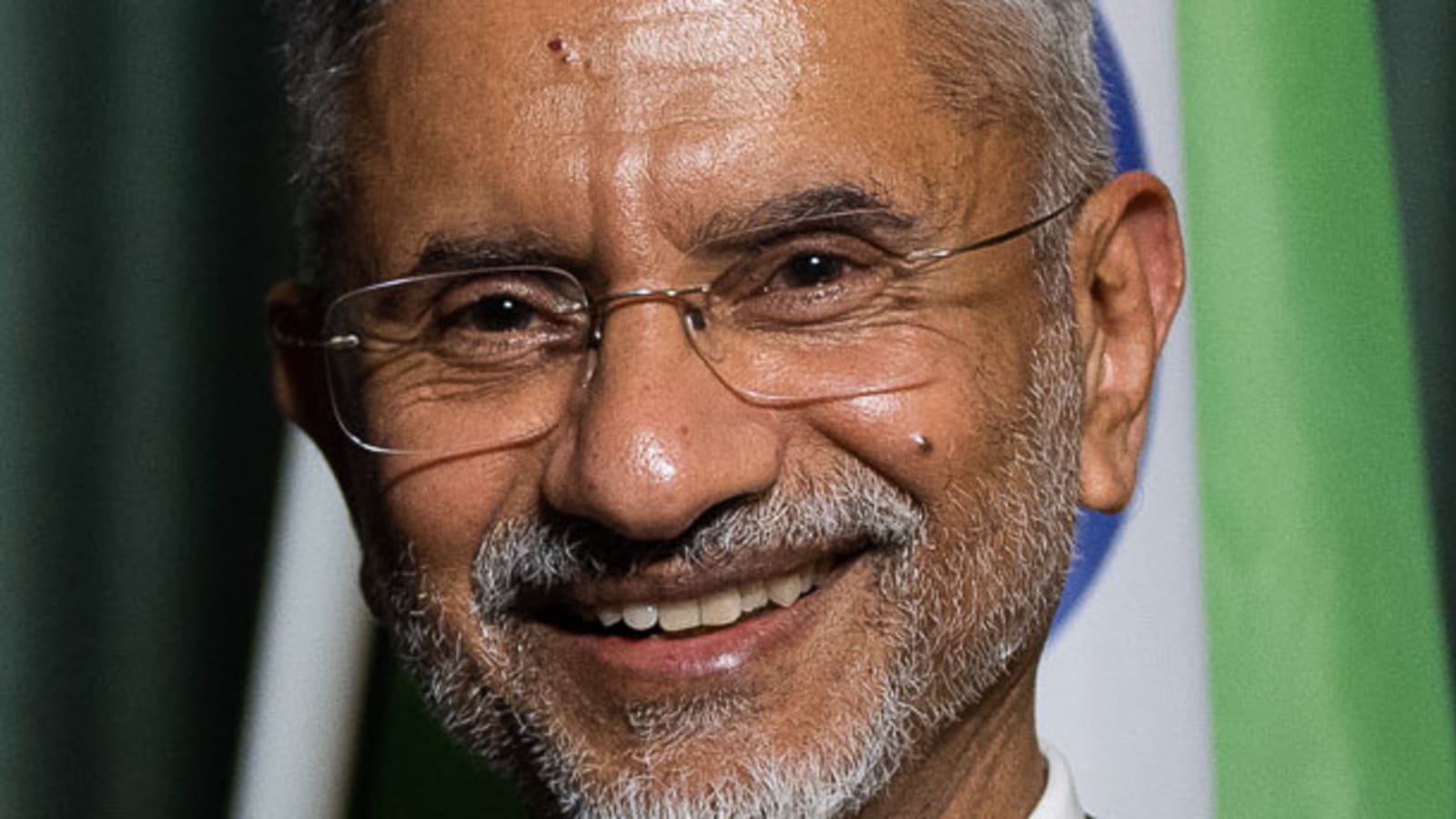
On Sunday, External Affairs Minister S. Jaishankar announced that India has stepped up its role in the Russia-Ukraine war, moving "beyond advocacy" to hold active, direct talks with both nations to find a way to end the conflict.
Speaking at the Munich Leaders Meeting in New Delhi on 4 October 2026, Jaishankar said India is no longer just calling for peace from the sidelines. Instead, New Delhi is actively engaged in quiet diplomacy to resolve specific, immediate issues. These include the safety of shipping in the Black Sea, grain and energy exports, and "non-attack possibilities."
"Those are ongoing conversations right now," Jaishankar said, confirming that India is working to find a mutually acceptable path forward.
Active diplomacy between Kyiv and Moscow
The disclosure follows comments from Ukrainian Foreign Minister Andrii Sybiha, who revealed that Kyiv had received ceasefire proposals from four countries, describing India's proposal as the "most comprehensive." Around the same time, Russian President Vladimir Putin noted that Indian Prime Minister Narendra Modi had "excellent ideas" aimed at finding a solution.
India’s diplomatic efforts have intensified in recent months. Modi met Putin on the margins of the Shanghai Cooperation Organisation summit in Kyrgyzstan in August, where he declared that "endless war must now give way to end of war." The two leaders met again ahead of the BRICS summit in New Delhi. Modi also held talks with Ukrainian President Volodymyr Zelensky at the G7 summit in France in June, and Jaishankar travelled to Kyiv in September to emphasise that the conflict cannot be resolved on the battlefield.
Defending the historic ties with Russia
While outlining India's mediation efforts, Jaishankar mounted a firm defence of New Delhi's enduring relationship with Moscow, tracing the bond back to the 1950s.
He reminded the audience that the Soviet Union, and later Russia, stood by India when its security and territorial integrity were under threat. This support came during a period when, as Jaishankar put it, "much of the world preferred backing a military regime next to us," referring to Pakistan.
"We are obviously shaped in many ways by our legacy," Jaishankar said, adding that India's experience with Russia has been "consistently positive."
While the relationship historically focused on defence, nuclear technology, and space cooperation, Jaishankar noted that it has now expanded significantly into an economic partnership. Trade, investment, and energy imports have become central pillars of the bilateral tie.
Building bridges with Europe
Despite its deep ties with Moscow, Jaishankar argued that India is simultaneously building a stronger, modern relationship with Europe.
He pointed to growing cooperation in advanced industries such as semiconductors, space, defence, and advanced manufacturing. He also noted a shared alignment between India and European nations on artificial intelligence, alongside a growing openness in Europe to welcoming skilled Indian professionals.
Key numbers
| What | Figure | Source |
|---|---|---|
| Date of Munich Leaders Meeting speech | 4 October 2026 | S. Jaishankar speech |
| Historical starting point of India-Russia ties | 1950s | S. Jaishankar speech |
In this story
| Name | Role in the story |
|---|---|
| Ukraine | Country engaged in peace talks with India |
| Russia | Country with historical ties to India and combatant in war |
| S. Jaishankar | External Affairs Minister of India who spoke at the conference |


