Fed Chair Kevin Warsh warns AI boom could boost growth or risk market bust
Central bank staff are gaming out economic contingencies as economists warn massive tech spending is already pushing up inflation and borrowing costs.
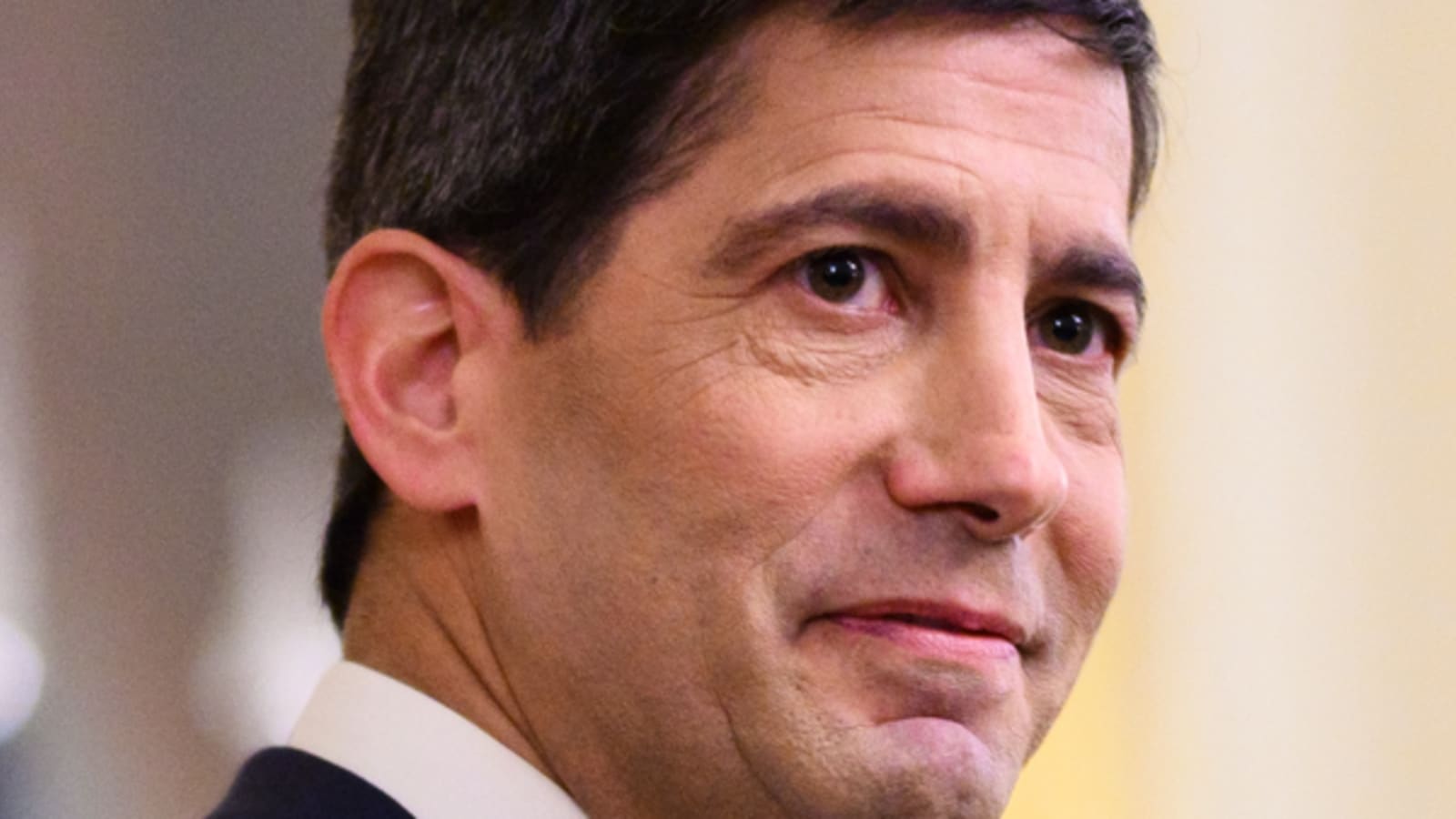
Federal Reserve Chairman Kevin Warsh has revealed central bank staff are actively gaming out economic contingencies around artificial intelligence, warning that while the technology could lift long-term US economic growth, it also carries the risk of severe market disappointment and job losses.
Speaking in San Francisco before a special task force on productivity and employment that he assembled, Warsh said the emerging technology—which he referred to as "super intelligence" following a recent directive from President Donald Trump—represents an entirely new force in economic life that will have significant implications for monetary policy.
What Fed Chair Kevin Warsh said about AI
Warsh stressed that the Federal Reserve is not taking an impartial view of American leadership in technology, but outlined three distinct paths the economic rollout could take.
In the most optimistic case, AI-driven productivity gains could accelerate real economic growth beyond its current trajectory while maintaining high employment levels and exerting disinflationary pressure. A second outcome involves substantial job displacement, where automation increases unemployment despite overall efficiency gains.
The central bank chief also highlighted a third risk: a sharp correction in financial markets if heavy capital investment fails to deliver expected returns.
"After significant capital investment and stock market gains, expected returns could turn down and equity valuations could fall, leading to an economic slowdown and a more notable rise in unemployment," Warsh said in prepared remarks during his first visit to a regional Fed bank since taking office.
| Scenario | Growth impact | Employment effect | Market implications |
|---|---|---|---|
| Productivity boom | Accelerates real GDP growth | Sustains near full employment | High returns justify capital investment |
| Job displacement | Modest net efficiency gains | Increases unemployment via automation | Capital replaces human labor |
| Valuation slump | Triggers economic slowdown | Notable rise in unemployment | Equity valuations and returns drop |
How AI investment is driving inflation and interest rates
While the Federal Reserve assesses future scenarios, economists warn the current AI infrastructure boom is already creating measurable macroeconomic side effects.
Mark Zandi, chief economist at Moody's Analytics, stated that spending on artificial intelligence has dominated domestic capital allocation since ChatGPT launched four years ago. According to Zandi, AI projects have accounted for nearly two-thirds of total investment growth over that period, while capital spending across the rest of the economy has slowed by more than half since mid-2024.
Zandi warned that this concentrated capital demand is pushing up interest rates by soaking up available financing, while driving up prices for electricity and consumer electronics.
"The bet on AI had better pay off in higher productivity, because the rest of the economy isn't investing enough to deliver it," Zandi noted in an analysis shared on social media platform X.
Broader financial risks and Wall Street expectations
The scale of capital flowing into data centres and computing hardware has divided market analysts. JPMorgan Chase Chief Executive Jamie Dimon previously estimated that annual global spending on AI infrastructure could reach $1 trillion by 2027, potentially adding a full percentage point to annual gross domestic product growth alongside inflationary pressures.
However, international institutions have urged caution. The International Monetary Fund has warned that if productivity gains fall short of market expectations, technology companies could face a sharp pullback in capital investment and a broad market correction.
Key numbers
| What | Figure | Source |
|---|---|---|
| AI share of investment growth | Nearly two-thirds | Mark Zandi, Moody's Analytics |
| Non-AI investment growth slowdown | More than half since mid-2024 | Mark Zandi, Moody's Analytics |
| Projected AI infrastructure spending by 2027 | $1 trillion | Jamie Dimon, JPMorgan Chase |
| Projected GDP boost from AI spending | 1 percentage point | Jamie Dimon, JPMorgan Chase |
In this story
| Name | Role in the story |
|---|---|
| Kevin Warsh | Chairman of the Federal Reserve who delivered speech on AI economic impact. |
| Federal Reserve | US central bank studying economic contingencies of AI. |
| Mark Zandi | Chief economist at Moody's Analytics who warned of AI-driven inflation and interest rates. |