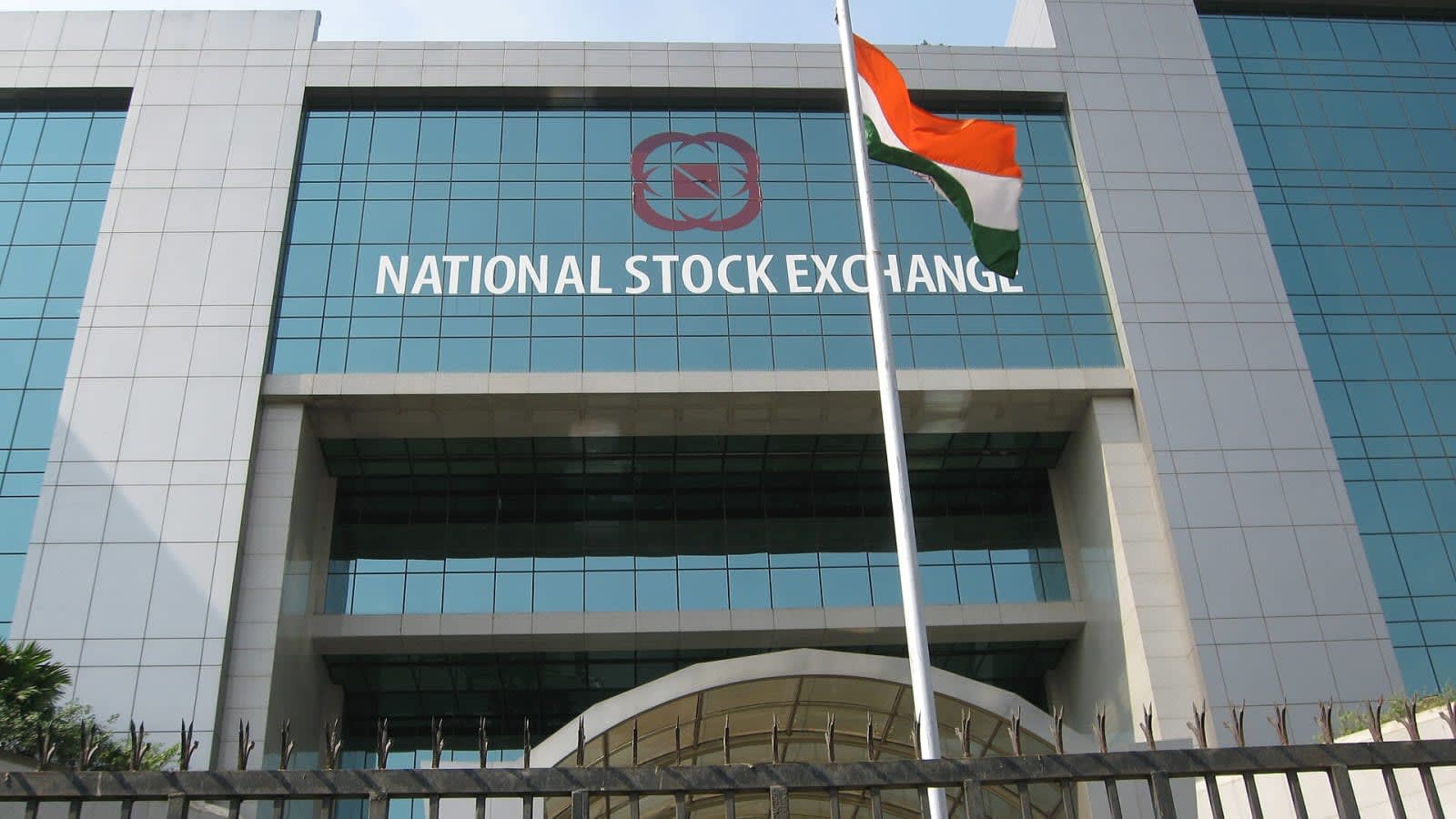
Sensex and Nifty drop on global headwinds as domestic buyers support market
Foreign capital outflows and elevated global bond yields weighed on Indian benchmark indices, even as mid-cap stocks and domestic investors demonstrated resilience.

What happened on Dalal Street
Indian benchmark stock indices surrendered early morning gains on Monday, 12 October, as sharp foreign institutional selling and elevated global bond yields weighed on blue-chip equities.
The BSE Sensex dropped over 600 points to trade around 71,854 after touching an intraday low of 71,742.51, wiping out an initial 400-point opening surge. Meanwhile, the NSE Nifty 50 slipped 0.85 per cent to an intraday low of 22,331, dropping below the key 22,400 mark.
Heavyweight banking and technology stocks led the benchmark slide. The Nifty Bank index fell 1 per cent while the Nifty IT index slid 1.2 per cent, with major counters like Tech Mahindra, ICICI Bank, State Bank of India, and Reliance Industries coming under profit-taking pressure.
In contrast to the benchmarks, broader market segments showed strong domestic resilience. The Nifty Midcap 150 index rose 0.60 per cent, while the Nifty Smallcap 250 jumped 1.4 per cent during the session. Overall market breadth on the National Stock Exchange remained positive, with 1,884 advancing stocks against 1,474 declines.
Global triggers driving the correction
Market analysts attributed the intraday pullback primarily to external macroeconomic pressures rather than domestic factors.
Foreign portfolio investors (FPIs) have continued offloading Indian equities, selling assets worth ₹44,166 crore in October alone, taking total net FPI equity sales in 2026 to over ₹3.04 lakh crore. Geojit Investments noted that sustained foreign selling is closely linked to US 10-year Treasury yields topping 5.3 per cent—their highest level since 2002—making US fixed-income assets attractive relative to emerging market equities.
Risen energy costs and currency movements further heightened global caution. Brent crude oil traded around $103 per barrel following military escalation in the Middle East, including missile strikes on Riyadh's international airport. Concurrently, the US Dollar Index traded near 102.5, close to an 18-month high, placing temporary pressure on emerging market currencies.
On the domestic policy front, the Reserve Bank of India recently moved to manage banking system liquidity by raising the minimum daily Cash Reserve Ratio (CRR) maintenance requirement to 99 per cent from the fortnight beginning 16 October. The measure nudged India’s 10-year benchmark bond yield to 7.37 per cent.
Strong fundamentals offer long-term support
Despite near-term global headwinds, market experts emphasize that India's domestic economic outlook remains firmly grounded. Domestic Institutional Investors (DIIs) have consistently absorbed foreign outflows, purchasing ₹4,743.26 crore worth of assets in the preceding session alone.
Analysts point to India's projected GDP growth rate of 7.1 per cent for FY27 and healthy corporate earnings as solid pillars for long-term investors. Geojit Investments highlighted that recent corrections have brought equity valuations to attractive levels, providing value-buying opportunities in growth sectors.
For the Nifty 50, technical analysts at SBI Securities identify immediate chart support between 22,330 and 22,350, with resistance positioned around the 22,660 level.
Key numbers
| What | Figure | Source |
|---|---|---|
| Sensex intraday low | 71,742.51 | BSE / Livemint |
| Nifty 50 intraday low | 22,331 | NSE / Livemint |
| October FPI equity outflows | ₹44,166 crore | NSDL |
| US 10-year Treasury yield | 5.3% | Reuters |
| India 10-year bond yield | 7.37% | The Economic Times |
| India FY27 GDP growth forecast | 7.1% | Geojit Investments |
In this story
| Name | Role in the story |
|---|---|
| NSE Nifty 50 | Benchmark Indian stock index sliding below key technical levels. |
| BSE Sensex | Major Indian stock market index experiencing an intraday correction. |