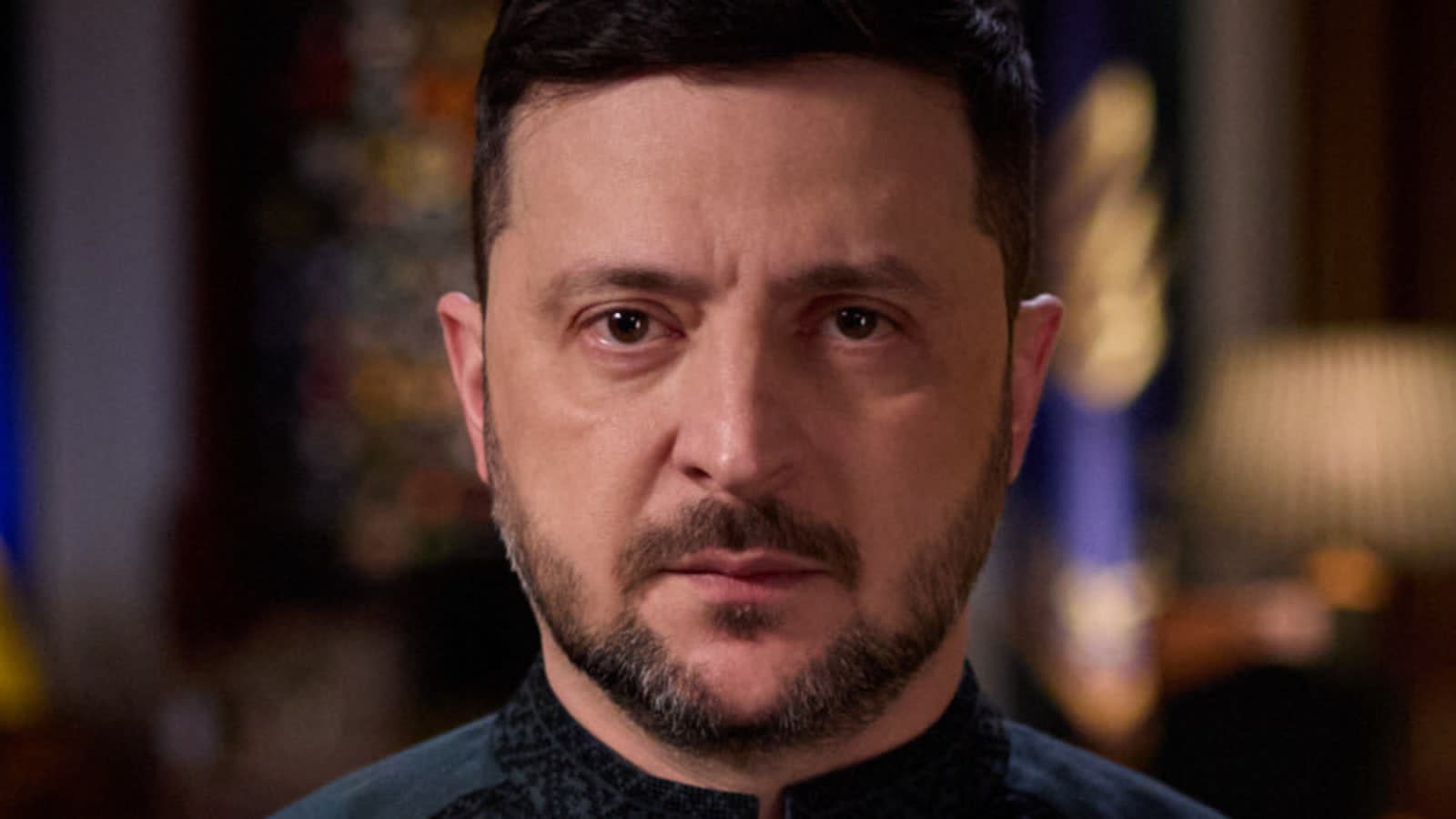
Russian drone strike hits Kyiv bridge during German Chancellor Friedrich Merz's visit
A daylight explosion on the Northern Bridge injured two people as Germany pledges new funding for interceptor drones.

A Russian drone strike hit a major bridge in Kyiv on Sunday, sending a massive fireball into the sky while traffic was crossing, just as German Chancellor Friedrich Merz arrived in the capital on a surprise visit.
The daylight strike on the Northern Bridge over the Dnipro River is the latest in a coordinated campaign targeting the capital's transport links. Kyiv Mayor Vitali Klitschko said the explosion injured two people, damaged the roadway, and ruptured a nearby hot water supply line.
The attack marks a dangerous turn for the city's three million residents. Kyiv authorities have already restricted or suspended traffic on five of the city’s six road bridges following a series of strikes. The Northern Bridge was hit for the second time in two days, while the Southern Bridge—which carries road traffic and the subway—was struck five times in less than 24 hours.
The Dnipro River divides Kyiv in two. Because most jobs and government offices are on the right bank while over a third of the population lives on the left, destroying these crossings would cause a logistical disaster. Ukraine’s infrastructure minister said plans are underway to build alternative crossings if the attacks continue.
Why German Chancellor Friedrich Merz was in Kyiv
Chancellor Merz arrived in Kyiv alongside Economic Affairs and Energy Minister Katarina Reiche to show support for Ukraine as it enters a highly critical phase of the war. Air-raid sirens and the thud of air defences echoed through the city during their visit.
Since Merz took office in May 2025, Germany has surpassed the United States to become Ukraine’s largest provider of military aid. Standing alongside President Volodymyr Zelenskyy, Merz announced that Germany would fund the joint production of new interceptor drones designed to shoot down Russia's jet-powered drones.
"This will quickly and tangibly strengthen Ukraine’s air defence," Merz said, adding that "significant technical breakthroughs" had recently accelerated production.
Russia's 'new doctrine' of winter strikes
The intensifying attacks appear to be part of a broader Russian strategy. Zelenskyy told reporters that Ukrainian intelligence had obtained documents detailing a "new doctrine" issued by Russian President Vladimir Putin. According to Zelenskyy, the plan is to systematically hit civilian infrastructure, roads, schools, and hospitals to force people to flee the capital and other major cities before winter.
In response, Zelenskyy said Ukraine would step up strikes on Russian oil refineries, despite concerns raised by US President Donald Trump’s administration about rising global diesel prices.
"We have to respond in any way we can," Zelenskyy said. "With their attacks on our energy, we have to respond on their energy."
Russia’s foreign ministry warned foreign diplomats and nationals to leave Ukraine, stating that Moscow would continue systematic strikes. However, European Union ambassador Katarína Mathernová said the EU delegation has no intention of leaving, writing on social media that "threatening us will not stop Europe’s support."
Meanwhile, in eastern Ukraine, Zelenskyy confirmed that a counteroffensive code-named "Vivaldi" had recaptured roughly 140 square kilometres in the Donbas region.
Key numbers
| What | Figure | Source |
|---|---|---|
| Injured in Northern Bridge strike | 2 | Kyiv Mayor Vitali Klitschko |
| Recaptured Donbas territory under Vivaldi counteroffensive | 140 square kilometres | Ukrainian President Volodymyr Zelenskyy |
In this story
| Name | Role in the story |
|---|---|
| Friedrich Merz | German Chancellor who visited Kyiv to pledge support. |
| Volodymyr Zelenskyy | President of Ukraine who hosted Merz and warned of a new Russian doctrine. |
| Kyiv | Ukrainian capital targeted by the Russian drone strikes. |