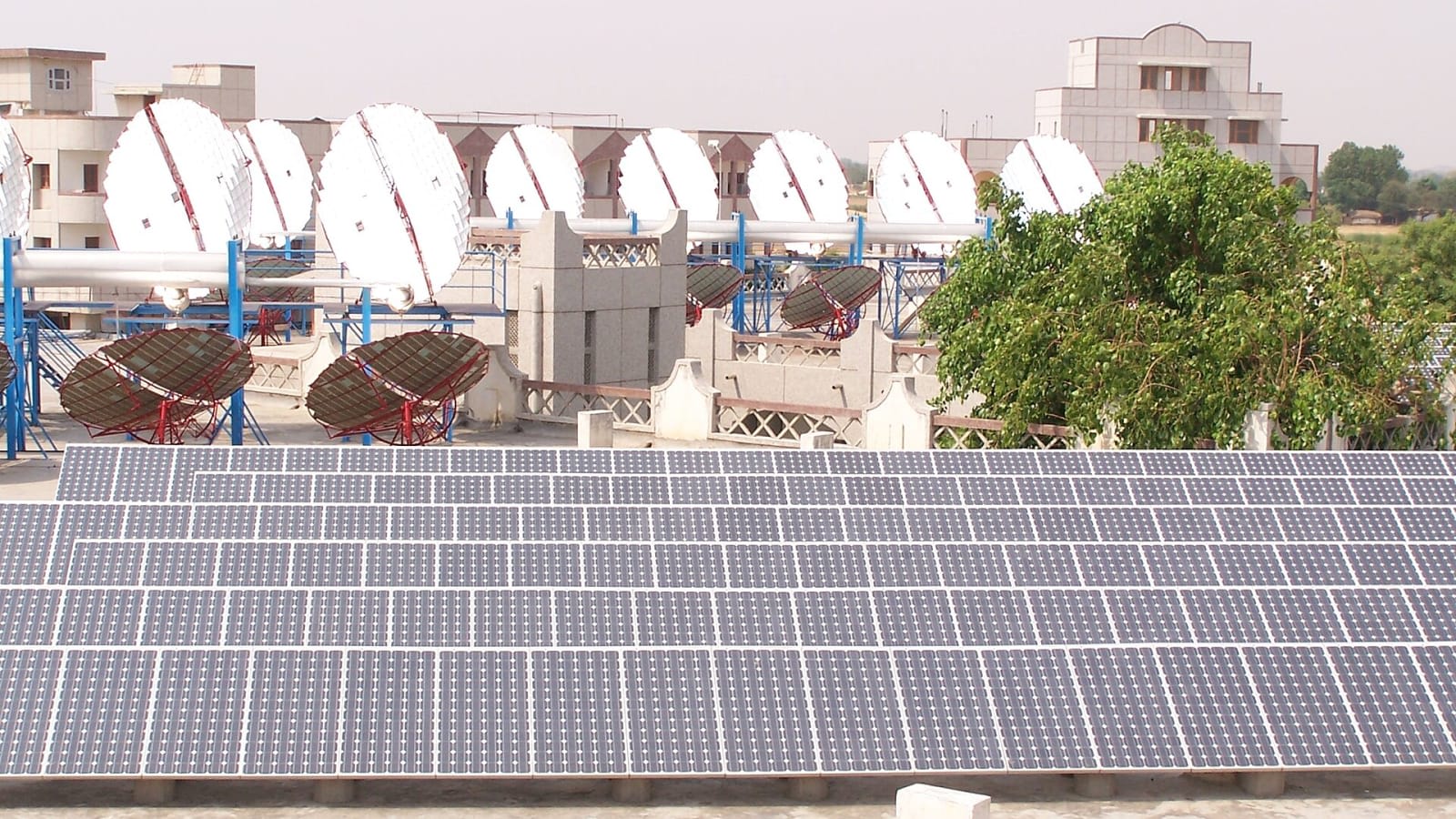
IEA says green energy expansion saved India $100bn in import costs
Rapid solar and wind adoption strengthens national energy security while setting up $240 billion in projected savings by 2030.
What the IEA report revealed
India’s sustained expansion of renewable energy capacity over the past 15 years has saved the nation more than $100 billion in coal and natural gas import costs, according to a report by the International Energy Agency (IEA).
In its India Renewable Energy Market Report 2026, the organisation highlighted that India has established itself as the world’s second-fastest-growing renewables market. Total renewable capacity has reached 300 gigawatts (GW), significantly strengthening national energy security and insulating the domestic economy from volatile international fuel prices.
Without the solar, wind, and bioenergy capacity brought online since 2010, India’s coal imports in 2025 alone would have been approximately 110 million tonnes higher.
Key renewable capacity figures
The scale of India's green infrastructure rollout underlines the impact of long-term planning and steady policy support across national and state programs.
| Capacity Measure | Historic / Current | Projection for 2030 |
|---|---|---|
| Total Renewable Capacity | 300 GW | 530 GW |
| Solar PV Additions | 168 GW (since March 2014) | Not disclosed |
| Wind Additions | 38 GW (since March 2014) | Not disclosed |
| Bioenergy Installed | Nearly 12 GW | Not disclosed |
| Import Cost Savings | Over $100 billion | $240 billion (cumulative) |
Between March 2014 and September 2026, India added 168 GW of solar PV capacity and 38 GW of wind capacity, while installed bioenergy capacity expanded to nearly 12 GW.
Meeting national targets ahead of schedule
The deliberate emphasis on clean generation enabled India to reach its goal of sourcing 50 per cent of its installed electricity capacity from non-fossil fuel sources in 2025 — five years ahead of the original 2030 target.
The IEA pointed out that growth has moved beyond utility-scale installations into widespread rooftop and agricultural adoption. Central schemes have driven much of this progress, notably the PM Surya Ghar Muft Bijli Yojana for household rooftop solar and the PM-KUSUM scheme for solarising irrigation pumps and agricultural feeders. Expanding domestic solar manufacturing and corporate procurement have further boosted local supply chains.
Future savings and global leadership
Looking forward, the IEA estimates that as renewable capacity expands to 530 GW by 2030, cumulative import savings on coal and gas will reach $240 billion, provided international fuel prices remain near 2024–25 averages. Annual import savings are projected to hit $35 billion by 2030, a sum greater than India's total spending on non-coking coal and natural gas imports in FY25.
"India’s experience shows how consistent policies can help drive down renewable energy costs and attract investment, offering valuable lessons for other emerging economies," said IEA Executive Director Fatih Birol.
Key numbers
| What | Figure | Source |
|---|---|---|
| Import savings over past 15 years | Over $100 billion | International Energy Agency |
| Installed renewable energy capacity | 300 GW | International Energy Agency |
| Solar PV additions since March 2014 | 168 GW | International Energy Agency |
| Wind capacity additions since March 2014 | 38 GW | International Energy Agency |
| Projected cumulative fuel import savings by 2030 | $240 billion | International Energy Agency |
In this story
| Name | Role in the story |
|---|---|
| International Energy Agency | Author of the India Renewable Energy Market Report 2026. |
| India | Country whose renewable energy push and fuel savings are documented. |