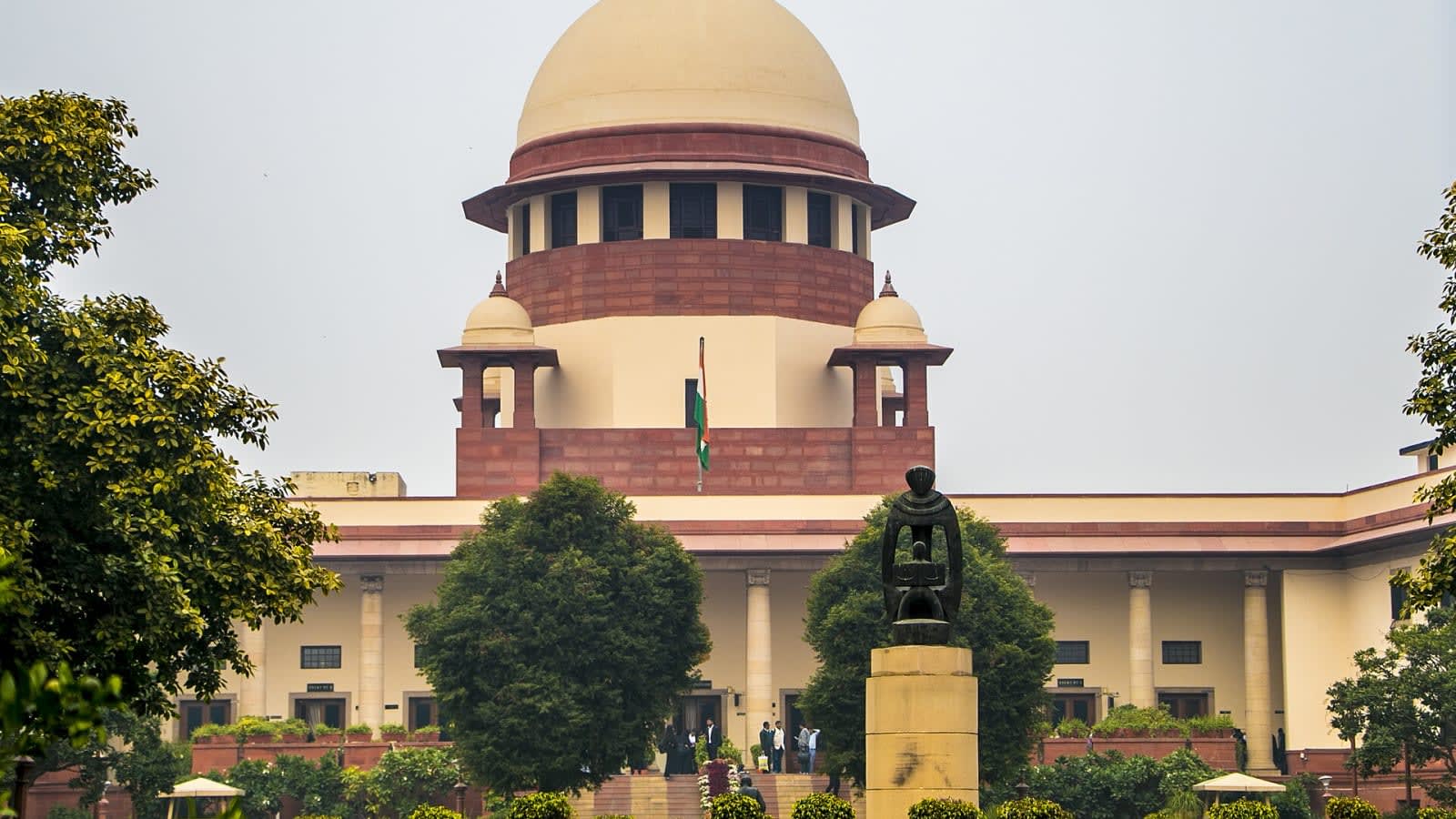
Supreme Court demands Election Commission records over modified Form 6 voter registration
CJI Surya Kant clarified that the court never approved the new online declarations, as petitions challenge alleged unilateral decisions by CEC Gyanesh Kumar.

The Supreme Court has demanded to see internal records from the Election Commission of India to find out who authorised controversial changes to the online voter registration form.
On Monday, a three-judge bench led by Chief Justice Surya Kant made it clear that the court had not approved any modifications to the form, directly contradicting a recent public claim by the poll body.
"Any modified Form 6 has not been approved by us," Chief Justice Surya Kant said during the hearing. "Let's be clear. When record is produced, we would like to see who has modified."
Why has voter registration Form 6 become a flashpoint?
The dispute centres on Form 6, the statutory application used by citizens to register as voters. During the Election Commission’s ongoing Special Intensive Revision (SIR) of electoral rolls, a new declaration was added to the online version of the form.
Applicants were required to declare whether their name, or the name of a parent or grandparent, was included in the previous SIR. This change created a hurdle for first-time 18-year-old voters and those trying to get back on the rolls after widespread deletions. Reports from the revision exercise showed that more than 13 crore names had been deleted from draft rolls across the country.
Within the Election Commission itself, the modification triggered an internal rift. Election Commissioners Vivek Joshi and Sukhbir Singh Sandhu reportedly objected to the change. They argued that because Form 6 is prescribed under the Registration of Electors Rules, 1960, it cannot be legally changed without the central government amending the rules and laying those changes before Parliament.
The Election Commission had defended the move in a press release on 26 September, suggesting that the Supreme Court had already approved the declaration in a judgment earlier this year concerning the revision process in Bihar. On Monday, the bench clarified that it had done no such thing, as the modified declaration was introduced after that judgment was delivered.
What are the allegations of unilateral decision-making?
The dispute is part of a broader legal challenge against Chief Election Commissioner Gyanesh Kumar. A petition filed by advocate Shailendra Mani Tripathi has been tagged with a public interest litigation by social activist Rakesh Kumar Singh, which accuses Mr Kumar of running the commission unilaterally.
The petitions allege that the Chief Election Commissioner took at least 14 major decisions, including software modifications and major policy directives, without the consensus of the other two commissioners. Under the Chief Election Commissioner Act of 2023, the poll body’s business is supposed to be conducted unanimously or decided by a majority vote.
The petitioners had asked the court to suspend Mr Kumar immediately and order a judicial inquiry.
What happens next in the Supreme Court?
The bench declined to pass any immediate suspension orders, stating that it could not act purely on news reports without hearing the other side first.
"Can we ex-parte come to decision that all decisions were unilateral?" Justice Joymalya Bagchi asked during the hearing. "We expect them to respond in a clear, transparent manner."
The court has issued notices to the Union government, the Election Commission, and all three commissioners, demanding they produce the records and explain how the decisions were made.
Key numbers
| What | Figure | Source |
|---|---|---|
| Unilateral decisions allegedly taken by the CEC | 14 | Petitioners Shailendra Mani Tripathi and Rakesh Kumar Singh |
| Voter names deleted from draft electoral rolls under the SIR | More than 13 crore | Arguments presented by petitioner counsels citing public data |
In this story
| Name | Role in the story |
|---|---|
| Election Commission of India | The electoral body whose voter Form 6 modifications and decision-making processes are under scrutiny. |
| Surya Kant | Chief Justice of India who clarified the court has not approved the modified Form 6. |
| Gyanesh Kumar | The Chief Election Commissioner accused of taking unilateral decisions. |
| Supreme Court of India | Hearing petitions against Election Commission changes and issuing notices for records. |
| Joymalya Bagchi | Supreme Court Justice who noted the need for ECI responses before passing orders. |