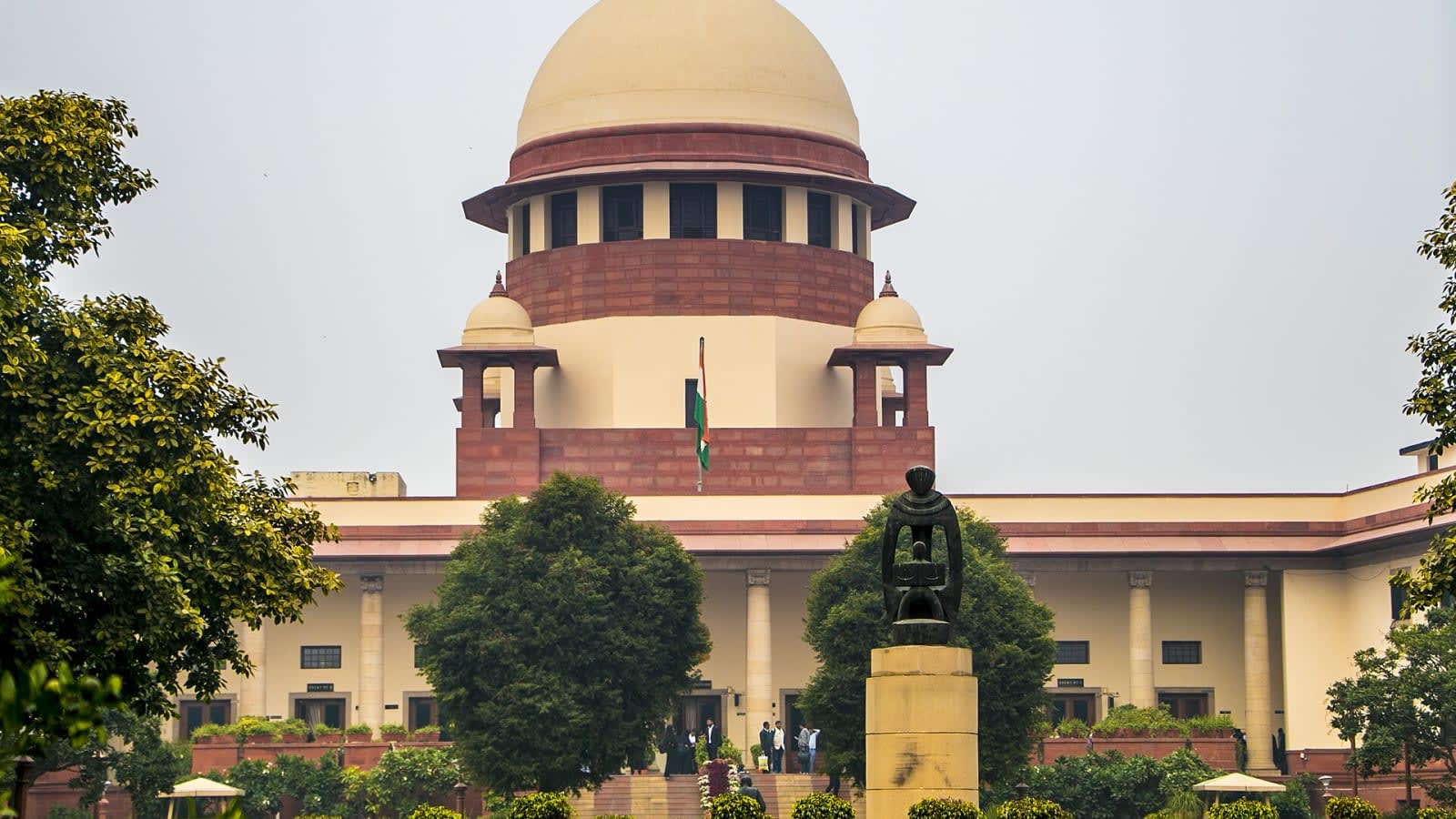
Supreme Court rules no prior approval needed to probe public servant bribe demand
The top court held that Section 17A protection applies strictly to official decisions, leaving bribe demands open to direct investigation.

Investigating agencies do not require prior approval from the government to probe public servants accused of demanding bribes, the Supreme Court has ruled, reinforcing clean governance and accountability across public administration.
A bench of Justices S.V.N. Bhatti and N.V. Anjaria held that demanding an undue advantage is entirely unconnected to the discharge of official duties, which is the only activity protected by law. Writing the judgment for the bench, Justice Anjaria upheld a decision by the Rajasthan High Court that refused to drop corruption charges against a police constable.
Why Section 17A protection does not apply to bribes
Section 17A was added to the Prevention of Corruption Act in 2018 to protect public servants from frivolous prosecution over genuine decisions or recommendations made in the course of their duties. However, the Supreme Court stressed that the provision cannot be given an omnibus application.
The judges noted that for Section 17A to apply, there must be a specific decision or recommendation made by an official in the legitimate performance of public functions. Crimes such as receiving bribes, criminal breach of trust, cheating, and falsification of accounts sit completely outside official work.
"The decisive phrase in the section is 'discharge of official functions or duties'," the bench noted, clarifying that statutory protection was never intended to shield corrupt acts.
How the case against the constable unfolded
The ruling came on an appeal filed by Tejaram, a constable previously posted at the office of the deputy superintendent of police in Rajasthan's Sirohi district. In April 2021, fellow constable Devendra Kumar submitted an email complaint alleging that Tejaram had demanded ₹1.5 lakh on behalf of the superintendent of police.
| Date | Legal Step / Event |
|---|---|
| 22 April 2021 | Email complaint lodged against Constable Tejaram |
| 4 June 2021 | FIR registered under PC Act and Indian Penal Code |
| 1 September 2021 | Constable Tejaram arrested |
| 8 December 2023 | Prosecution sanction granted under Section 19 |
| 19 January 2024 | Investigating agency files chargesheet |
| 12 September 2024 | Special court in Pali frames charges under Section 7 |
| 26 March 2025 | Rajasthan High Court rejects revision petition |
| 16 October 2026 | Supreme Court dismisses final appeal |
Tejaram had argued that the investigation against him was invalid because officers had not obtained prior approval under Section 17A. Rejecting that defence, the Supreme Court affirmed that the special court in Pali was fully justified in framing charges under Section 7 of the Prevention of Corruption Act.
Key numbers
| What | Figure | Source |
|---|---|---|
| Bribe amount alleged | ₹1.5 lakh | Case records cited in judgment |
| Date of Supreme Court verdict | 16 October 2026 | Supreme Court judgment |
| Prosecution sanction date | 8 December 2023 | Case records |
In this story
| Name | Role in the story |
|---|---|
| Justice S.V.N. Bhatti | Supreme Court judge on the bench. |
| Tejaram | Rajasthan police constable whose appeal against corruption charges was dismissed. |
| Justice N.V. Anjaria | Supreme Court judge who authored the judgment. |
| Supreme Court of India | Delivered the judgment regarding Section 17A of the Prevention of Corruption Act. |