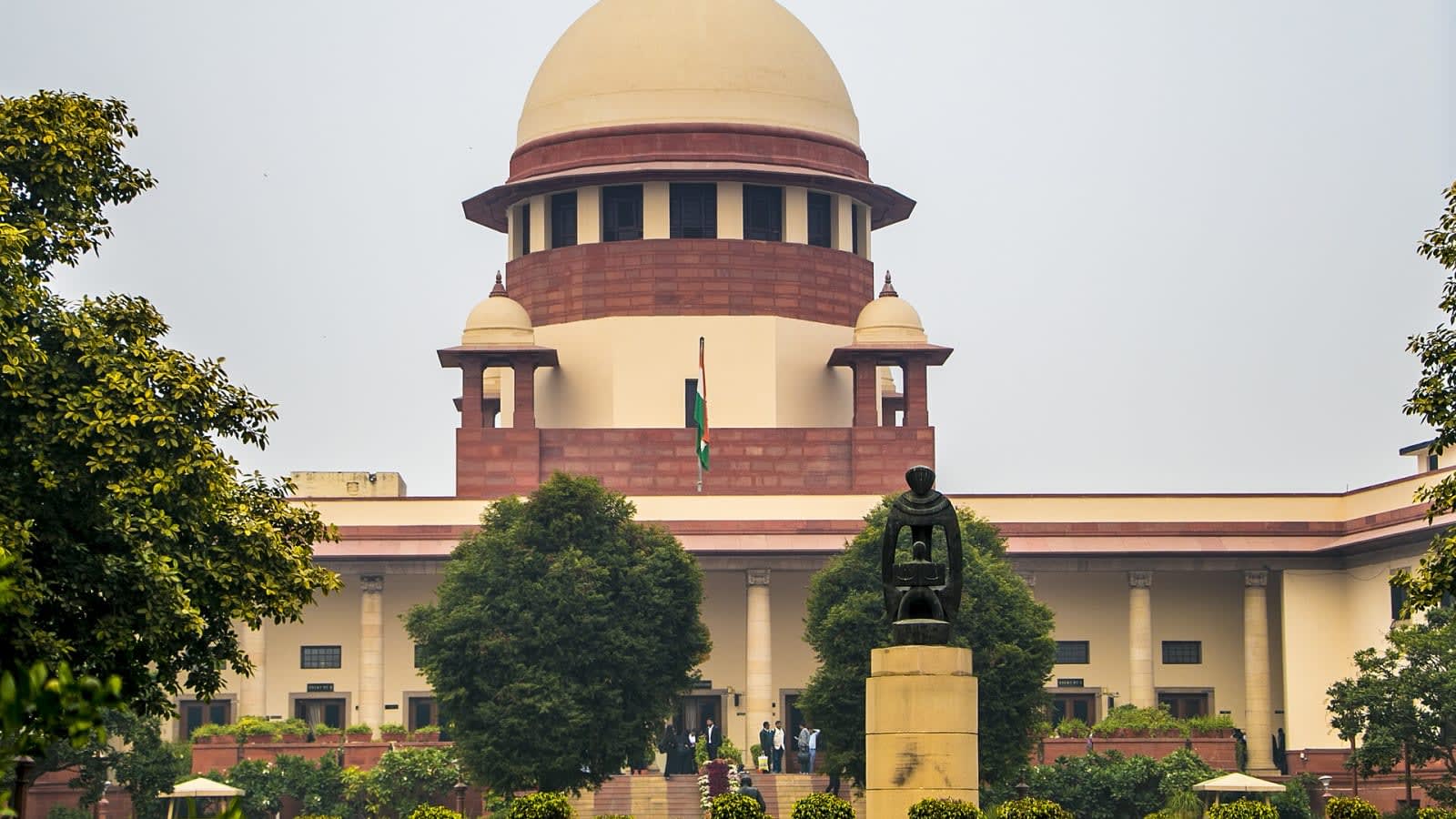
Supreme Court tells Delhi Police and Centre to ensure women are safe after dark
Justices JB Pardiwala and K Vinod Chandran label security lapses a systemic failure and demand an audit of public spaces across the capital.

The Supreme Court has warned the Centre and Delhi Police that they must instil "fear" in potential offenders to stop the capital’s public spaces from becoming high-risk zones for women.
Hearing a suo motu case on Monday following a series of recent sexual assaults, a bench of Justices JB Pardiwala and K Vinod Chandran said the authorities' focus must shift entirely to preventing crimes before they happen, rather than simply reacting to them.
"We must ensure every woman in Delhi-NCR feels safe, whether walking at 10 pm or travelling by metro or road," the bench said. "What is important is to prevent crime, not what you do after crime is committed."
Why the Supreme Court intervened
The apex court took up the matter on its own initiative on 28 September, following three brutal attacks on women and minors in the National Capital Region.
These incidents included the gang-rape of a 17-year-old girl at Aastha Kunj Park near Kalkaji on 21 September, the gang-rape of a minor in Swaroop Nagar, and the sexual assault of a 16-year-old girl inside a bus travelling from Greater Noida to Delhi.
The bench asked whether the authorities had learnt any lessons at all since the 2012 Nirbhaya case. The judges declared that public safety is directly tied to the fundamental right to live with dignity and without violence, guaranteed under Article 21 of the Constitution.
Justice Pardiwala argued that police must show an uncompromising posture to deter criminals. "Unless you create such fright in the minds of the criminals... you will not be able to prevent such crimes," he said. He added that fears of criticism from human rights groups should not stop the police from acting firmly against those accused of rape.
What the security audits revealed
The assault at Aastha Kunj Park, which led to widespread public protests, forced a security audit of Delhi's public parks by the Delhi Development Authority (DDA). The findings revealed a total failure to maintain basic security infrastructure.
Out of 736 parks managed by the DDA across the capital, only 16 had CCTV cameras installed.
The audit classified 190 of these parks as high-risk zones. It found that 520 parks needed more lighting, while 323 required additional CCTV coverage. It also flagged major security gaps in boundaries, gate security, public toilets, and abandoned buildings in several parks.
At Aastha Kunj Park itself, officials have since identified more than 30 spots where CCTV cameras must be installed. However, they noted that the park's isolated stretches and heavily wooded areas make comprehensive surveillance difficult.
What happens next
Calling the failure to secure public spaces a "systemic failure", the Supreme Court has ordered a comprehensive safety audit of all public spaces across Delhi.
The bench warned that administrative excuses will no longer be tolerated. "Deficiencies, if any, should not facilitate commission of crime," the court said, putting the responsibility squarely on Delhi Police and the Union government to fix the city's vulnerabilities.
Key numbers
| What | Figure | Source |
|---|---|---|
| Parks managed by DDA covered in the safety audit | 736 | Delhi Development Authority safety audit |
| DDA parks with functioning CCTV cameras | 16 | Delhi Development Authority safety audit |
| Parks classified as high-risk | 190 | Delhi Development Authority safety audit |
| Parks requiring improved lighting | 520 | Delhi Development Authority safety audit |
In this story
| Name | Role in the story |
|---|---|
| Justice JB Pardiwala | Led the Supreme Court bench and delivered harsh remarks on deterrence. |
| Delhi Police | Criticised by the court for failing to secure public spaces. |
| Supreme Court of India | Heard the suo motu case and directed the safety audit. |
| Justice K Vinod Chandran | Member of the Supreme Court bench hearing the case. |