ISRO to operate four launch pads by 2029, Chairman V Narayanan says
The expansion includes a 2,000-acre SSLV spaceport at Kulasekarapattinam to strengthen India's satellite launch capacity and commercial space partnerships.
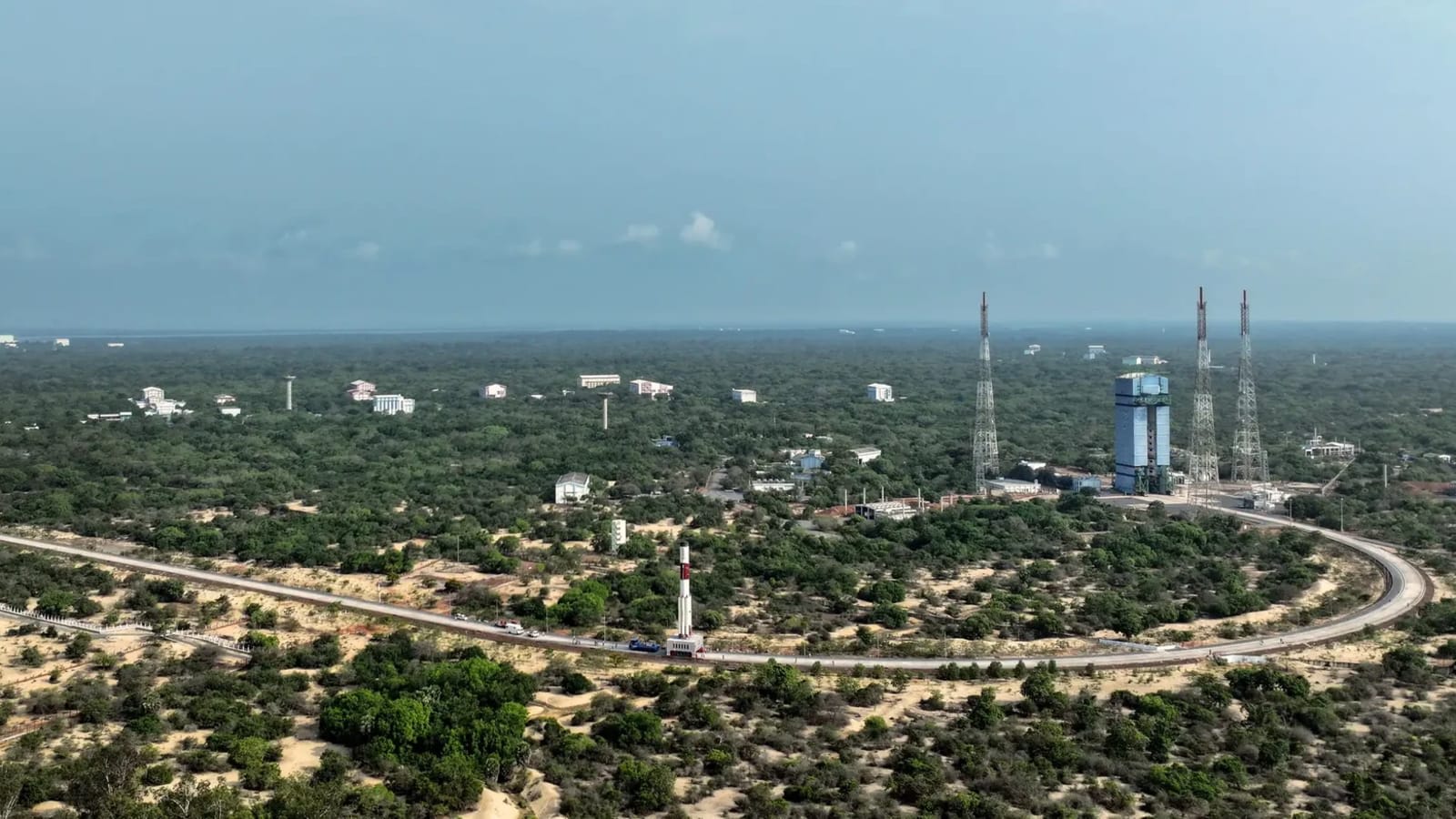
India will operate four functional launch pads by 2029 as the Indian Space Research Organisation expands its national infrastructure to handle mounting global and domestic demand for satellite launches.
Speaking at a university graduation ceremony in Chennai, ISRO Chairman V Narayanan outlined the nation's space infrastructure roadmap, highlighting a 2,000-acre Small Satellite Launch Vehicle complex at Kulasekarapattinam in Tamil Nadu's Tuticorin district. The new spaceport will feature launch pads, vehicle integration buildings, rail-track systems, and telemetry, tracking, and command setups specifically designed for rapid satellite deployment.
Narayanan clarified that while ISRO will remain a national public agency rather than undergo privatisation, it is actively partnering with private enterprise. By transferring technology and handholding domestic startups, the agency aims to build a robust commercial space ecosystem that generates thousands of high-tech jobs across the country.
Key space projects and timelines
| Project or facility | Target location | Key features | Status |
|---|---|---|---|
| SSLV Launch Complex | Kulasekarapattinam, Tamil Nadu | 2,000-acre site, rail-track integration, dedicated command setup | Under development |
| Gaganyaan Test 1 | Low Earth Orbit trajectory | Uncrewed safety, crew escape, and pressure system evaluation | Planned within two months |
| Chandrayaan-5 | Moon surface | Joint mission with Japan, 350-kg rover, 100 days of experiments | In planning stage |
The national space program is also advancing its human spaceflight objectives. ISRO plans to conduct its first uncrewed Gaganyaan test flight within the next two months. That launch will be followed by two additional uncrewed test missions before sending Indian astronauts into orbit.
Engineers have already executed approximately 8,000 ground-based experiments for Gaganyaan to test crew escape mechanisms, environmental controls, and module interior conditions under varying pressures, temperatures, and humidity. Four astronaut-designates are currently undergoing specialized training for the flight.
Looking beyond low-Earth orbit, Narayanan revealed that ISRO is collaborating with Japan's space agency on Chandrayaan-5. The lunar mission will deployment a 350-kilogram rover built to carry out 100 days of scientific experiments on the moon's surface.
Key numbers
| What | Figure | Source |
|---|---|---|
| Target launch pads by 2029 | 4 | ISRO Chairman V Narayanan |
| Kulasekarapattinam site area | 2,000 acres | ISRO Chairman V Narayanan |
| Gaganyaan ground experiments completed | 8,000 | ISRO Chairman V Narayanan |
| Astronauts in training | 4 | ISRO Chairman V Narayanan |
| Chandrayaan-5 rover mass | 350 kg | ISRO Chairman V Narayanan |
| Chandrayaan-5 surface mission duration | 100 days | ISRO Chairman V Narayanan |
In this story
| Name | Role in the story |
|---|---|
| V Narayanan | Chairman of ISRO who announced the launch pad expansion and mission roadmaps. |
| ISRO | India's national space agency. |