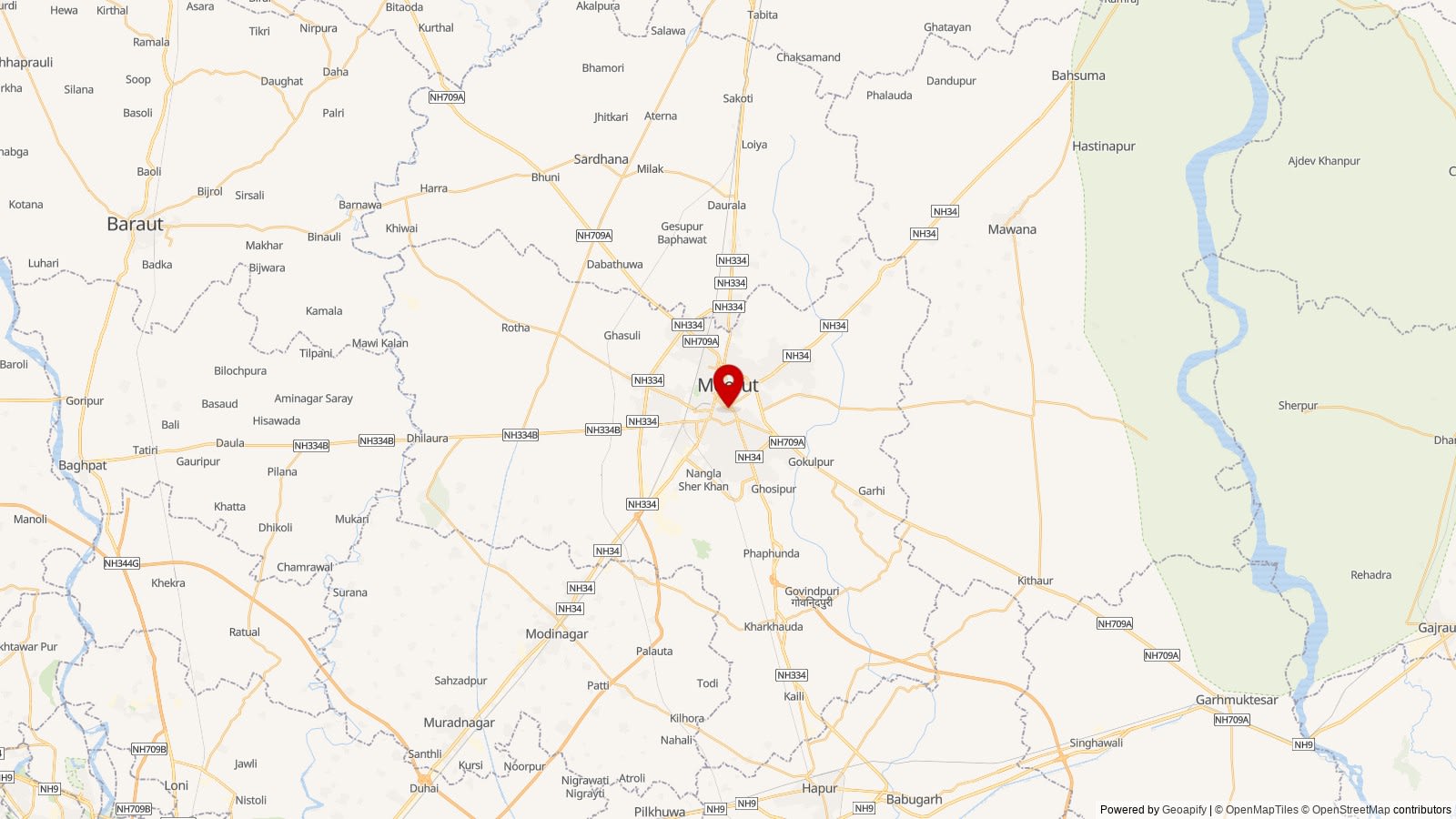
Meerut court sentences woman and lover to death for staging husband's murder as snakebite
A meticulous police investigation and forensic evidence dismantled a staged snakebite alibi, leading a sessions court to rule the killing the rarest of rare.

A Meerut court has sentenced a woman and her lover to death for strangling her husband and planting a defanged live snake beside his body to pass off the killing as an accidental snakebite.
Additional District and Sessions Judge Jaiveer Singh Nagar handed capital punishment on Friday to Ravita and her neighbour Amardeep, terming the premeditated killing of Amit Kashyap the "rarest of rare". Kashyap, also known as Mikky, lived in Akbarpur Sadat village on the outskirts of Meerut. Both convicts attended the sentencing hearing via video link from prison, where they had been held for 17 months.
How a staged snakebite came undone
The case dates to mid-April 2025, when Kashyap was discovered dead on a cot at his residence with a live snake resting beside his body. His family initially assumed he had succumbed to a venomous bite in his sleep.
That cover quickly fell apart during the post-mortem examination. Autopsy surgeons found distinct fingernail scratches, trauma around his nose, and ligature marks on his neck, certifying that Kashyap died of asphyxia caused by manual strangulation rather than envenomation.
Acting on forensic findings, Uttar Pradesh police seized the snake and secured it in a container. Handlers and snake charmers brought in to inspect the reptile discovered that its venom glands had been surgically excised, ruling out any lethal bite. Detectives subsequently tracked down and questioned the handler who had supplied the defanged serpent, unravelling the cover-up.
Evidence that secured the death penalty
The prosecution built a water-tight case spanning a chargesheet of over 500 pages, supported by testimony from more than a dozen witnesses.
Digital forensic trails proved pivotal in establishing the conspiracy between Ravita and Amardeep. Investigators recovered records of more than 500 telephone exchanges between the two, conducted through a mobile number registered to an unrelated third party from Jagriti Vihar who confirmed he had never used the SIM card. In the four days immediately following the murder, the pair spoke more than 70 times.
Arguing for capital punishment, District Government Counsel KK Chaubey and Additional District Government Counsel Farzana Masood presented the calculated planning and destruction of evidence as grounds for the maximum sentence under law, pointing to Supreme Court precedents on brutal domestic conspiracies.
Judge Nagar accepted the prosecution's submission, observing that Ravita had betrayed foundational family trust and violated the traditional duty of protection. Alongside the death sentence, the court directed local authorities to ensure that state support provides for the dignified upbringing and education of the victim's surviving children.
Key numbers
| What | Figure | Source |
|---|---|---|
| Chargesheet length | Over 500 pages | Police investigation documents submitted to court |
| Phone calls between accused | More than 500 calls | Call detail records presented by prosecution counsel Farzana |
| Witnesses examined | Over a dozen | Court trial records |
| Period spent in judicial custody prior to sentence | 17 months | Court proceedings record |
In this story
| Name | Role in the story |
|---|---|
| Meerut | District in Uttar Pradesh where the crime occurred and the trial was held |
| Ravita | Wife of the victim, convicted of murder and criminal conspiracy |
| Amardeep | Neighbour and co-accused sentenced to death for murder |
| Amit Kashyap | Murder victim, also known as Mikky Kashyap |