
US-Iran conflict drives oil over $100 and leaves global markets on edge
A naval clash in the Gulf has blocked a fifth of the world's crude, forcing investors to brace for higher inflation and interest rates.
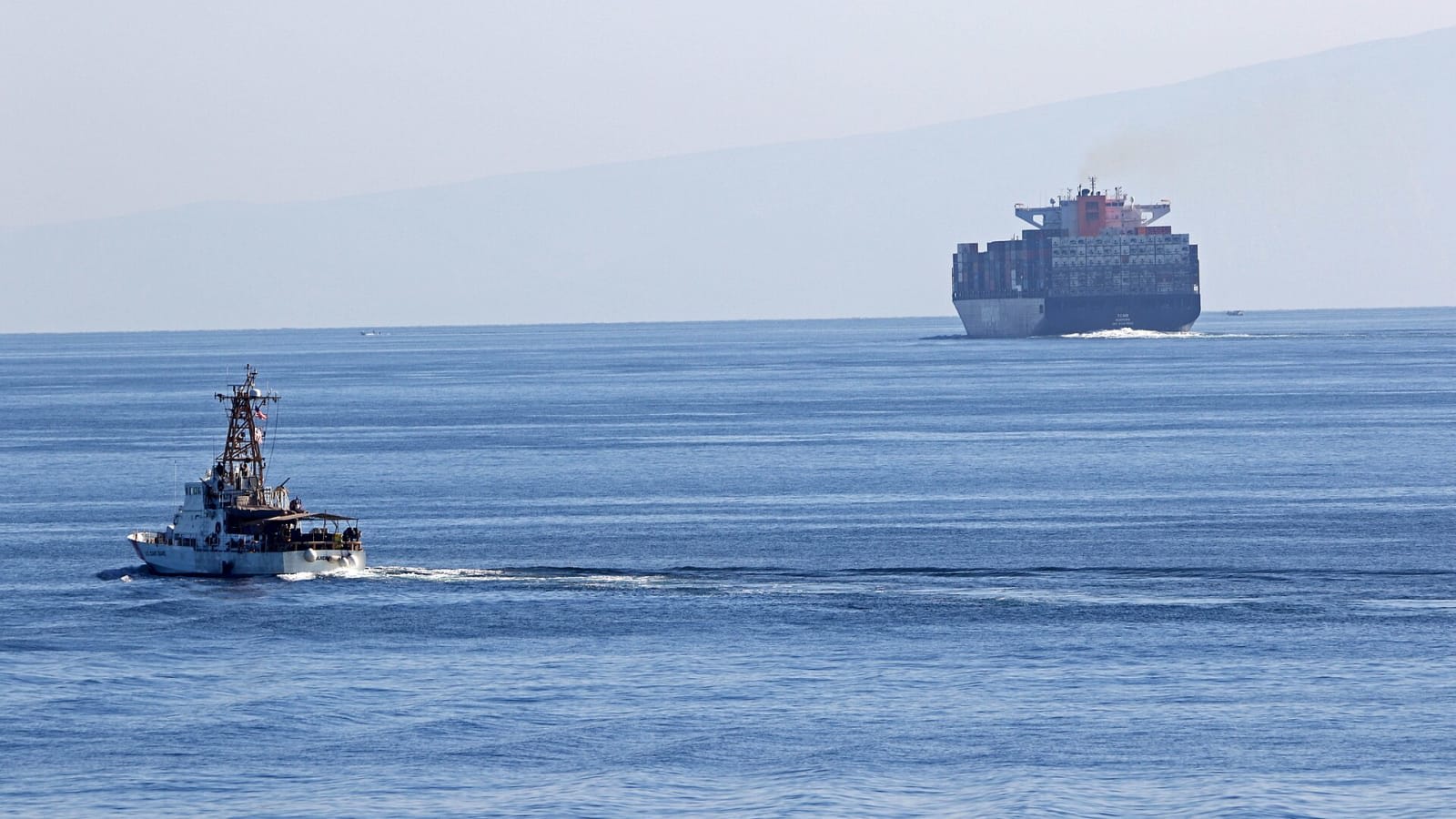
A military flare-up in the Middle East and stubbornly high inflation have sent global stock markets into a spin, with crude oil surging past $100 a barrel after the US military destroyed five Iranian tankers.
The attacks, which occurred on Tuesday, have effectively shut down traffic through the Strait of Hormuz. Because roughly one-fifth of the world’s oil supply passes through this narrow channel, the sudden closure has triggered an energy price spike that is reverberating through major economies.
Brent crude jumped 3.4% on Wednesday to breach the $100 mark for the first time since July, at one point touching $110 before easing back to $104.42 on Friday. US President Donald Trump has warned that drivers are unlikely to see relief at the pumps soon, stating on Wednesday that oil prices probably will not fall until after the US midterm elections.
Why are oil prices spiking?
The direct catalyst is the escalating military conflict between the US and Iran. After the US destroyed five Iranian tankers, shipping through the Strait of Hormuz ground to a halt. This disruption has driven up fuel costs globally. In the US, average petrol prices have climbed to $4.22 a gallon, up 32% from a year ago, while diesel prices reached an all-time high of $5.94 a gallon. Because diesel powers the global shipping and manufacturing sectors, the record high is expected to push the cost of everyday goods even higher.
How have Asian stock markets reacted?
This energy squeeze has left regional markets highly volatile. Equities in Asia fell sharply on Thursday and Friday as traders digested the implications for inflation and central bank policy. Japan’s Nikkei 225 index dropped 0.8% on Thursday before deepening its losses on Friday with a 1.9% slide. South Korea’s Kospi index suffered a similar fate, falling 0.9% on Thursday and 1.8% the following day. In Hong Kong, the Hang Seng fell 1.4%, while China's Shanghai Composite slipped 0.3%.
What does this mean for inflation and interest rates?
Central banks are already signalling that they will keep interest rates high to combat the pressure. Bank of Japan board member Kazuyuki Masu reaffirmed plans to continue raising borrowing costs as domestic inflation approaches the bank's 2% target. In Washington, the U.S. Treasury Department took the unusual step of announcing a $6 billion buyback of long-term debt in an effort to contain rising bond yields, which make borrowing more expensive for businesses.
Despite the gloom, Wall Street staged a rebound on Friday, clawing back earlier losses. The S&P 500 rose 1.1%, breaking a four-day losing streak, while the Dow Jones Industrial Average gained 631 points. The rally was fuelled by fresh economic data showing that the US Consumer Price Index rose 3.4% in August. While that remains well above the Federal Reserve’s 2% target, the figure was exactly what economists had forecast. The predictability reassured traders who had feared a far worse inflation spike from the energy shock.
Key numbers
- Above $104 a barrel
- 3.4%
- $4.22 per gallon
- $5.94 per gallon


